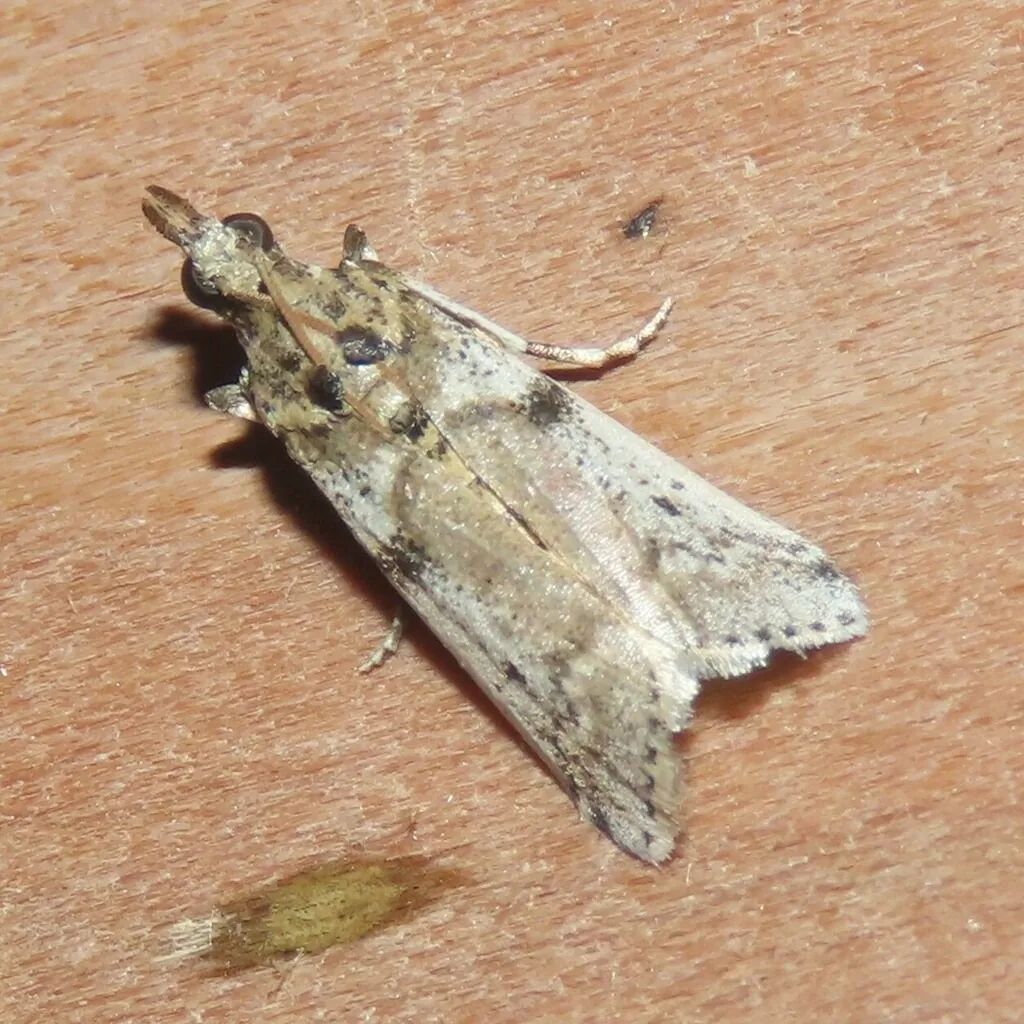
How to identify it
Where it lives
It attacks almond, pistachio, walnut, fig and pomegranate; in warm years the central and southern San Joaquin Valley can see a fourth generation.[1]
Biology and life cycle
Larvae overwinter in old nuts and fruit (mummies) and keep feeding on warm winter days.[1]
Moths emerge in March or April and lay eggs on mummies, then on new nuts after hull split or on injured fruit.[1]
There are at least three generations a year, sometimes four in warm seasons.[1]
Damage and signs
- Pinhole entrances lead to whole kernels eaten, with webbing, frass and mold.[1]
Health risk
It feeds in nuts and fruit; UC IPM mentions no risk to people.[1]
Control
Prevention
Harvest early, avoid drought stress that splits hulls early, and prevent other injury to fruit.[1]
Sanitation
Knock down and dispose of old nuts and fruit before late winter; this is the most effective control.[1]
Biological control
Parasitic wasps, including commercially available Goniozus legneri, and egg-eating Phytocoris bugs help; avoid broad persistent sprays.[1]
Common questions
Sources
- iNaturalist, “Amyelois transitella taxon page (order and family).” www.inaturalist.org/taxa/347144 (accessed 2026-10-06)