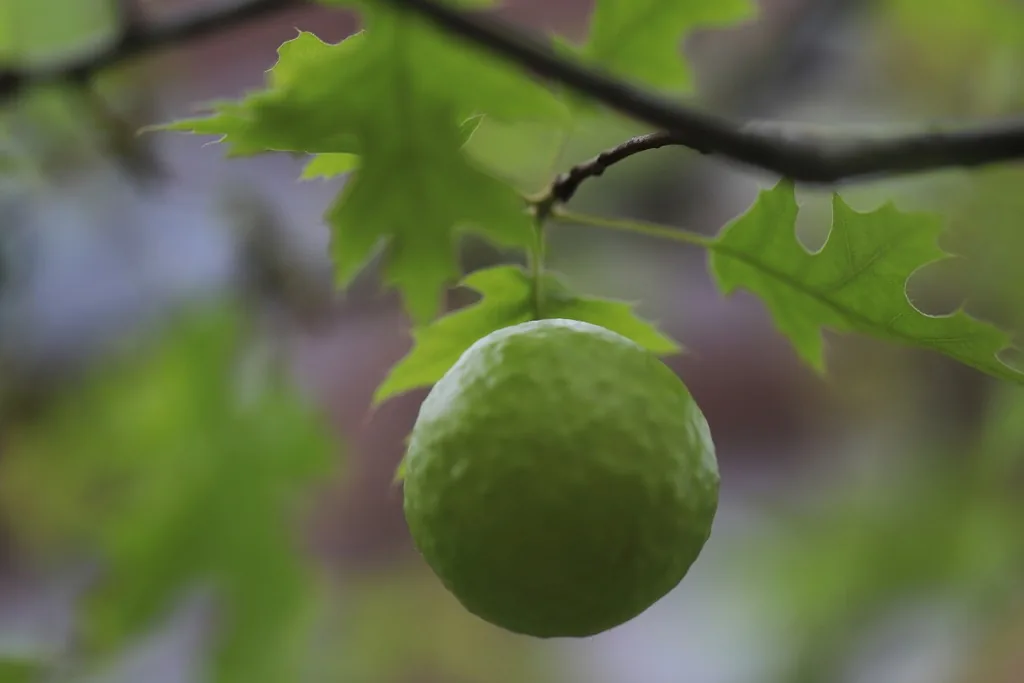
How to identify it
- Gall wasps are tiny; you'll usually notice the galls instead, on leaves, stems and twigs.[3][1]
- Common oak galls include jumping oak gall, oak apple gall and oak bullet gall.[3]
- Many insect galls hold a single legless larva, though some house several larvae, including predators and parasites of the gall maker.[1]
- The twohorned oak gall wasp makes small brown seedlike galls with two bumps under live oak leaves in California.[2]
Look-alikes
| Look-alike | How to tell them apart |
|---|---|
| Oak twig blight and twig girdlers | These kill whole leaves in groups; twohorned gall wasps kill only parts of leaves beyond each gall, leaving the leaf partly green.[2] |
Where it lives
Gall wasps are the most common gall-making insects, usually on oak and rose; the twohorned oak gall wasp affects coast live and interior live oak.[3][2]
Biology and life cycle
Galls form as new leaves and shoots grow in spring, when the insect's feeding and secretions push the plant to grow abnormal tissue.[3]
Gall wasps usually have one or two generations a year.[1]
The twohorned oak gall wasp alternates a catkin-gall generation in late winter with a leaf-gall generation and overwinters as pupae in the galls.[2]
Galls stay on plants for more than one season, since they're noticed only when full size.[3]
Damage and signs
Health risk
Gall wasps affect plants only, and the sources describe no risk to people.[1][3]
Control
Prevention
Control usually isn't needed; gall numbers swing naturally from year to year.[3][2]
Traps and physical control
Prune and dispose of annoying galls before adults emerge, which may reduce some species.[1]
Biological control
Fungi, parasites, predators and competing insects living in galls naturally kill many gall wasps.[2]
Pesticides
Sprays rarely work, because galls protect the insects once they start forming.[3]
Common questions
- What are the round balls on my oak tree?
- Most likely oak galls, such as oak apple or bullet galls, made by tiny gall wasps.[3]
- Will galls kill my oak?
- Rarely. Insect galls usually don't threaten tree health, even when they look alarming.[1][3]
- Should I spray for oak galls?
- No. Once galls form it's too late, and control is generally not suggested.[3]
Sources
- University of California Statewide IPM Program, “Gall Makers (Pests in Gardens and Landscapes).” ipm.ucanr.edu/PMG/GARDEN/PLANTS/INVERT/gallmakers.html (accessed 2026-10-06)
- University of California Statewide IPM Program, “Twohorned Oak Gall Wasp (Pests in Gardens and Landscapes).” ipm.ucanr.edu/PMG/GARDEN/PLANTS/INVERT/twohornedwasp.html (accessed 2026-10-06)
- University of Minnesota Extension, “Insect and mite galls (Yard and garden insects).” extension.umn.edu/yard-and-garden-insects/insect-and-mite-galls (accessed 2026-10-06)
- iNaturalist, “Amphibolips confluenta taxon page (order and family).” www.inaturalist.org/taxa/135271 (accessed 2026-10-06)