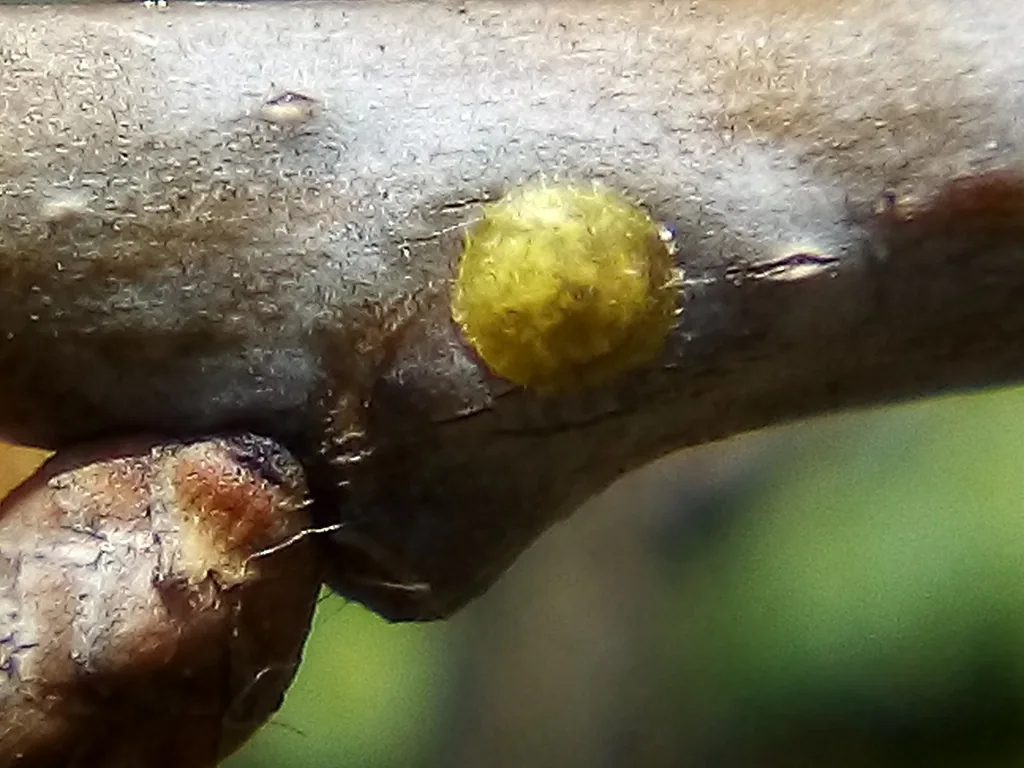
How to identify it
Where it lives
Several species attack deciduous and evergreen oaks in California, with serious damage on the Central Coast and in the Central Valley.[1]
Biology and life cycle
All adults are female and produce living young from April through October in Northern California, peaking in May and June.[1]
Crawlers move for a few days, then settle on a twig for life.[1]
Damage and signs
Health risk
It feeds on plants; UC IPM mentions no risk to people.[1]
Control
Traps and physical control
Prune out isolated infestations if they're caught very early.[1]
Pesticides
Narrow-range oil applied in spring just before buds open, with thorough coverage, can manage small to medium trees over several years.[1]
Common questions
Sources
- University of California Statewide IPM Program, “Oak Pit Scales (Pest Notes).” ipm.ucanr.edu/home-and-landscape/oak-pit-scales/ (accessed 2026-10-06)
- iNaturalist, “Asterodiaspis taxon page (order and family).” www.inaturalist.org/taxa/375004 (accessed 2026-10-06)