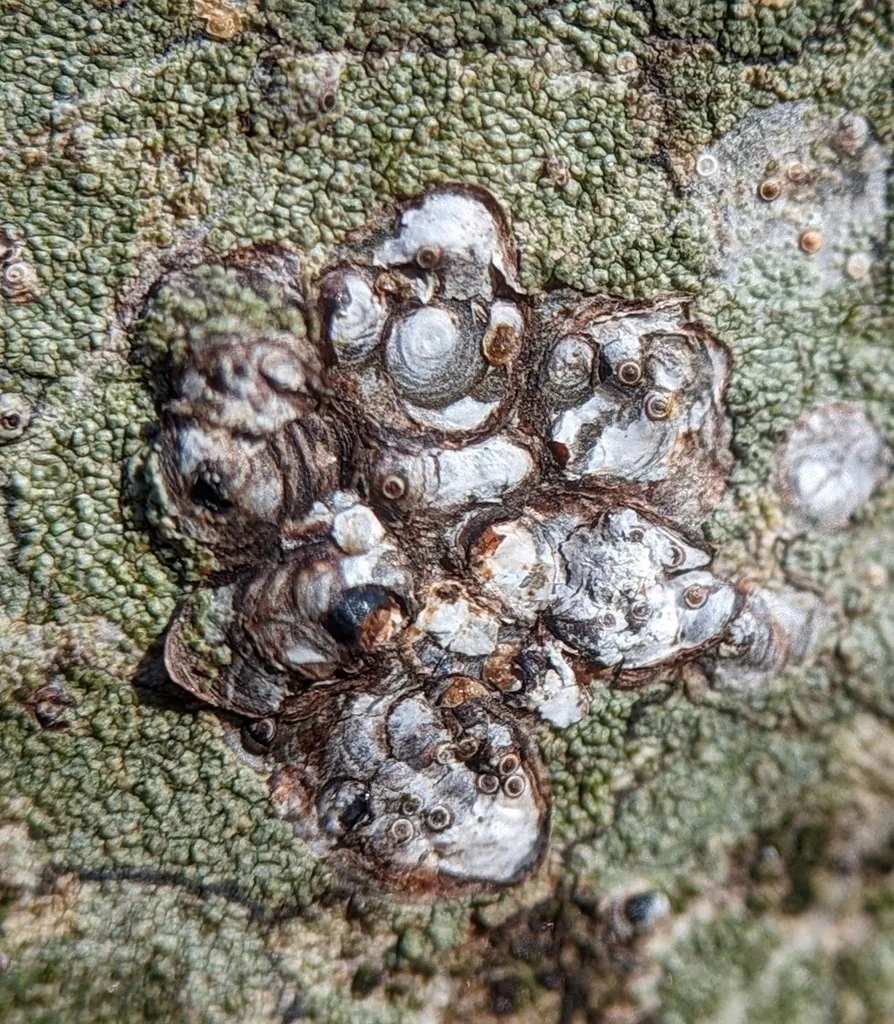
How to identify it
Where it lives
It's found on oaks (especially pin and willow oaks), beech, dogwood, hackberry, hickory, maple, pecan and willow.[1]
Biology and life cycle
It overwinters as nymphs on branches; females lay about 50 pink eggs.[1]
Crawlers emerge over a long stretch from early summer to the end of August.[1]
Damage and signs
- Stressed trees show leaf drop and branch dieback, and the bark becomes sunken where scales fed.[1]
Health risk
It feeds on plants; UK Extension mentions no risk to people.[1]
Control
Pesticides
Treat crawlers in May or July with a pyrethroid or oil-based insecticide, or use a systemic dinotefuran application.[1]
Common questions
Sources
- University of Kentucky Entomology (ENTFACT), “Obscure Scale (ENTFACT-432).” entomology.mgcafe.uky.edu/ef432 (accessed 2026-10-06)
- iNaturalist, “Melanaspis obscura taxon page (order and family).” www.inaturalist.org/taxa/319358 (accessed 2026-10-06)