Pest profile

Oleander Caterpillar

Syntomeida epilais · Lepidoptera: Erebidae[2]

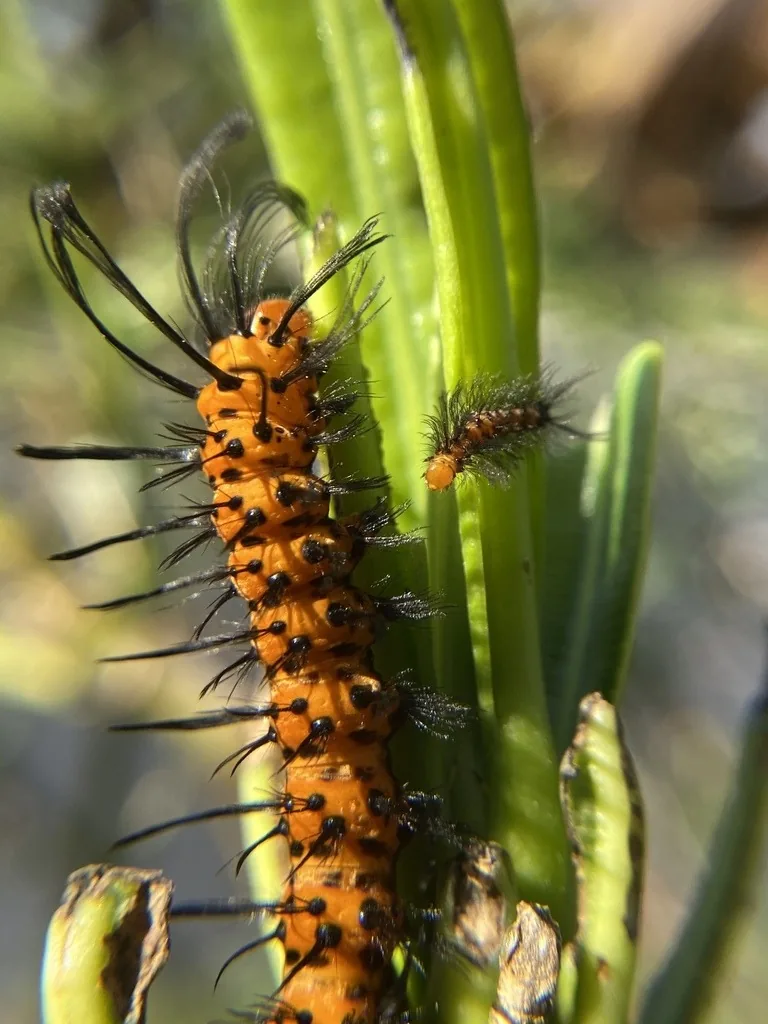
The orange, black-tufted oleander caterpillar is the only caterpillar pest of concern on oleander and can strip plants in south Florida.[1]

Orange oleander caterpillar with tufts of long black hairs on a leaf
Orange oleander caterpillar with tufts of long black hairs on a leaf. (c) Sandra H Statner, some rights reserved (CC BY) — via iNaturalist, CC BY 4.0

How to identify it

  • Larvae are orange with tufts of long black hairs.[1]
  • Adults, called polka-dot wasp moths, are iridescent blue-green with small white dots and fly by day.[1]
  • Eggs are pale cream to light yellow, in clusters under oleander leaves.[1]

Where it lives

It's a common sight on oleanders in Florida and southern Georgia.[1]

US map: public records from 4 states since 1990 (GBIF).

Biology and life cycle

Young larvae feed in groups and skeletonize new shoots, turning them light brown.[1]

Damage and signs

  • Feeding can cause considerable defoliation in southern Florida.[1]

Health risk

It feeds on oleander, a poisonous plant, which is why birds and small mammals avoid it; UF/IFAS mentions no direct risk to people.[1]

Control

Prevention

Check the undersides of browned new leaves early to find young groups.[1]

Biological control

Predatory stink bugs, tachinid flies and parasitic wasps attack the caterpillars.[1]

Common questions

What are the orange hairy caterpillars on my oleander?
Oleander caterpillars, the young of the polka-dot wasp moth.[1]
Do birds eat them?
No; their poisonous oleander diet deters birds and small mammals.[1]

Sources

  1. University of Florida IFAS Extension (Featured Creatures), “Oleander Caterpillar, Syntomeida epilais (EENY-009).” edis.ifas.ufl.edu/publication/IN135 (accessed 2026-10-06)
  2. iNaturalist, “Syntomeida epilais taxon page (order and family).” www.inaturalist.org/taxa/120875 (accessed 2026-10-06)

Updated 2026-10-14. Built from sourced records. Spot an error? Tell us.