Pest profile

Palmetto Weevil

Rhynchophorus cruentatus · Coleoptera: Curculionidae[2]

Palmetto weevil larvae destroy palm crowns from inside; by the time symptoms show, infested palms usually can't be saved.[1]

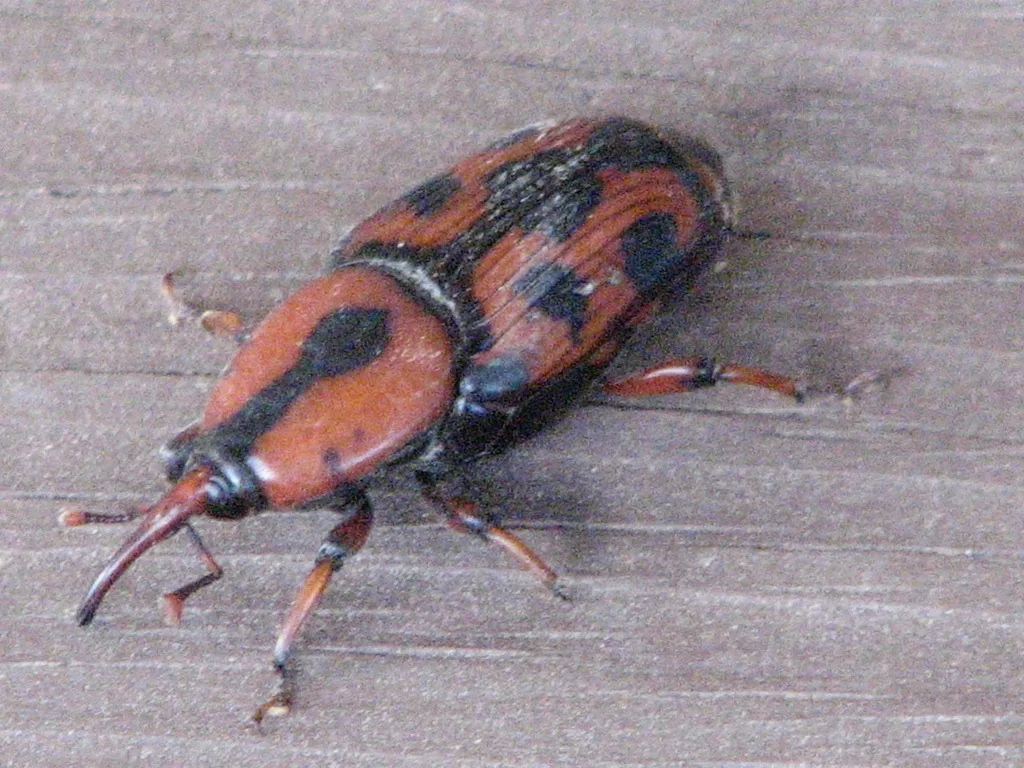
Palmetto weevil, a large weevil with red and black markings and a long snout
Palmetto weevil, a large weevil with red and black markings and a long snout. (c) johnyochum, some rights reserved (CC BY) — via iNaturalist, CC BY 4.0

How to identify it

  • Adults range from solid black to almost all red with black patterns, about 1.9 to 3 cm long from snout tip.[1]
  • In infested palms, younger leaves decline; in upright-leaved palms like Canary Island date palm, older leaves droop then collapse.[1]

Where it lives

It occurs from coastal South Carolina through the Florida Keys and west into coastal Texas, and throughout Florida.[1]

US map: public records from 8 states since 1990 (GBIF).

Biology and life cycle

Eggs are laid in leaf bases or wounds; a female lays about 207 eggs, and they hatch in about three days.[1]

Damage and signs

  • Larval feeding and rot destroy the crown and can topple it.[1]

Health risk

It attacks palms; UF/IFAS mentions no risk to people.[1]

Control

Sanitation

Cut down and destroy infested palms before adults emerge.[1]

When to call a professional

Preventive treatment of newly transplanted palms is possible but costly.[1]

Common questions

Why is my palm's center collapsing?
Palmetto weevil larvae feeding in the crown are one cause, especially in stressed or transplanted palms.[1]
Can an infested palm be saved?
Rarely; infestations are usually found too late.[1]

Sources

  1. University of Florida IFAS Extension (Featured Creatures), “Palmetto Weevil, Rhynchophorus cruentatus (EENY-013).” edis.ifas.ufl.edu/publication/IN139 (accessed 2026-10-06)
  2. iNaturalist, “Rhynchophorus cruentatus taxon page (order and family).” www.inaturalist.org/taxa/130352 (accessed 2026-10-06)

Updated 2026-10-14. Built from sourced records. Spot an error? Tell us.