Pest profile

Pantropical jumper

Plexippus paykulli and Menemerus bivittatus · Araneae: Salticidae[2]

These two imported jumping spiders live almost only on buildings and hunt the insects drawn to outdoor lights.[1]

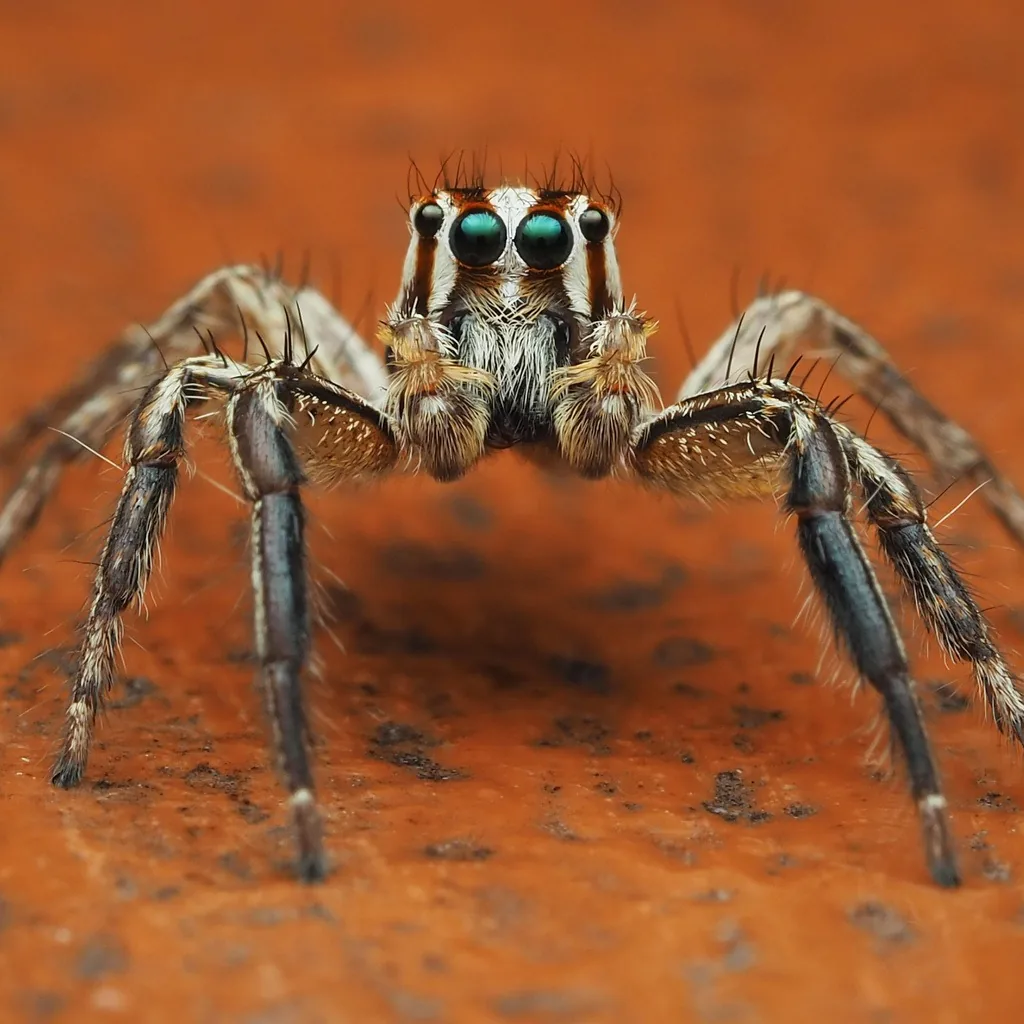
Pantropical jumping spider, a dark spider with white face stripes and large front eyes, facing the camera
Pantropical jumping spider, a dark spider with white face stripes and large front eyes, facing the camera. Photo: spidereyes, public domain (CC0), via iNaturalist

How to identify it

  • Both are medium-large jumping spiders, about 8 to 12 mm long.[1]
  • Gray wall jumper males look striped black and white along the body.[1]

Where it lives

Both occur from Florida to Texas and south to Paraguay; the gray wall jumper also lives in California.[1]

US map: public records from 16 states since 1990 (GBIF).

Biology and life cycle

Adults and young are present year-round, with most mating from fall to spring.[1]

They don't build webs to catch prey, so they don't leave cobwebs.[1]

Health risk

Jumping spiders are harmless to people; larger species can give a locally painful bite if roughly handled.[1]

Control

Biological control

Around homes they help control flies, mosquitoes and other pests.[1]

Common questions

What are the jumping spiders around my porch light?
Often pantropical jumpers or gray wall jumpers hunting insects drawn to the light.[1]
Are they dangerous?
No; jumping spiders are harmless to people.[1]

Sources

  1. University of Florida IFAS Extension (Featured Creatures), “Jumping Spiders, Gray Wall Jumper and Pantropical Jumper (Featured Creatures).” edis.ifas.ufl.edu/publication/IN315 (accessed 2026-10-06)
  2. iNaturalist, “Plexippus paykulli taxon page (order and family).” www.inaturalist.org/taxa/125444 (accessed 2026-10-06)

Updated 2026-10-14. Built from sourced records. Spot an error? Tell us.