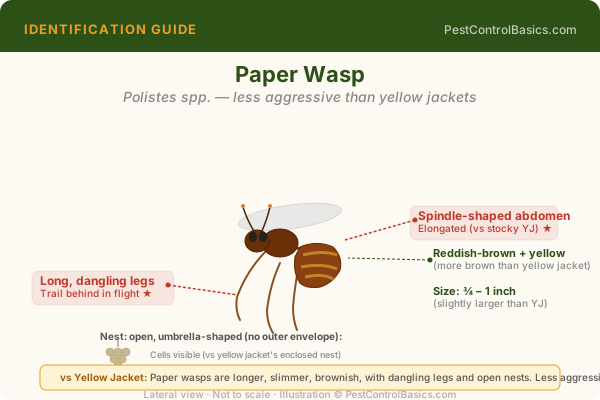
Original illustration by PestControlBasics.com. Use anatomical labels above to confirm your identification. For photo references, see the identification section below.
Paper wasp vs. yellow jacket
Paper wasps and yellow jackets are both black-and-yellow stinging wasps, but they have distinctly different appearances, nests, and temperaments.
Paper wasp body: Slender and elongated with a very narrow waist. Long legs that dangle noticeably below the body when in flight — a good ID feature in flight. Color varies by species from pale brown to black with yellow markings.
Paper wasp nest: Open umbrella or inverted dome shape with exposed cells — you can see individual hexagonal cells with developing larvae. There is no paper envelope covering the cells. The nest is attached by a thin stalk (petiole) and hangs under a protected surface.
Yellow jacket nest: Enclosed in layers of paper with a single entrance hole. You cannot see the cells from the outside.
Temperament difference: Paper wasps will sting if their nest is directly touched or approached very closely, but they don't aggressively defend a large perimeter the way yellow jackets do. Accidentally bumping a paper wasp nest with your hand is a sting incident; walking past one at a few feet is usually not.
Early season removal is the strategic move
The best time to address paper wasp nests is early spring when the founding queen has just started building — in April or May, the nest is often the size of a walnut with just a few cells and one or two wasps. At this stage, any approach works: jet aerosol, soapy water, or even physical removal with protective gloves.
Wait until night: Even for small nests, treating at night ensures all wasps are present and reduces risk. Apply a jet aerosol directly to the nest from 6–10 feet away. Workers will fall immediately. Remove the nest the following day and dispose of it to prevent re-use.
Soapy water for small nests: A strong solution of dish soap in water injected directly into a small nest kills workers quickly and without the chemical exposure of an aerosol. Works well for nests accessible from a close approach at night.
Sting treatment: Paper wasp stings cause immediate sharp pain. Remove any visible stinger (rare — wasps have smooth stingers and rarely leave them). Ice and over-the-counter antihistamines (diphenhydramine) reduce swelling. Oral pain relievers for discomfort. Watch for systemic allergic reaction (hives beyond the sting site, throat tightening, difficulty breathing) — these require epinephrine and emergency care.