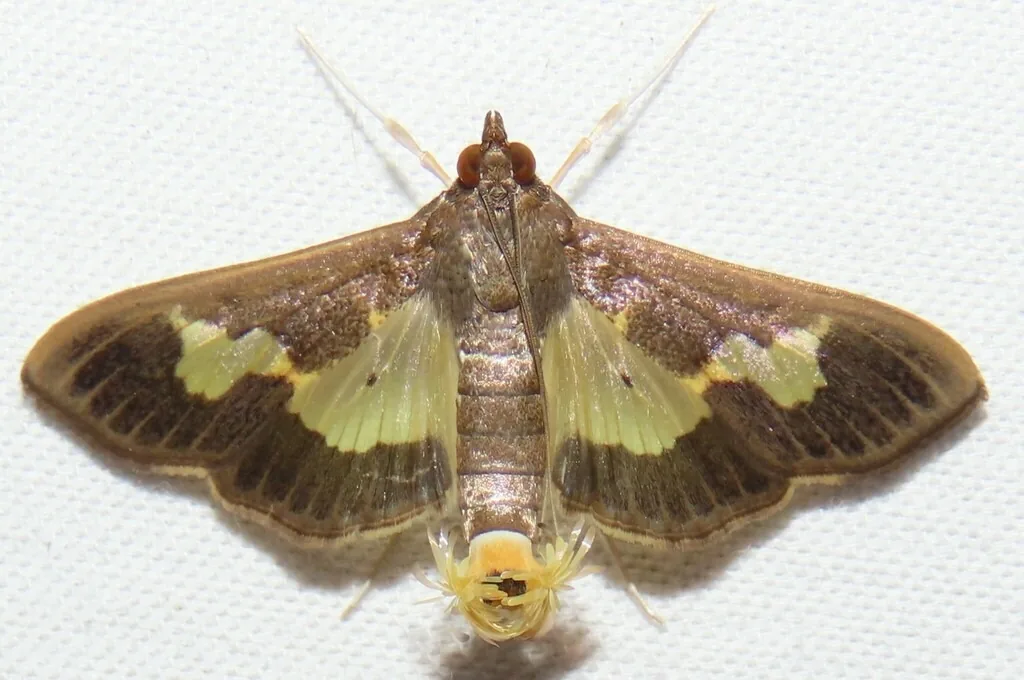
How to identify it
Where it lives
A tropical insect, it overwinters only in south Florida and perhaps south Texas, then disperses across the Southeast each summer; the Carolinas regularly see crop damage.[1]
Biology and life cycle
The life cycle takes about 30 days, with two to four overlapping generations in Georgia and the Carolinas.[1]
Damage and signs
- It damages summer and winter squash, cucumber, cantaloupe and pumpkin; blossoms are a favored site, and larvae often burrow into fruit.[1]
Health risk
It feeds on cucurbits; UF/IFAS mentions no risk to people.[1]
Control
Prevention
Plant early so part of the crop is harvested before pickleworms arrive.[1]
Keep them out
Screens or row covers keep moths off; uncover plants by day for bee pollination, since moths fly at night.[1]
Common questions
Sources
- University of Florida IFAS Extension (Featured Creatures), “Pickleworm, Diaphania nitidalis (EENY-164).” edis.ifas.ufl.edu/publication/IN321 (accessed 2026-10-06)
- iNaturalist, “Diaphania nitidalis taxon page (order and family).” www.inaturalist.org/taxa/126218 (accessed 2026-10-06)