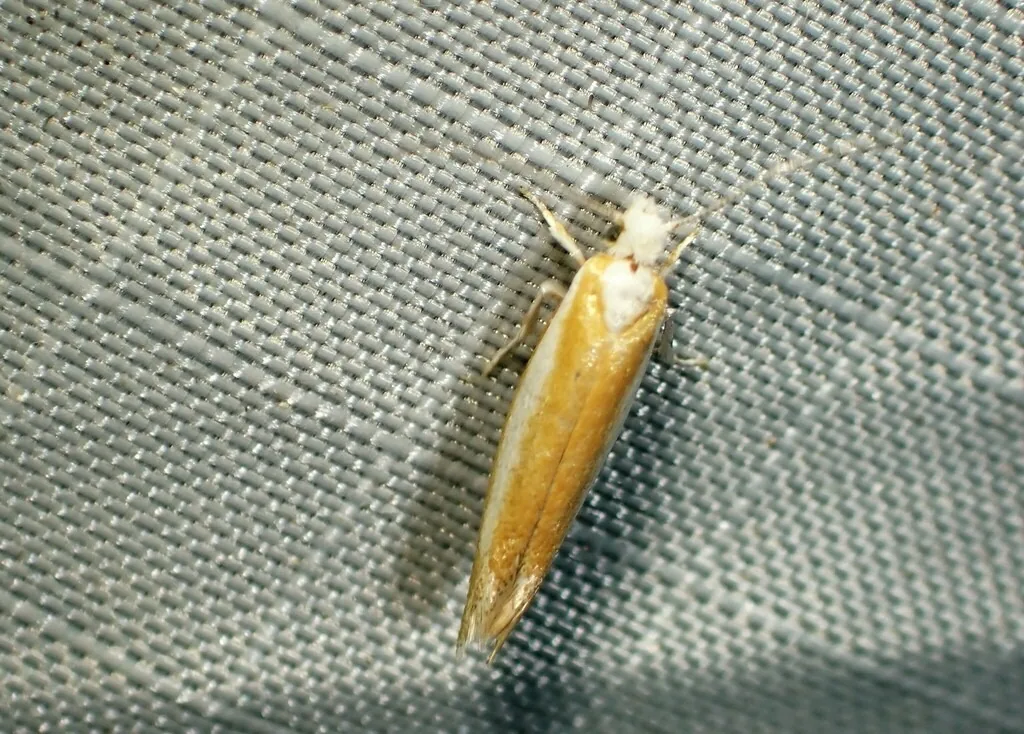
How to identify it
Where it lives
The PNW Insect Management Handbook covers it on two- and three-needle pines and western white pine in Pacific Northwest landscapes.[1]
Biology and life cycle
It overwinters as a young larva inside the needle sheath, resumes feeding in spring and pupates on the shoot tip.[1]
Adults lay eggs on needles from early to midsummer, and there's one generation a year.[1]
It attacks species and hybrids of two- and three-needle pines as well as western white pine, and seems to prefer smaller trees.[1]
Damage and signs
- Young larvae mine inside needles and older ones feed at the needle base inside the sheath, leaving needles that droop or stand out at sharp angles.[1]
Health risk
It feeds on plants; the PNW Insect Management Handbook mentions no risk to people.[1]
Control
Prevention
Look under trees for needles bound into tubes, and on branches for needles bound together instead of fanned out.[1]
Traps and physical control
On smaller trees, prune out and destroy heavily infested branch tips or needle clusters in early spring.[1]
Common questions
- Why are the needles on my young pine drooping and stuck together?
- Pine needle sheathminer larvae feeding inside needle sheaths cause drooping needles and bound clusters.[1]
- When should infested pine tips be pruned?
- In early spring; on smaller trees, prune out and destroy heavily infested tips or needle clusters.[1]
Sources
- Pacific Northwest Pest Management Handbooks (OSU, WSU, University of Idaho), “Pine (Pinus): Pine needle sheathminer (Insect Management Handbook).” pnwhandbooks.org/insect/hort/landscape/hosts-pests-landscape-plants/pine-pinus-pine-needle-sheathminer (accessed 2026-10-06)
- iNaturalist, “Zelleria haimbachi taxon page (order and family).” www.inaturalist.org/taxa/233970 (accessed 2026-10-06)