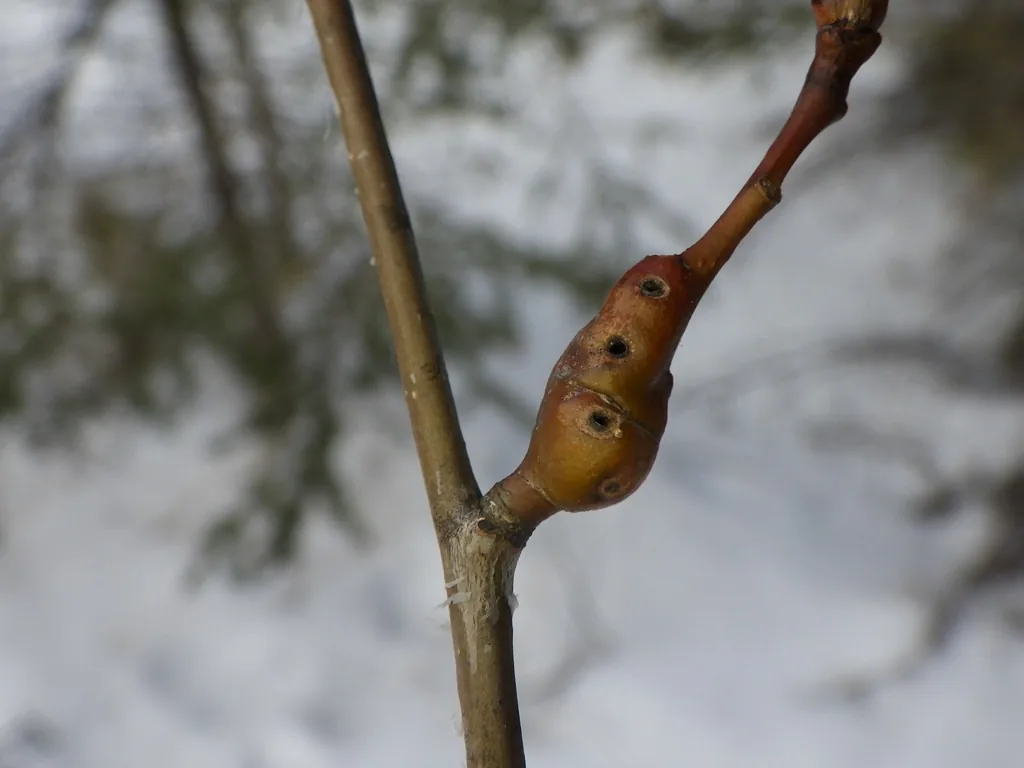
How to identify it
Where it lives
A native insect, it became much more common from the 1980s and has spread through Colorado and much of the Rocky Mountain region.[1]
Biology and life cycle
Full-grown maggots overwinter in the gall and pupate in late winter or early spring; most pupae drop to the ground.[1]
Adults emerge as new growth forms, and females insert eggs into developing twigs.[1]
Damage and signs
Health risk
It feeds on plants; CSU Extension mentions no risk to people.[1]
Control
Prevention
Don't overwater or overfertilize aspen; slowing succulent growth slows gall formation.[1]
Sanitation
Pruning galls has limited value and, done late, removes the galls holding parasitic wasps.[1]
Biological control
A small parasitic wasp often kills 20 to 30 percent of the flies, sometimes over 80 percent, and chickadees eat pupae.[1]
Common questions
Sources
- Colorado State University Extension, “Poplar Twiggall Fly (Fact Sheet 5.579).” extension.colostate.edu/resource/poplar-twiggall-fly/ (accessed 2026-10-06)
- iNaturalist, “Euhexomyza schineri taxon page (order and family).” www.inaturalist.org/taxa/1006298 (accessed 2026-10-06)