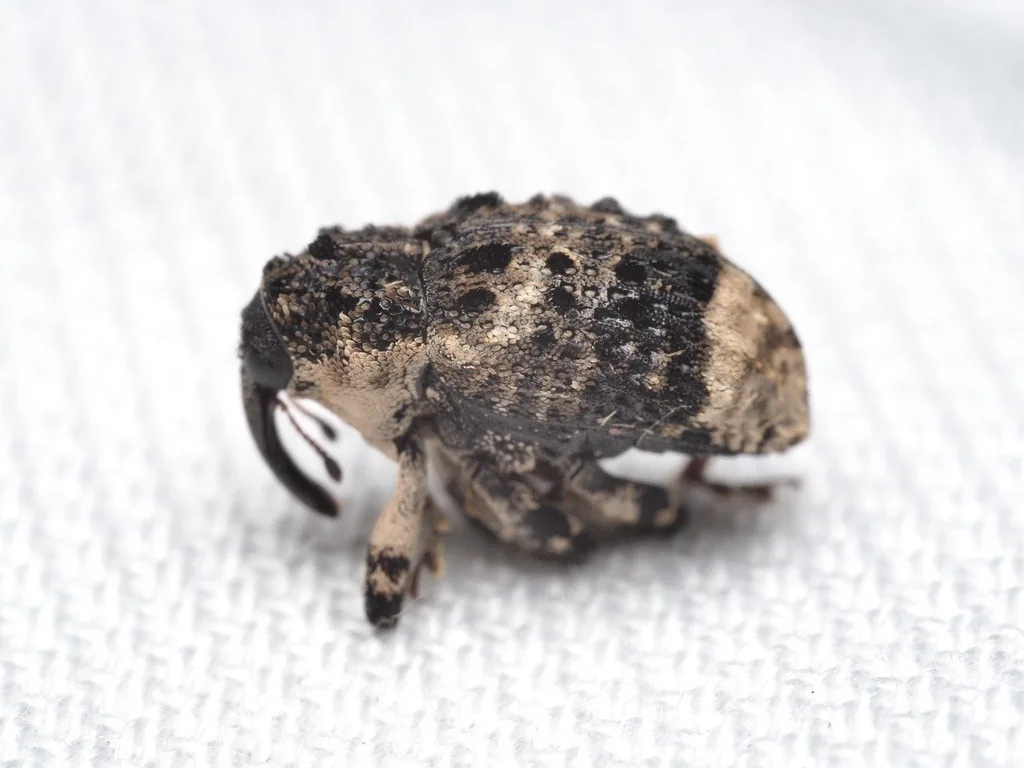
How to identify it
Where it lives
It prefers willow and also attacks alder, birch and poplar.[1]
Biology and life cycle
Adults emerge from spring to early fall, feed lightly on young bark, and play dead when disturbed.[1]
Females chew holes in bark, lay eggs at the bottom and pack them with frass; egg laying peaks March–April and July–September.[1]
Development takes one to three years.[1]
Damage and signs
Health risk
It feeds on trees only; UC IPM mentions no risk to people.[1]
Control
Traps and physical control
Prune off and destroy infested stems; adults seldom fly, so this reduces local populations.[1]
When to call a professional
Where damage is intolerable, pyrethroid bark sprays in March and July are available only through professional applicators.[1]
Common questions
Sources
- University of California Statewide IPM Program, “Poplar and Willow Borer (Pests in Gardens and Landscapes).” ipm.ucanr.edu/PMG/GARDEN/PLANTS/INVERT/poplrwilborer.html (accessed 2026-10-06)
- iNaturalist, “Cryptorhynchus lapathi taxon page (order and family).” www.inaturalist.org/taxa/217843 (accessed 2026-10-06)