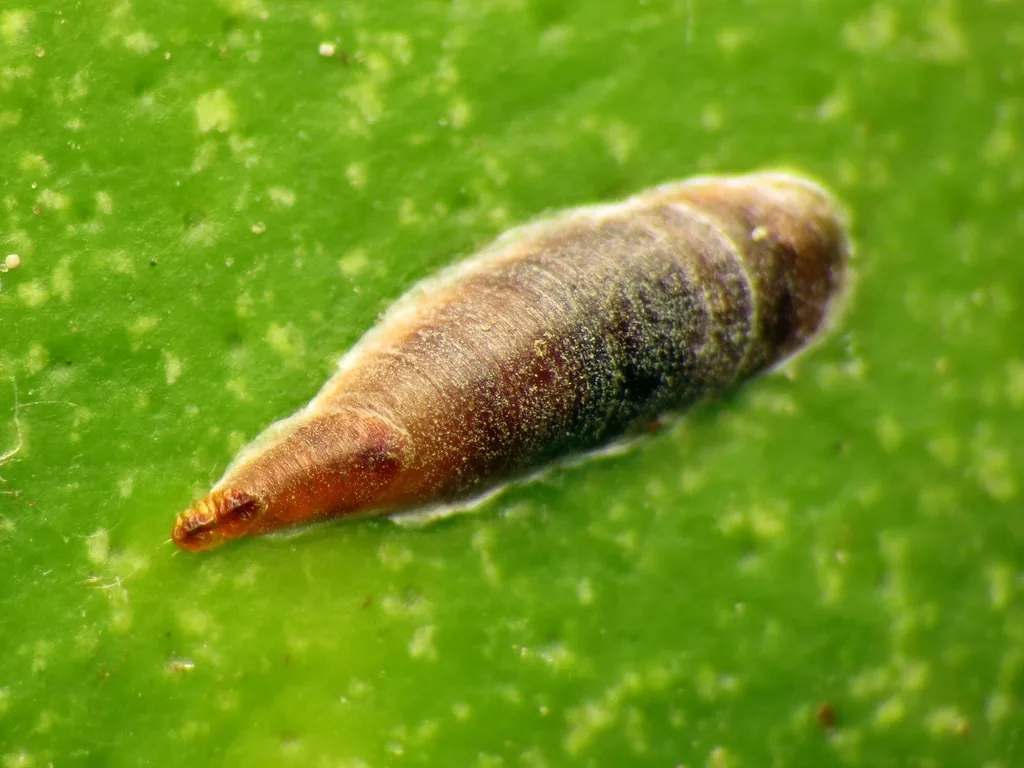
How to identify it
Look-alikes
| Look-alike | How to tell them apart |
|---|---|
| California red scale | Round reddish-brown scabs rather than elongate curved purple scales.[1] |
Where it lives
HGIC covers it on citrus in South Carolina; parasitic wasps keep it in check in Florida.[1]
Biology and life cycle
Mobile immatures are tiny and white, and there may be two generations a year.[1]
It prefers shady, protected parts of the tree, so numbers are highest toward the center.[1]
Damage and signs
- It causes leaf yellowing and drop, spotted or deformed fruit and shoot malformation; heavy infestations can kill plants.[1]
Health risk
It feeds on plants; Clemson HGIC mentions no risk to people.[1]
Control
Biological control
Parasitic wasps control it in Florida but may not yet be present in South Carolina.[1]
Pesticides
Horticultural oil kills all scale stages present, best before new growth in late winter or early spring, above 45 degrees F.[1]
Common questions
Sources
- Clemson Cooperative Extension, Home & Garden Information Center, “Citrus Insects & Related Pests (HGIC 2221).” hgic.clemson.edu/factsheet/citrus-insects-related-pests/ (accessed 2026-10-06)
- iNaturalist, “Lepidosaphes beckii taxon page (order and family).” www.inaturalist.org/taxa/330227 (accessed 2026-10-06)