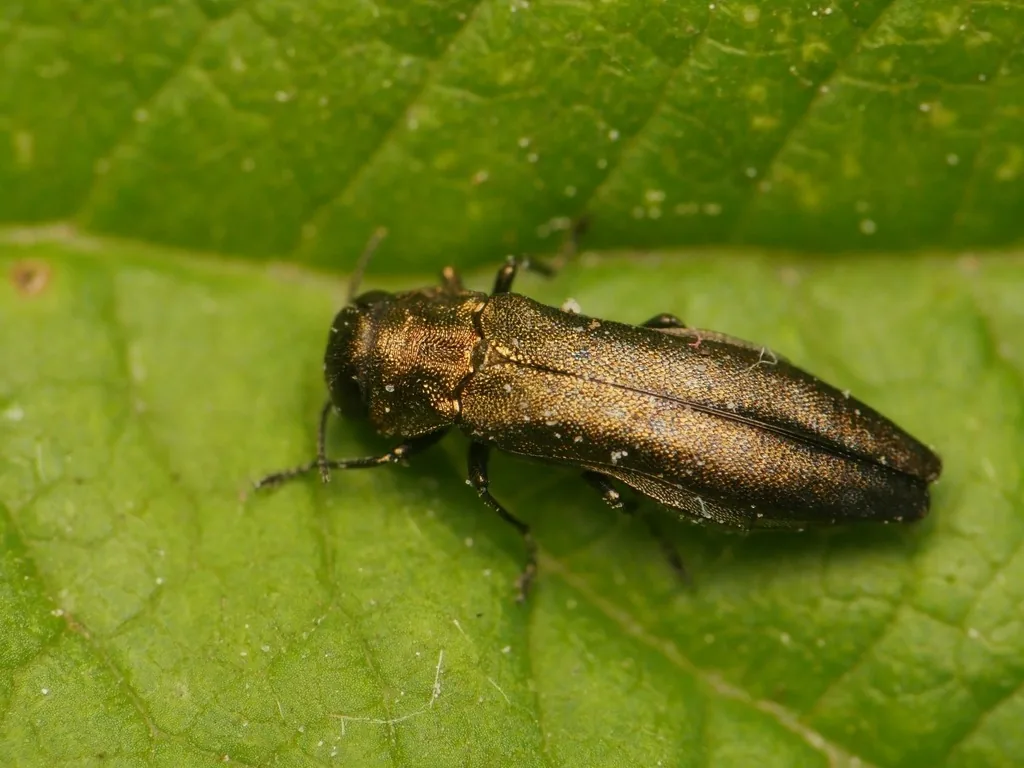
How to identify it
Where it lives
Relatively new to the Pacific Northwest, it's increasingly reported from the south Puget Sound to Oregon's Willamette Valley and has been confirmed in the inland Northwest.[1]
Biology and life cycle
Adults most commonly emerge in early June in the Pacific Northwest, after warm, humid spring weather; cool or dry springs delay them.[1]
Each adult lives about a week, feeding on leaves before laying eggs on the lower third of new canes or higher on older canes.[1]
Eggs hatch within two weeks; larvae feed in the cane's vascular tissue through early summer and move into the pith by early fall, staying until the next year.[1]
Damage and signs
- Girdled canes wilt from midsummer through fall and snap easily, especially under ripening berries, and damaged canes are more prone to winter injury.[1]
- Losses are worst in young plantings and fall-bearing primocane varieties, and damage can be mistaken for normal cane dieback or Phytophthora root rot.[1]
Health risk
It feeds on plants; the PNW Insect Management Handbook mentions no risk to people.[1]
Control
Prevention
It often arrives on infested nursery stock, and wild roses and brambles along roads and waterways keep it around.[1]
Sanitation
Thoroughly prune out and destroy damaged canes, which can cut populations by up to 80 percent; larvae rarely survive in canes pruned before late summer.[1]
Canes pruned later, after larvae reach the pith, should be destroyed or tilled more than 2 inches under.[1]
Pesticides
Sprays must target adult beetles before they lay eggs; treating before adults emerge doesn't work, and pollinator label guidelines matter because adults can emerge around bloom.[1]
Common questions
Sources
- Pacific Northwest Pest Management Handbooks (OSU, WSU, University of Idaho), “Emerging Insect Pests in the Pacific Northwest: Rose stem girdler (2014; revised March 2025).” pnwhandbooks.org/insect/emerging-insect-pests/emerging-insect/rose-stem-girdler-2014 (accessed 2026-10-06)
- iNaturalist, “Agrilus cuprescens taxon page (order and family).” www.inaturalist.org/taxa/212817 (accessed 2026-10-06)