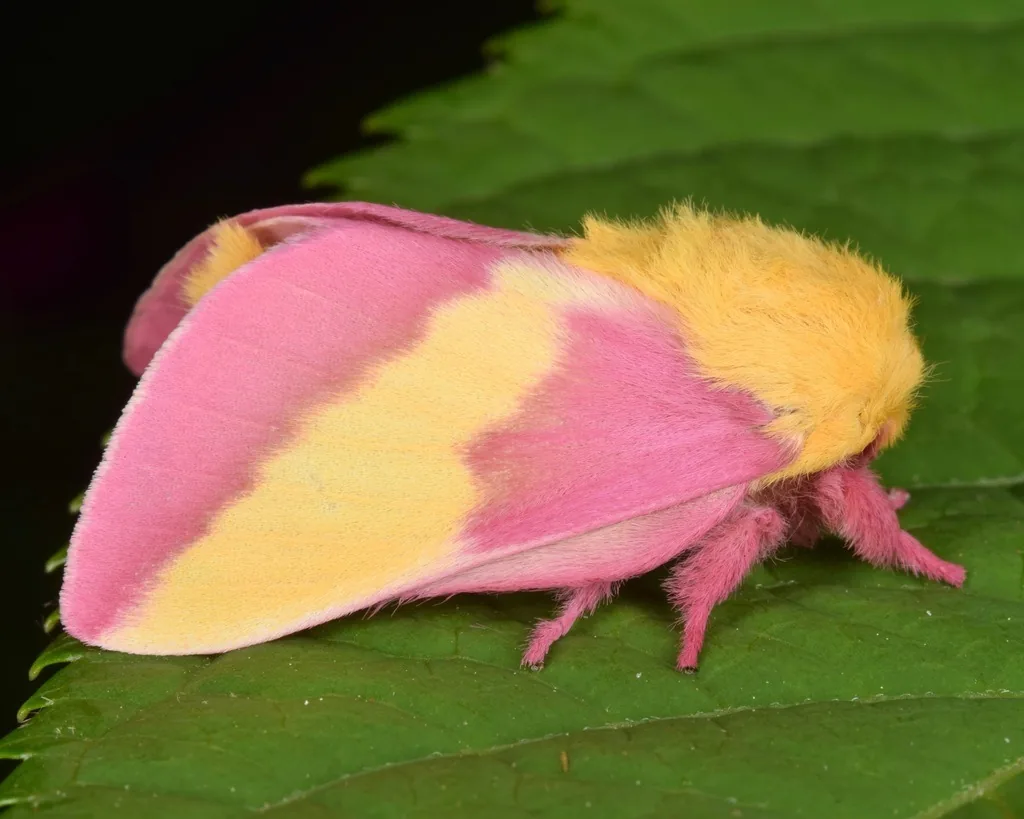
How to identify it
Where it lives
It's found throughout North America; in South Carolina, adults mate from as early as March to October.[1]
Biology and life cycle
Females lay egg clusters under host leaves, and young caterpillars feed together before becoming solitary.[1]
Larvae crawl to the ground to pupate in shallow soil; sugar, silver and red maples are the main hosts, sometimes turkey oak.[1]
Damage and signs
- Hundreds of caterpillars can strip a tree, usually an aesthetic problem; defoliation may harm saplings or stressed trees.[1]
Health risk
It feeds on plants; Clemson HGIC mentions no risk to people.[1]
Control
Traps and physical control
Wipe egg clusters off the undersides of leaves to stop caterpillars before they hatch.[1]
Biological control
Birds such as titmice, blue jays and chickadees, plus parasitic flies, wasps and predatory beetles, feed on them.[1]
Pesticides
Insecticides work on larvae but are very rarely advised or worthwhile; talk to an arborist or Extension agent first.[1]
Common questions
Sources
- Clemson Cooperative Extension, Home & Garden Information Center, “Rosy Maple Moth (Dryocampa rubicunda) (HGIC 2022).” hgic.clemson.edu/factsheet/rosy-maple-moth-dryocampa-rubicunda/ (accessed 2026-10-06)
- iNaturalist, “Dryocampa rubicunda taxon page (order and family).” www.inaturalist.org/taxa/48094 (accessed 2026-10-06)