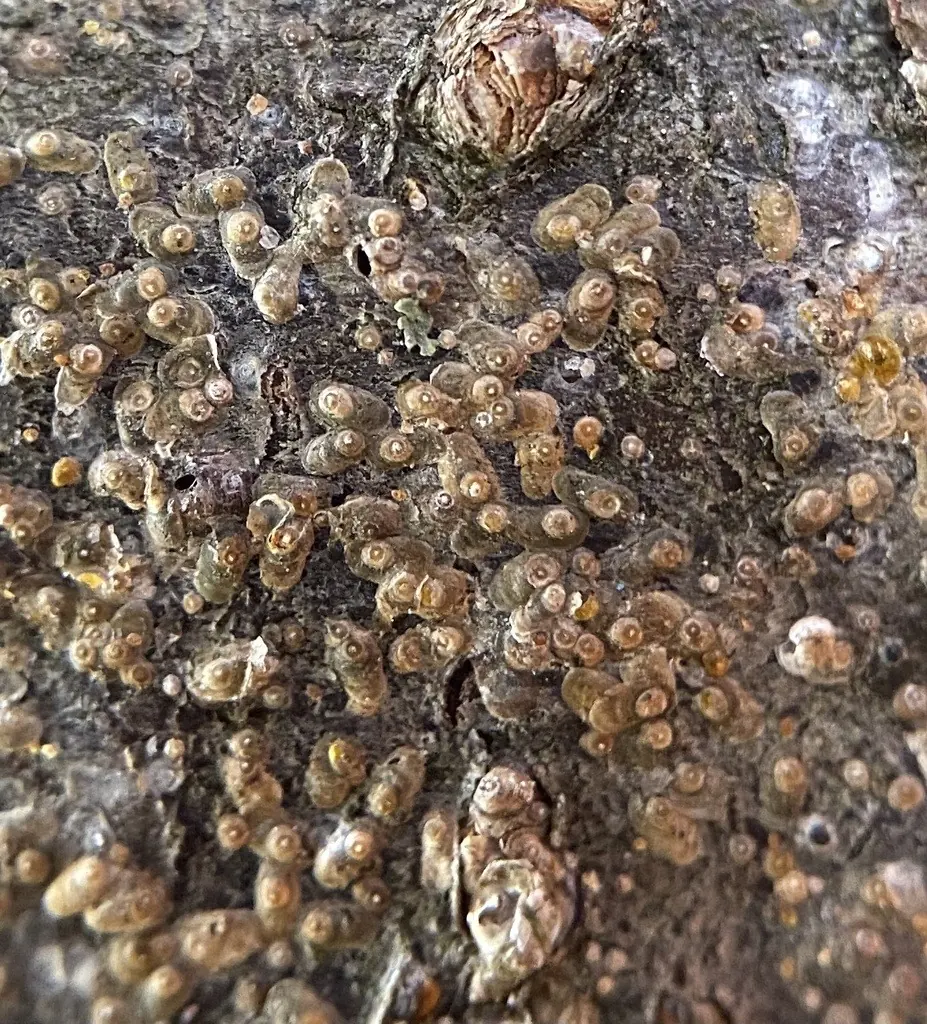
How to identify it
Where it lives
UK Extension covers it as an extremely important pest of apples, pears, peaches and plums.[1]
Biology and life cycle
Females give birth to tiny yellow crawlers that wander, settle and cover themselves with wax within a couple of days.[1]
There are two generations a year, and the second generation's crawlers emerge over a long period.[1]
Damage and signs
- It injects a toxin as it feeds, discoloring bark and fruit.[1]
Health risk
It feeds on trees; UK Extension mentions no risk to people.[1]
Control
Traps and physical control
Black sticky tape wrapped around an infested limb shows when crawlers are active.[1]
Pesticides
Dormant oil sprays give effective control in apples; crawler sprays go on about a week after crawlers first appear.[1]
Common questions
Sources
- University of Kentucky Entomology (ENTFACT), “San Jose Scale (ENTFACT-204).” entomology.mgcafe.uky.edu/ef204 (accessed 2026-10-06)
- iNaturalist, “Comstockaspis perniciosa taxon page (order and family).” www.inaturalist.org/taxa/1476210 (accessed 2026-10-06)