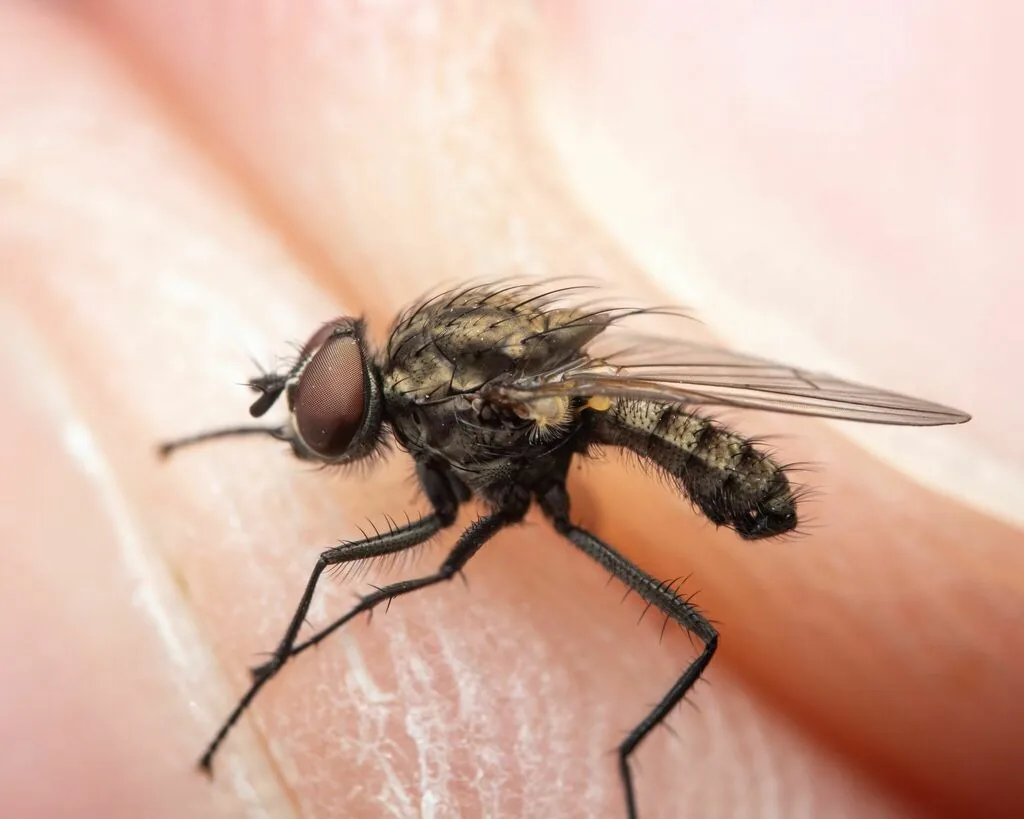
How to identify it
Look-alikes
Where it lives
In most California growing areas the maggots are active all year, with several generations.[1]
Biology and life cycle
Females lay small white eggs in stems at the soil line or in soil cracks next to plants.[1]
Eggs hatch in a few days, and the maggots burrow into roots or germinating seeds.[1]
After one to several weeks of feeding they pupate in roots or the surrounding soil.[1]
Damage and signs
Health risk
The maggots attack seeds and seedlings; UC IPM describes no risk to people.[1]
Control
Prevention
Cool, wet weather favors them, so plant when conditions promote fast germination, or use transplants or pregerminated seed.[1]
Keep them out
Cover seedbeds with fabric or cover individual plants so flies can't lay eggs nearby.[1]
Sanitation
Avoid heavy manure applications, since females prefer to lay eggs in rich soil, and work weeds in at least two weeks before planting.[1]
Common questions
Sources
- University of California Statewide IPM Program, “Seedcorn Maggot (Pests in Gardens and Landscapes).” ipm.ucanr.edu/PMG/GARDEN/VEGES/PESTS/seedcornmaggot.html (accessed 2026-10-06)
- iNaturalist, “Delia platura taxon page (order and family).” www.inaturalist.org/taxa/243756 (accessed 2026-10-06)