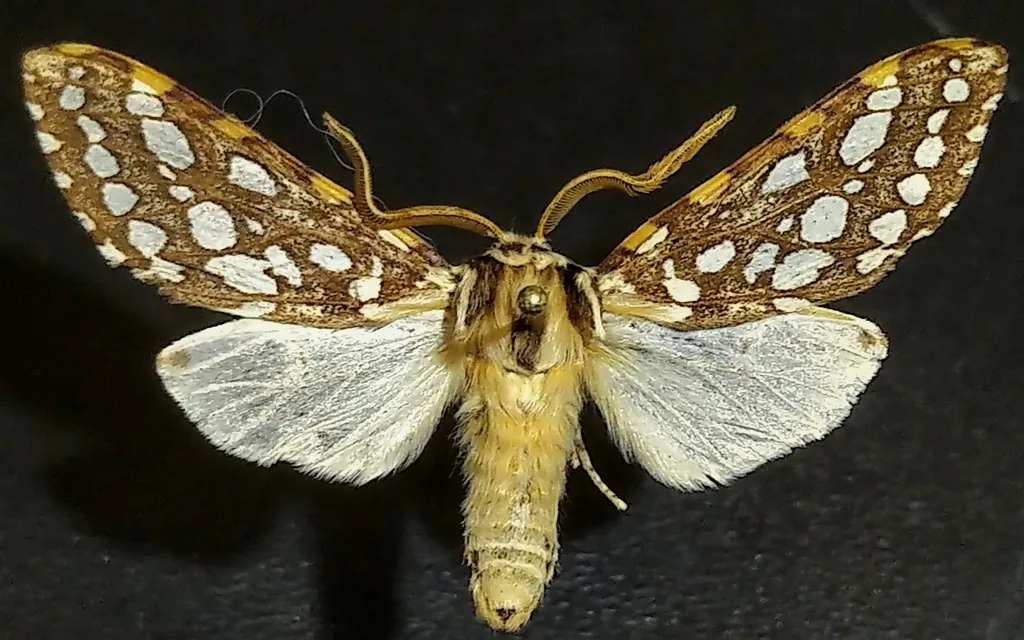
How to identify it
Where it lives
The PNW Insect Management Handbook covers it in Pacific Northwest landscapes, and there are reports of it defoliating forests.[1]
Biology and life cycle
In fall, tiny white larvae spin small webs at branch tips and overwinter in dense clusters, feeding on warm winter days.[1]
Webs and damage grow more noticeable by spring; in June mature caterpillars wander onto other plants, patios and decks looking for a place to spin cocoons.[1]
Cocoons are woven from silk and the caterpillars' reddish-brown hairs.[1]
Douglas-fir is preferred, but pine, arborvitae, spruce and true firs are also attacked.[1]
Damage and signs
- Caterpillars eat needles under their webs, but buds aren't harmed and spring growth usually covers most damage; minor infestations do little harm to landscape trees.[1]
Health risk
The hairs can irritate skin when caterpillars are handled without gloves, and rubbing your eyes can embed hairs painfully in eye tissue.[1]
Control
Traps and physical control
Prune out and destroy tents with caterpillars, wearing gloves.[1]
Biological control
Ophion parasitoid wasps and tachinid flies, including the large Tachinomyia similis, make populations crash in landscapes.[1]
Common questions
- What are the webs on my Douglas-fir branch tips in winter?
- Likely silver-spotted tiger moth caterpillars, which feed in webbed tents through fall and winter.[1]
- Why are fuzzy reddish-brown caterpillars crawling on my deck in June?
- Mature silver-spotted tiger moth caterpillars leave trees in June to find places to spin cocoons.[1]
Sources
- Pacific Northwest Pest Management Handbooks (OSU, WSU, University of Idaho), “Douglas-fir (Pseudotsuga): Silver-spotted tiger moth (Insect Management Handbook).” pnwhandbooks.org/insect/hort/landscape/hosts-pests-landscape-plants/douglas-fir-pseudotsuga-silver-spotted-tiger-moth (accessed 2026-10-06)
- iNaturalist, “Lophocampa argentata taxon page (order and family).” www.inaturalist.org/taxa/84792 (accessed 2026-10-06)