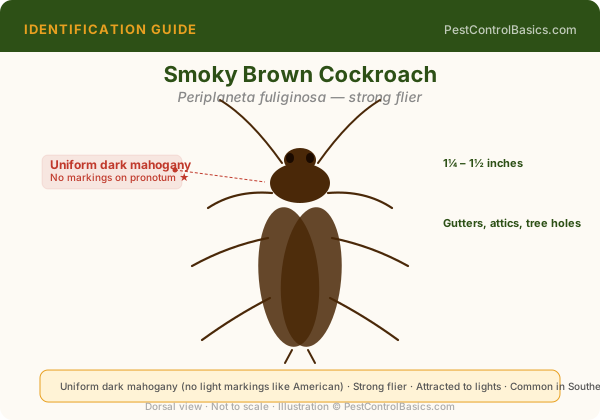
Original illustration by PestControlBasics.com. Use anatomical labels above to confirm your identification.
Smoky brown vs. American cockroach
Smoky brown cockroaches are frequently confused with American cockroaches (palmetto bugs). The key difference: smoky browns are uniform dark mahogany with no markings. American cockroaches have a distinctive pale yellow figure-8 pattern on the pronotum (the shield behind the head). If you see a marking — American cockroach. Uniform dark brown — smoky brown.
Both are large outdoor roaches that wander inside, but smoky browns are strongly phototaxic — they fly directly toward light sources at night. If roaches are showing up near lit doorways, windows, or around light fixtures at night, suspect smoky brown cockroaches.
They also require more moisture than American cockroaches — they dry out and die quickly in low-humidity indoor environments. Dehumidification reduces their ability to survive inside.
Outdoor-focused treatment is most effective
Replace exterior white lights with yellow LEDs: This single change dramatically reduces smoky brown attraction to your structure. They fly toward white/blue spectrum light; yellow 2700K LEDs are nearly invisible to them.
Bifenthrin perimeter spray: Apply to the full foundation perimeter, around all windows and doors, and to any mulched areas adjacent to the structure. Reapply every 4–6 weeks during active season (spring through fall).
Tree and gutter maintenance: Smoky browns nest in clogged gutters, hollow trees, and dense ivy. Cleaning gutters in spring, trimming trees away from the roofline, and removing dense ground cover near the structure eliminates primary harborage.
Bait in outdoor areas: Cockroach bait stations placed in garden beds, under AC units, and around outdoor utility areas reduce the population pressure approaching the structure.