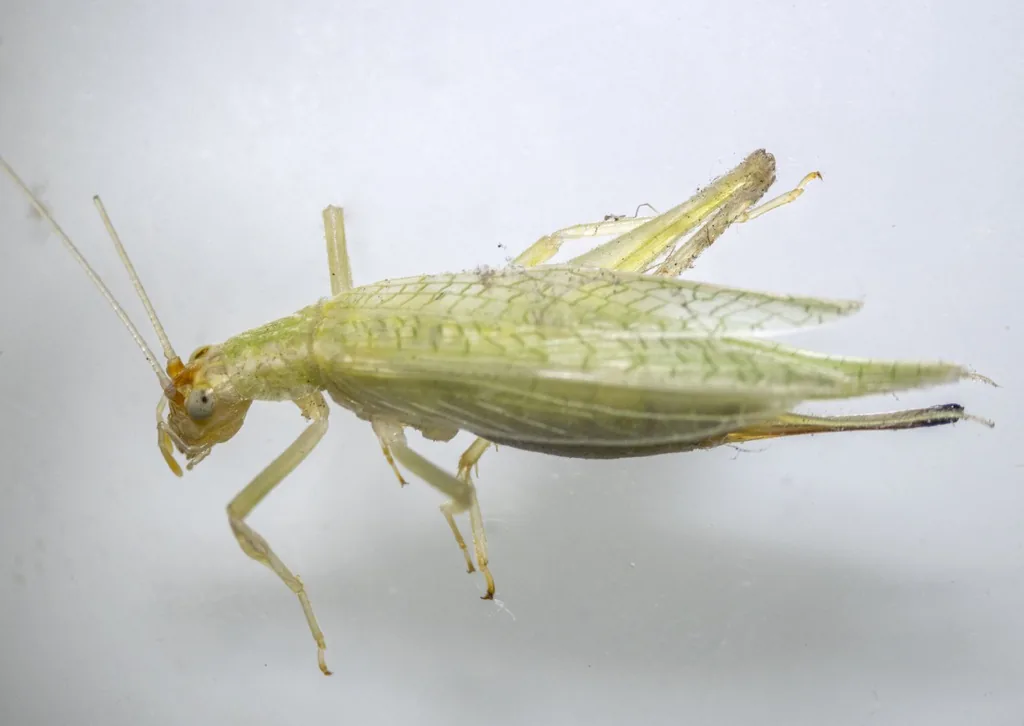
How to identify it
Where it lives
The PNW Insect Management Handbook covers it on blackberry and raspberry canes in the Pacific Northwest.[1]
Biology and life cycle
Adults mate and females lay eggs in canes in early fall; eggs hatch in spring and young crickets grow through summer, maturing by early fall.[1]
It feeds on the foliage of many plants, and there's one generation a year.[1]
Damage and signs
- Canes may break at the egg punctures, and disease can enter through them, but it isn't a common caneberry pest.[1]
Health risk
It feeds on plants; the PNW Insect Management Handbook mentions no risk to people.[1]
Control
Prevention
Plantings near weeds, neglected fence rows or natural areas are most likely to be infested; good weed management helps.[1]
Pesticides
The handbook lists carbaryl and zeta-cypermethrin for home use.[1]
Common questions
Sources
- Pacific Northwest Pest Management Handbooks (OSU, WSU, University of Idaho), “Blackberry and Raspberry: Snowy tree cricket (Insect Management Handbook).” pnwhandbooks.org/insect/small-fruit/blackberry-raspberry/blackberry-raspberry-snowy-tree-cricket (accessed 2026-10-06)
- iNaturalist, “Oecanthus fultoni taxon page (order and family).” www.inaturalist.org/taxa/130356 (accessed 2026-10-06)