How to identify it
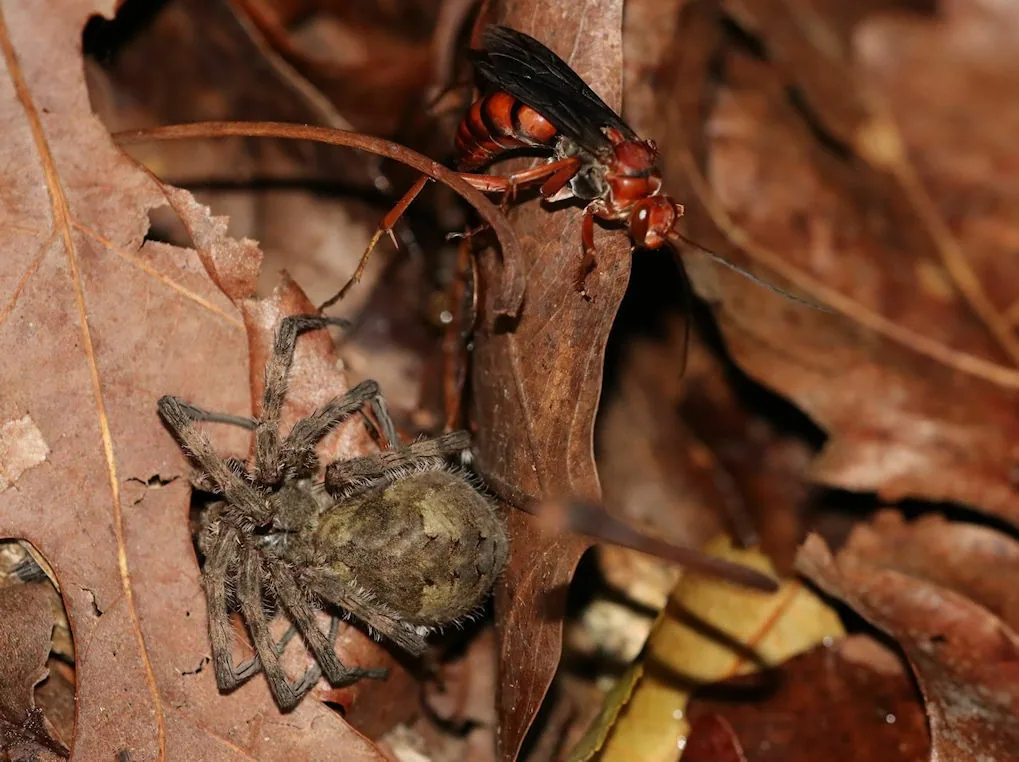
- The rusty spider wasp is up to about an inch long with a rusty orange body and iridescent blue wings.[1]
- Spider wasps in general are slender, about 1/2 inch, with long spiny legs, a dark body and smoky black or blue wings.[2]
- They run about on the ground, constantly flicking their wings; females' antennae are curled or spiraled.[2]
Where it lives
Spider wasps are common in Iowa; the rusty spider wasp is seen around structures and yards in South Carolina.[1][2]
Biology and life cycle
A female paralyzes a spider with her sting, drags it backward to a shallow burrow, lays one egg on it and covers the burrow; the larva feeds on the spider.[1][2]
Rusty spider wasps hunt large wolf spiders and fishing spiders that can be five times their size.[1]
Adults drink flower nectar; males gather near nesting females to mate.[1]
Indoors, they are usually accidental invaders looking for winter shelter in late summer and fall, or nesting in rotted wood.[2]
Health risk
Females can sting if handled or threatened, but they are solitary and rarely sting people or pets.[1][2]
Control
Prevention
No special control is needed outdoors; give them space.[1][2]
Traps and physical control
Ones found indoors can be swatted or removed.[2]
Common questions
- What is the orange wasp dragging a spider?
- Probably a rusty spider wasp taking a paralyzed wolf or fishing spider to its burrow.[1]
- Do spider wasps sting people?
- Rarely; they are solitary and sting only if handled or threatened.[1][2]
- Why is there a spider wasp in my house?
- Usually it wandered in by mistake looking for a winter hiding place, most often in late summer and fall.[2]
Sources
- Clemson Cooperative Extension, Home & Garden Information Center, “Rusty Spider Wasp.” hgic.clemson.edu/rusty-spider-wasp/ (accessed 2026-10-15)
- Iowa State University Extension and Outreach (Yard and Garden), “Spider Wasp.” yardandgarden.extension.iastate.edu/encyclopedia/spider-wasp (accessed 2026-10-15)
- iNaturalist, “Tachypompilus ferrugineus taxon page (order and family).” www.inaturalist.org/taxa/147347 (accessed 2026-10-06)