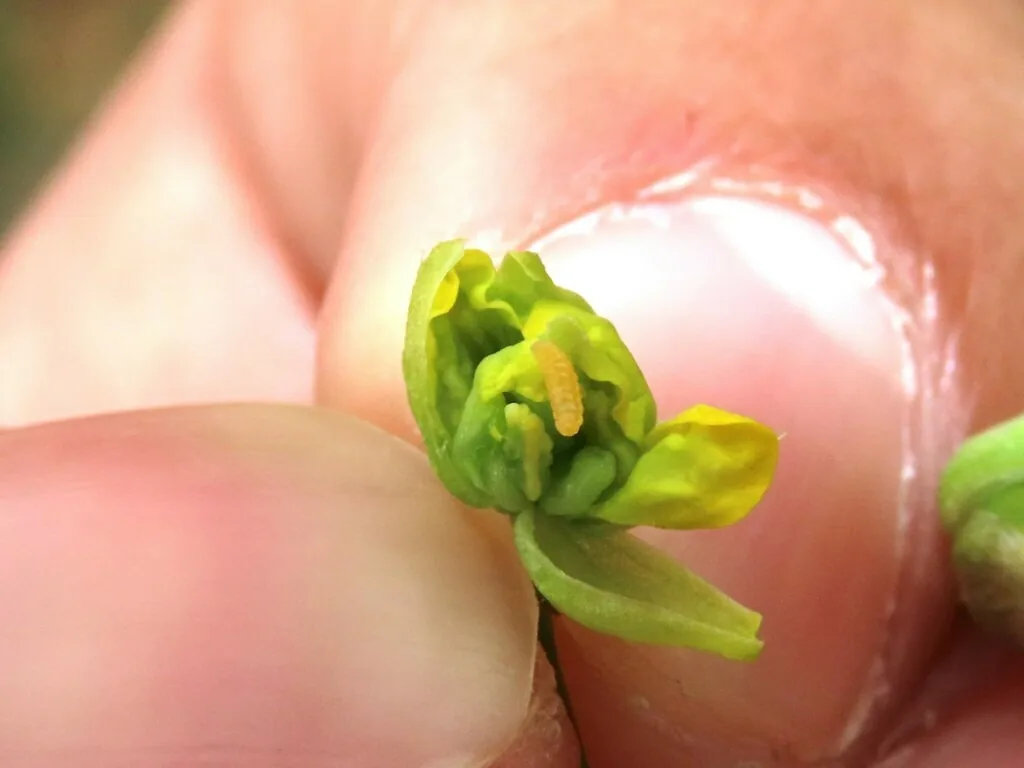
How to identify it
- Adults are tiny delicate flies about 2 mm long, light brown to light orange.[1]
- Larvae are 1 to 4 mm, creamy white when young and lemon yellow when mature, hidden in the growing point.[1]
- The key sign is brown, corky scarring near the growing point, with distorted leaves and multiple or missing heads.[1]
Where it lives
An invasive fly, it was first found in Minnesota in 2016 in parts of Hennepin and Ramsey counties and is established in Manitoba.[1]
Biology and life cycle
It overwinters in the top few centimeters of soil where brassicas grew and can stay dormant for several seasons.[1]
Adults live one to five days; larvae feed 7 to 15 days, then drop to the soil; there can be two to five generations a year.[1]
Damage and signs
- Feeding distorts and scars leaves and stems and can prevent broccoli from forming a crown or cause multiple heads.[1]
Health risk
It attacks brassicas; Minnesota Extension mentions no risk to people.[1]
Control
Prevention
Don't start transplants in soil that may hold swede midge pupae.[1]
Where confirmed, don't plant brassicas in the same spot for one to three years.[1]
When to call a professional
Report suspected swede midge in Minnesota to the Minnesota Department of Agriculture.[1]
Common questions
Sources
- University of Minnesota Extension, “Swede midge (Yard and garden insects).” extension.umn.edu/garden-and-home/yard-and-garden/yard-and-garden-insects/swede-midge (accessed 2026-10-06)
- iNaturalist, “Contarinia nasturtii taxon page (order and family).” www.inaturalist.org/taxa/202628 (accessed 2026-10-06)