Pest profile

Sweetpotato Weevil

Cylas formicarius · Coleoptera: Brentidae[2]

The sweetpotato weevil is the most serious pest of sweet potato, damaging roots in the field and in storage.[1]

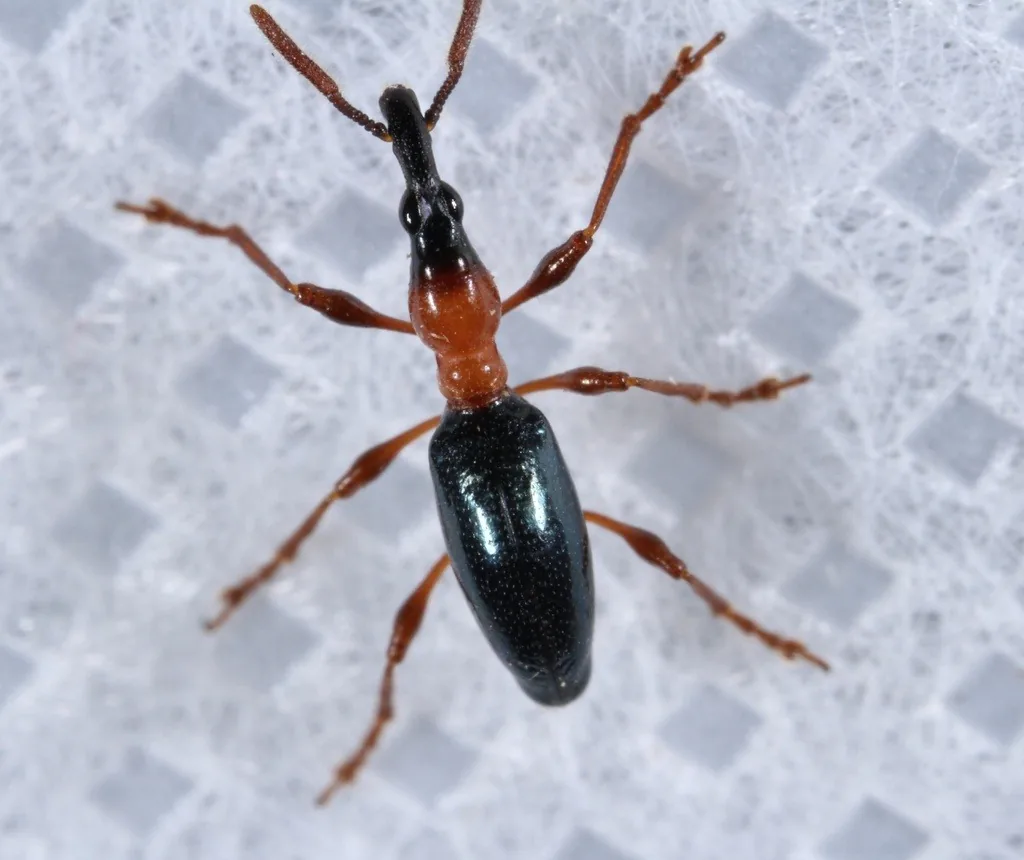
Sweetpotato weevil, an ant-like weevil with a black head and snout, reddish-orange thorax and legs, and shiny blue-black wing covers
Sweetpotato weevil, an ant-like weevil with a black head and snout, reddish-orange thorax and legs, and shiny blue-black wing covers. (c) Joshua Ebright, some rights reserved (CC BY) — via iNaturalist, CC BY 4.0

How to identify it

  • Adults are long, thin and ant-like, with a black head, orange to reddish-brown thorax and legs, and metallic blue wing covers.[1]
  • Larvae are legless and white, tunneling inside roots and stems.[1]

Where it lives

It's found on the Southeast coastal plain from North Carolina to Texas, plus Hawaii and Puerto Rico.[1]

US map: public records from 6 states since 1990 (GBIF).

Biology and life cycle

Females lay single eggs in cavities in roots or stems and seal them with a fecal plug.[1]

A generation takes one to two months, and all stages can be found year-round where hosts are available.[1]

Damage and signs

  • Reported losses range from 5 to 97 percent; vine yellowing shows only after heavy infestation.[1]
  • Among vegetables only sweet potato is a host, but morning glory and railroad vine are wild hosts.[1]

Health risk

It feeds on plants; UF/IFAS mentions no risk to people.[1]

Control

Prevention

Plant weevil-free slips and place new plantings away from earlier crops and sweet potato storage.[1]

Traps and physical control

Pheromone traps are useful for monitoring adults.[1]

Common questions

What's tunneling my sweet potatoes?
Often sweetpotato weevil larvae, which develop inside the roots.[1]
Can weevils start from planting stock?
Yes; slips should be free of weevils at planting.[1]

Sources

  1. University of Florida IFAS Extension (Featured Creatures), “Sweetpotato Weevil, Cylas formicarius (EENY-027).” edis.ifas.ufl.edu/publication/IN154 (accessed 2026-10-06)
  2. iNaturalist, “Cylas formicarius taxon page (order and family).” www.inaturalist.org/taxa/305678 (accessed 2026-10-06)

Updated 2026-10-14. Built from sourced records. Spot an error? Tell us.