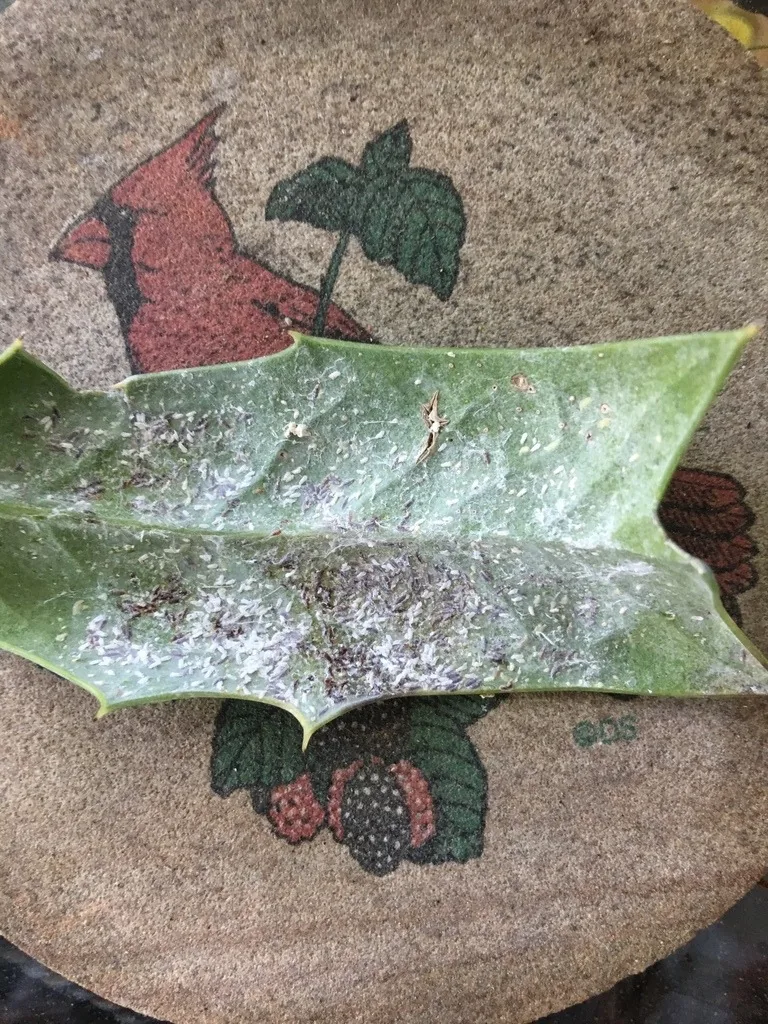
How to identify it
Where it lives
In the U.S. it's found in Florida, Georgia, South Carolina and Louisiana, and it has spread to Texas and California.[1]
Biology and life cycle
It's active year round in Florida but slows in colder Georgia and the Carolinas, with fewer generations.[1]
Eggs are laid in two rows under the female's cover.[1]
Damage and signs
- It drains nutrients, yellowing camellia and holly leaves; it's also a pest of tea, citrus, dogwood and olive.[1]
Health risk
It feeds on plants only; UF/IFAS mentions no risk to people.[1]
Control
Traps and physical control
On camellias, prune small interior non-flowering branches in February or March to improve air flow and spray coverage.[1]
Pesticides
In cooler areas spray in spring as eggs hatch, covering leaf undersides thoroughly; two or three applications 7 to 10 days apart are needed.[1]
Common questions
Sources
- University of Florida IFAS Extension (Featured Creatures), “Tea Scale, Fiorinia theae (EENY-250).” edis.ifas.ufl.edu/publication/IN522 (accessed 2026-10-06)
- iNaturalist, “Fiorinia theae taxon page (order and family).” www.inaturalist.org/taxa/1043502 (accessed 2026-10-06)