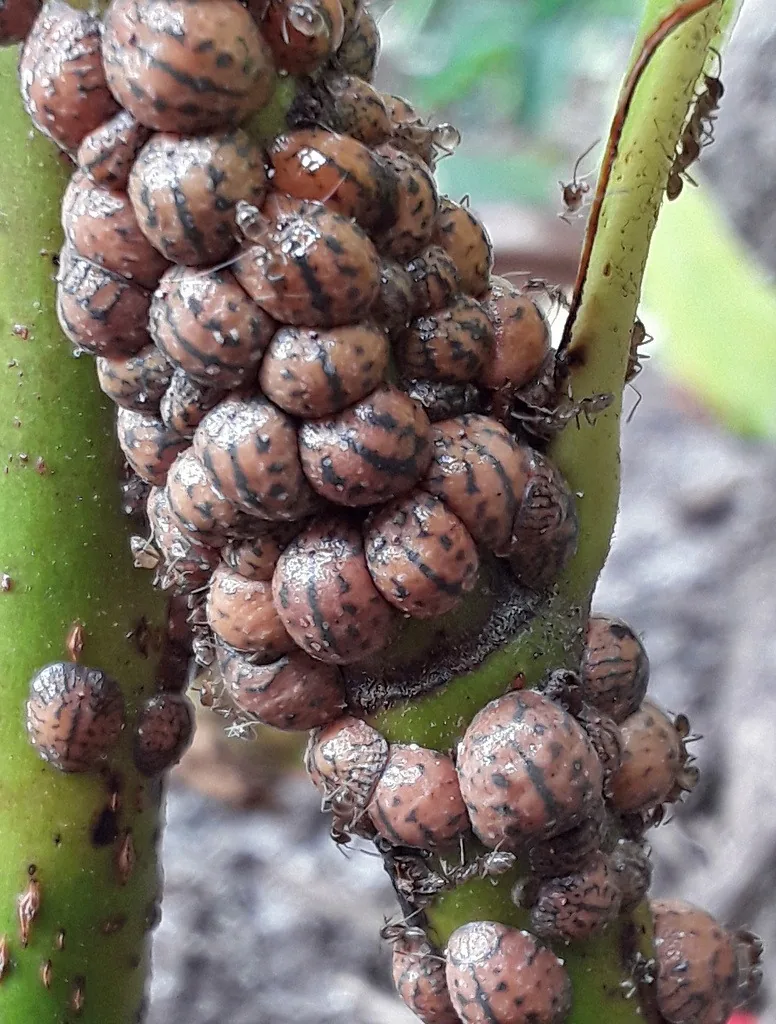
How to identify it
Where it lives
It infests poplar, tulip poplar, linden, redbud and magnolia.[1]
Biology and life cycle
It overwinters as immatures; each female can produce up to 3,000 young, which hatch around August.[1]
There's one generation a year, and crawlers can spread by wind or birds.[1]
Damage and signs
- Feeding thins the canopy and causes twig dieback, and honeydew grows black sooty mold.[1]
Health risk
It feeds on plants; UK Extension mentions no risk to people.[1]
Control
Pesticides
Options include dormant oil in winter for overwintering immatures, targeted crawler sprays, or a systemic product.[1]
Common questions
Sources
- University of Kentucky Entomology (ENTFACT), “Managing Tuliptree Scale (ENTFACT-435).” entomology.mgcafe.uky.edu/ef435 (accessed 2026-10-06)
- iNaturalist, “Toumeyella liriodendri taxon page (order and family).” www.inaturalist.org/taxa/507877 (accessed 2026-10-06)