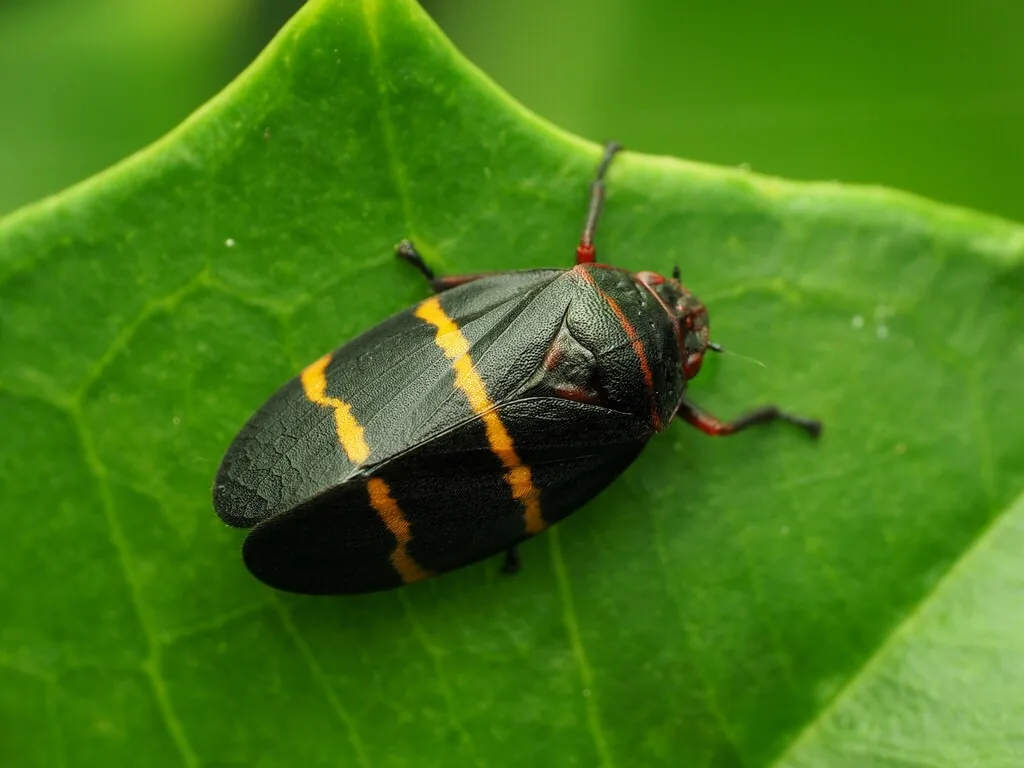
How to identify it
Where it lives
NC State reports it as a growing turf pest, especially in eastern North Carolina, and Clemson covers it in South Carolina lawns.[1][2]
Biology and life cycle
Eggs overwinter in grass stems, under leaf sheaths and in debris; most hatch in March and April in South Carolina.[1][2]
Nymphs feed for about a month, a full life cycle takes about two months, and there are two generations a year, with adults appearing in June and peaking in August and September.[1][2]
Adults hide in hollies and shrubs by day, are most active at night and may come to lights.[2]
Damage and signs
Health risk
Control
Prevention
Check for nymphs by parting the grass near the soil line, especially in July, and recheck after treatment since reinfestation is quick.[1][2]
Sanitation
Damage is worst where thatch is thick, so dethatch and topdress when appropriate.[2]
Pesticides
If treatment is needed, aim it at the nymphs late in the day, when they are higher on the plants.[1][2]
Common questions
- What is the white foam in my lawn?
- Spittle masses made by twolined spittlebug nymphs feeding at the base of the grass.[1][2]
- Which lawns get twolined spittlebugs?
- Centipedegrass and St. Augustinegrass are preferred, especially with heavy thatch.[2]
- Are the black bugs with orange stripes on my holly the same insect?
- Yes; the adults feed on holly and other shrubs.[2]
Sources
- NC State Extension, “Twolined Spittlebugs in Turf (TurfFiles).” content.ces.ncsu.edu/twolined-spittlebug-1-in-turf (accessed 2026-10-15)
- Clemson Cooperative Extension, Home & Garden Information Center, “Two-Lined Spittlebug (HGIC 2488).” hgic.clemson.edu/factsheet/two-lined-spittlebug/ (accessed 2026-10-15)
- iNaturalist, “Prosapia bicincta taxon page (order and family).” www.inaturalist.org/taxa/126291 (accessed 2026-10-06)