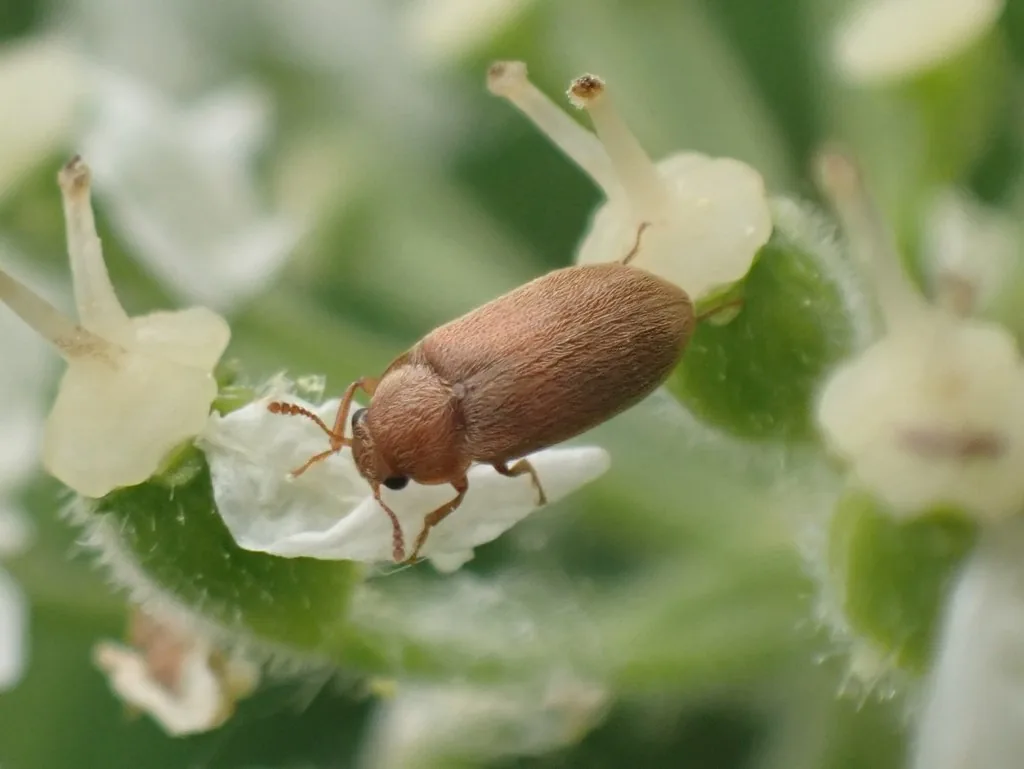
How to identify it
Where it lives
The PNW Insect Management Handbook covers it on raspberries and blackberries in the Pacific Northwest.[1]
Biology and life cycle
Adults overwinter in the soil and emerge in late April or May to feed and lay eggs on flower buds or stems.[1]
Larvae work to the center of the fruit and feed for 30 days or more, then drop to pupate in the top 3 inches of soil; there's one generation a year.[1]
Damage and signs
Health risk
It feeds on plants; the PNW Insect Management Handbook mentions no risk to people.[1]
Control
Prevention
Adults are hard to see, but careful checks of new leaves and young blossoms in spring, with a hand lens, will find them.[1]
Pesticides
The handbook lists no products for home-garden use.[1]
Common questions
Sources
- Pacific Northwest Pest Management Handbooks (OSU, WSU, University of Idaho), “Blackberry and Raspberry: Raspberry beetle (aka western raspberry fruitworm) (Insect Management Handbook).” pnwhandbooks.org/insect/small-fruit/blackberry-raspberry/blackberry-raspberry-raspberry-beetle-aka-western-raspberry-fruitworm (accessed 2026-10-06)
- iNaturalist, “Byturus unicolor taxon page (order and family).” www.inaturalist.org/taxa/215612 (accessed 2026-10-06)