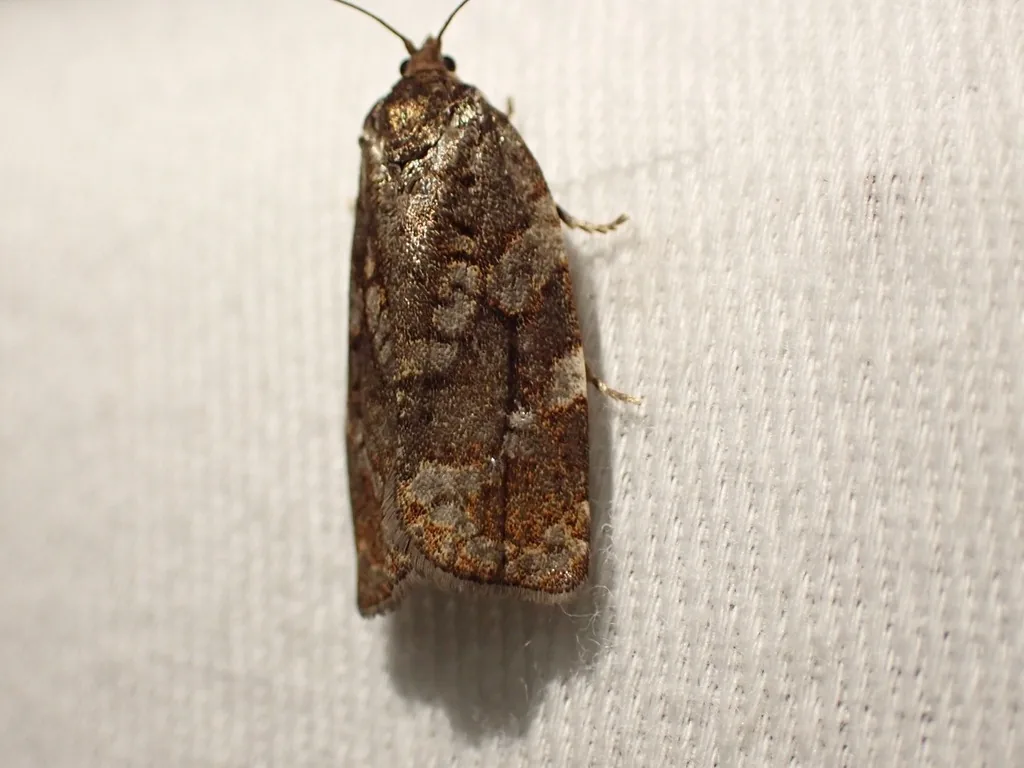
How to identify it
Where it lives
It's mainly a pest of balsam and subalpine firs and also attacks nearby spruce and Douglas-fir; the PNW handbook calls it a significant forest pest but an infrequent landscape one.[1]
Biology and life cycle
Larvae overwinter in small silk cocoons that are hard to find.[1]
In spring they emerge and spin long silk threads that help them disperse.[1]
Damage and signs
- Larvae feed on buds and foliage and may tie shoot tips together with webbing into a nest.[1]
Health risk
It feeds on plants; the PNW Insect Management Handbook mentions no risk to people.[1]
Control
Traps and physical control
Hand-pick and destroy larvae when you find them.[1]
Biological control
Parasitoids, predators and bad weather all help keep budworm numbers in check.[1]
Common questions
Sources
- Pacific Northwest Pest Management Handbooks (OSU, WSU, University of Idaho), “Fir (Abies): Spruce budworm (western) (Insect Management Handbook).” pnwhandbooks.org/insect/hort/landscape/hosts-pests-landscape-plants/fir-abies-spruce-budworm-western (accessed 2026-10-06)
- iNaturalist, “Choristoneura occidentalis taxon page (order and family).” www.inaturalist.org/taxa/1430395 (accessed 2026-10-06)