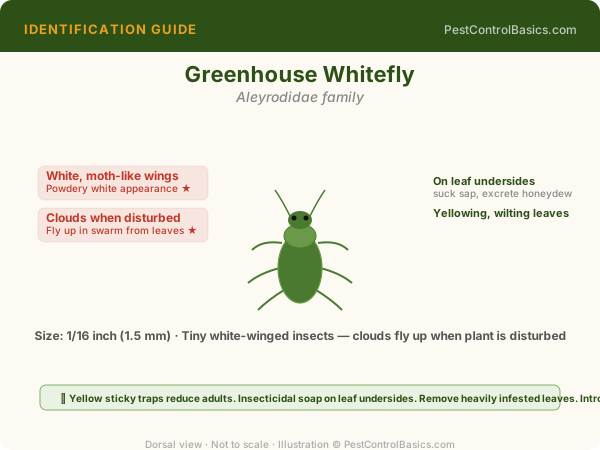
Original illustration by PestControlBasics.com. Use anatomical labels above to confirm your identification.
🔍 Identification
Greenhouse whitefly (Trialeurodes vaporariorum): wings held flat and parallel to leaf surface when at rest; nymphs have waxy marginal fringe; more susceptible to many insecticides. Silverleaf whitefly / Bemisia (Bemisia tabaci): wings held tent-like at an angle when at rest; nymphs lack waxy fringe; causes additional disorders beyond feeding damage (squash silverleaf disorder, irregular ripening in tomato). More pesticide-resistant — has developed resistance to neonicotinoids, pyrethroids, and organophosphates in commercial populations.
🧬 Biology & Behavior
Both species cause similar feeding damage but Bemisia has dramatically higher pesticide resistance across all chemical classes. In commercial production, Bemisia requires rotation of insecticide modes of action every 1-2 generations to prevent resistance development. Identification matters because treatment protocols differ significantly.
⚠️ Damage & Health Risk
Feeding damage causing yellowing; honeydew production leading to sooty mold; virus transmission (Bemisia transmits 100+ plant viruses — far more than greenhouse whitefly); physiological disorders in squash and tomato (Bemisia only).
🔧 DIY Treatment
Yellow sticky traps for monitoring; insecticidal soap for greenhouse whitefly; for Bemisia: rotate between spirotetramat (Kontos), azadirachtin (Azamax), pyrifluquinazon (Rycar), and insecticidal soap — never rely on one chemistry. Biological control: Encarsia formosa parasitoid wasp highly effective for greenhouse whitefly.
👷 When to Call a Pro
Commercial greenhouse programs use rigorous resistance management rotation protocols with Bemisia — consult University Extension or certified CCA for current resistance management guidelines for your region.