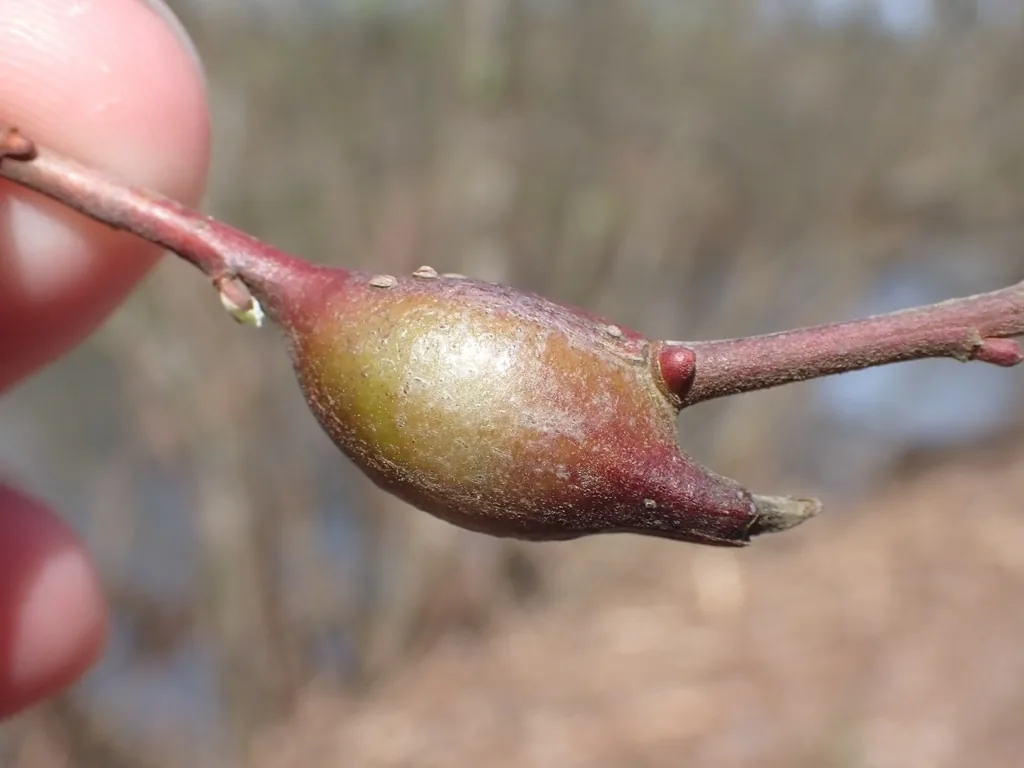
How to identify it
Where it lives
The PNW Insect Management Handbook covers it on willows in Pacific Northwest landscapes; pussy willow is reportedly a favorite host.[1]
Biology and life cycle
It overwinters as a partly grown larva in the gall; adults emerge in spring and lay eggs on swollen willow buds.[1]
Each larva tunnels into a bud and develops in a hollow cavity inside the gall; there's one generation a year.[1]
Damage and signs
- Infestations rarely injure a tree seriously, but years of heavy galling can make it look as if it had been pruned too hard.[1]
Health risk
It feeds on plants; the PNW Insect Management Handbook mentions no risk to people.[1]
Control
Traps and physical control
Prune out galls as you notice them; if you prune in fall or winter, crush or bury them, since adults can still emerge from galls left on the ground.[1]
Common questions
Sources
- Pacific Northwest Pest Management Handbooks (OSU, WSU, University of Idaho), “Willow (Salix): Willow beaked-gall midge (Insect Management Handbook).” pnwhandbooks.org/insect/hort/landscape/hosts-pests-landscape-plants/willow-salix-willow-beaked-gall-midge (accessed 2026-10-06)
- iNaturalist, “Rabdophaga rigidae taxon page (order and family).” www.inaturalist.org/taxa/83455 (accessed 2026-10-06)