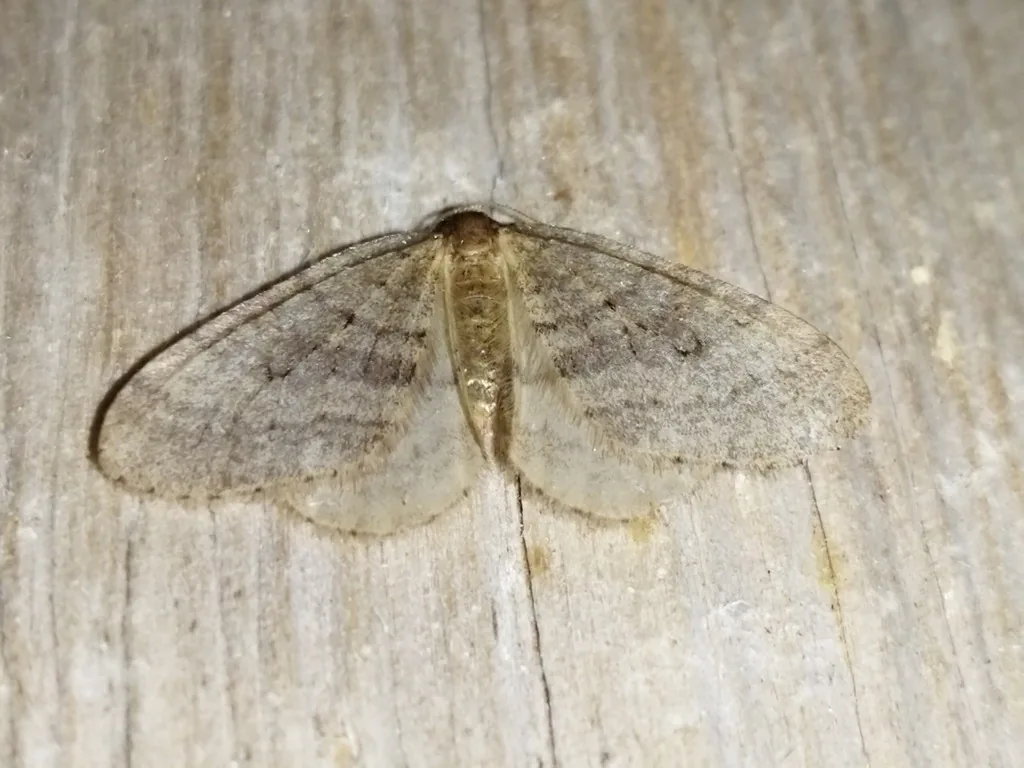
How to identify it
Look-alikes
| Look-alike | How to tell them apart |
|---|---|
| Leafrollers | Leafroller larvae roll leaves; winter moth larvae only tie them together with silk.[1] |
Where it lives
Introduced from Europe, it was found in the Pacific Northwest in 1958.[1]
Biology and life cycle
It pupates in the soil in summer and fall, and adults emerge in late fall and early winter, after the first frost.[1]
The flightless female mates, crawls up the plant and lays eggs in bud or bark crevices; larvae hatch in early spring and feed on opening buds.[1]
After several weeks, larvae drop to the soil on silk threads to pupate; there's one generation a year.[1]
Young larvae spin fine silk threads to drift on the wind to new plants; the threads can be seen in slanting morning and evening light.[1]
Damage and signs
- Larvae damage buds, blooms, leaves and fruit from March to midsummer.[1]
Health risk
It feeds on plants; the PNW Insect Management Handbook mentions no risk to people.[1]
Control
Prevention
Check plants in early spring for larvae, webbing and feeding on buds.[1]
Traps and physical control
Home gardeners can pick larvae off when found and prune out infested growth.[1]
Biological control
Lacewings, assassin bugs and spiders eat the larvae but don't regulate populations well; cold winters matter more.[1]
Pesticides
The PNW handbook's blueberry page lists no products registered for home-garden control.[1]
Common questions
Sources
- Pacific Northwest Pest Management Handbooks (OSU, WSU, University of Idaho), “Blueberry: Winter moth (Insect Management Handbook).” pnwhandbooks.org/insect/small-fruit/blueberry/blueberry-winter-moth (accessed 2026-10-06)
- iNaturalist, “Operophtera brumata taxon page (order and family).” www.inaturalist.org/taxa/60780 (accessed 2026-10-06)