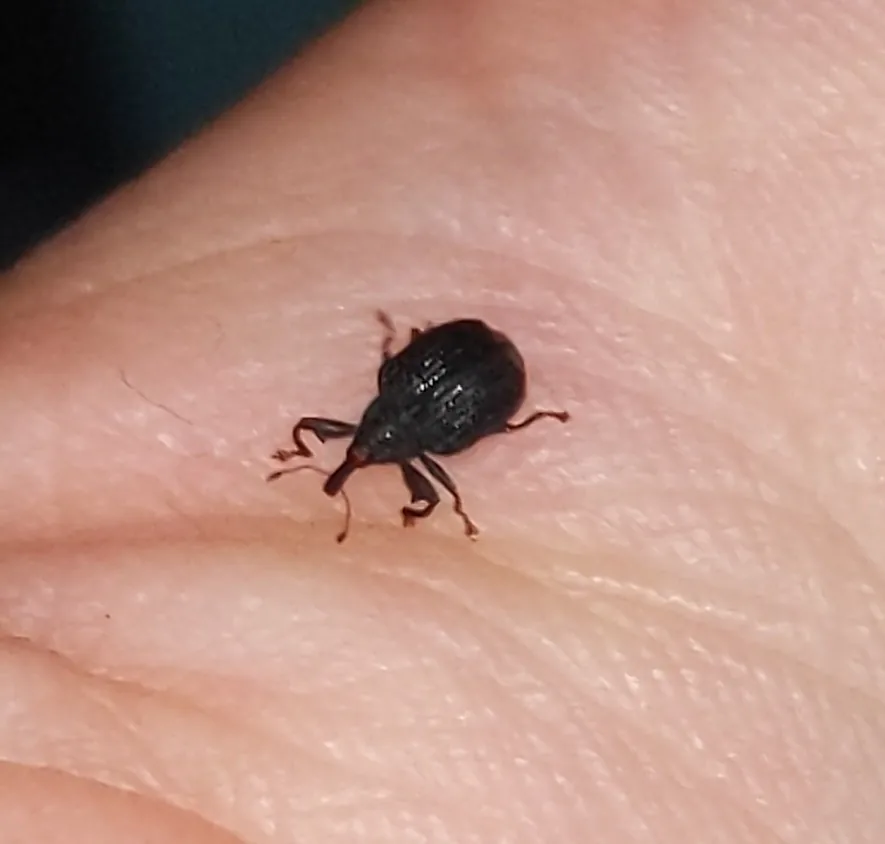
How to identify it
Where it lives
UK Extension covers it as a pest of yellow poplar, sassafras and magnolia.[1]
Biology and life cycle
Adults overwinter in leaf litter and start feeding on buds in late April and early May.[1]
Eggs go into leaf midribs; larvae mine the leaves, which turn brown and look scorched.[1]
Damage and signs
- New adults in June feed on leaf undersides, leaving yellowed spots; leaves may drop if trees are drought stressed.[1]
Health risk
It feeds on plants; UK Extension mentions no risk to people.[1]
Control
Prevention
Damage is unsightly, but the injury probably won't harm large established trees.[1]
Pesticides
Acephate or carbaryl can reduce damage when feeding shows on about 10 percent of branches.[1]
Common questions
Sources
- University of Kentucky Entomology (ENTFACT), “Yellow Poplar Weevil (ENTFACT-414).” entomology.mgcafe.uky.edu/ef414 (accessed 2026-10-06)
- iNaturalist, “Odontopus calceatus taxon page (order and family).” www.inaturalist.org/taxa/226209 (accessed 2026-10-06)