2,4-D is the most widely used selective herbicide for broadleaf weed control in lawns. It kills dandelions, clover, plantain, and other broadleaf weeds while leaving grass unharmed. Developed during WWII and registered in 1945, it remains the backbone of lawn weed control 80 years later.
🧪
Classification
Phenoxy Herbicide (Synthetic Auxin)
Signal Word
Danger to Caution (varies)
Mode of Action
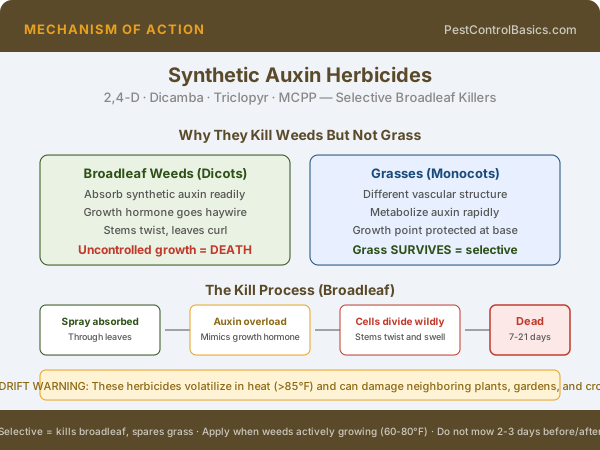
Synthetic auxin: mimics plant growth hormone at toxic levels, causing uncontrolled cell growth that kills broadleaf plants
How herbicide auxin works — illustrated mechanism of action
Broadleaf weeds in lawns: dandelions, clover, plantain, chickweed, henbit, ground ivy (creeping charlie), wild violets, spurge, oxalis, thistle, dollarweed. Does NOT kill grasses (selective). Also does not control crabgrass, nutsedge, or other grass-type weeds.
Products and Brand Names
Weed B Gon (Ortho - the most popular consumer brand), Trimec (combo with dicamba + MCPP), Triplet, Speed Zone, Gordon Amine 400, Hi-Yield 2,4-D, Southern Ag Amine 2,4-D, many store brand lawn weed killers. Almost all broadleaf lawn herbicides contain 2,4-D as a primary ingredient.
Safety and Precautions
Moderate toxicity. Skin and eye irritant. Keep children and pets off treated lawn until dry (typically 2-4 hours, or after next watering/rain). Apply when wind is calm to prevent drift to gardens and ornamentals.
Drift damage: 2,4-D vapor can drift and damage tomatoes, grapes, roses, and other sensitive broadleaf plants from surprisingly far away - even on calm days. Ester formulations volatilize in heat above 85F. Use amine formulations in hot weather to reduce drift risk.
Amine vs Ester: Amine formulations (most consumer products) are water-soluble, lower drift risk, and safer in hot weather. Ester formulations penetrate waxy leaves better (more effective on tough weeds) but volatilize in heat and drift more. Homeowners should almost always choose amine.
Pro Tips
When to apply: Best results when weeds are actively growing (spring and fall). Daytime temperatures of 60-80F are ideal. Do not apply during drought stress or extreme heat. Do not mow for 2-3 days before or after application (weeds need leaf surface to absorb herbicide).
Spot treatment vs broadcast: For a few scattered weeds, spot-spray with a pump sprayer. For widespread weed pressure, broadcast with a hose-end sprayer. Spot treatment uses dramatically less herbicide and is better for the environment.
The clover question: 2,4-D kills clover, which many modern homeowners WANT in their lawn (nitrogen fixation, pollinator habitat). If you want to keep clover, use targeted spot treatment on just the weeds you do not want, or consider whether a clover-inclusive lawn is right for you.
Combination products: Most consumer lawn herbicides combine 2,4-D with dicamba and MCPP/MCPA for broader weed spectrum. These three-way mixes are more effective than 2,4-D alone and are the standard for professional lawn care.
🐛 Pests This Treats — Learn More
Click any pest to view its full identification guide, biology, and treatment options.
Follow the product label. Keep pets out of treated areas until completely dried (2–4 hours for sprays). Once dry, treated surfaces pose minimal risk to dogs and cats.
Q: Can I use 2 4 d herbicide indoors?
Check the specific product label — formulations vary. Baits and dusts often have indoor labeling; concentrates and granulars are typically outdoor.
Q: How long does 2 4 d herbicide last after application?
Residual varies by formulation, surface type, weather, and UV exposure. Indoor applications last longer than outdoor. Check the product label for re-application intervals.
Q: What should I do if exposed?
Remove contaminated clothing, wash skin with soap and water. For eye contact, rinse 15–20 minutes. For ingestion or severe symptoms, call Poison Control (1-800-222-1222). Have the product label available.
📋 Safety Data Sheet (SDS)
📋
2,4-D Selective Lawn Herbicide — Safety Data Sheet
View the official SDS document for this product directly on the CDMS label database.
Did you know? 2,4-D was developed as part of biological warfare research during WWII - scientists were looking for chemicals that could destroy enemy food crops. Instead, they discovered the selective broadleaf herbicide that would revolutionize lawn care. It was one of the ingredients in Agent Orange (the other was 2,4,5-T, now banned).
🔮
Reviewed by Derek GiordanoContent reviewed by a licensed pest management professional. Last reviewed: April 2026.