🧪 Active Ingredient Profile
Fipronil — Termidor, Frontline & Ant Bait Applications
Phenylpyrazole · CAS 120068-37-3
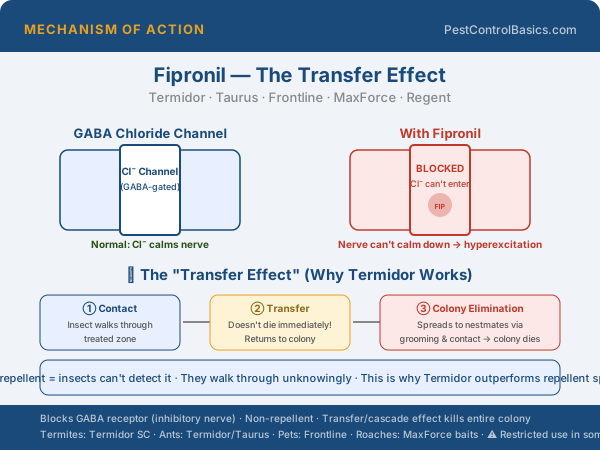
Fipronil is the active ingredient in Termidor (the gold standard termite treatment), Frontline flea products, and several ant baits. Its non-repellent, slow-acting properties make it ideal for products that need to transfer through colonies.
Mode of Action
Blocks GABA-gated chloride channels in insect nervous systems — distinct from pyrethroids (sodium channels); highly effective at low concentrations
🦺 Personal Protective Equipment (PPE)
Required PPE varies by formulation and application method. Always read the product
label — the label is the law and overrides general guidance.
- Chemical-resistant gloves
- Eye protection when mixing
- Long sleeves and pants
- Keep children and pets out during application
- Wash hands after handling
⚠️ Label compliance: The product label is a legal document under FIFRA.
Applying any pesticide in a manner inconsistent with its label is a federal violation.
📋 Application Best Practices
- Read the full label before each use — formulations change and label requirements may differ from previous products you've used.
- Apply at the right rate — more is not more effective. Over-application wastes product, creates unnecessary exposure, and is illegal.
- Target harborage and entry points, not just visible pest activity. Treating where pests hide is more effective than treating where you see them.
- Record the application — note the product, rate, area treated, and date. Required for commercial applications; best practice for homeowners.
- Ventilate the treatment area after application and before re-entry.
💡 Storage: Store in original container, away from children, in a cool dry location. Never transfer to food or beverage containers. Check local regulations for disposal — most areas have household hazardous waste collection events.
🌿 Environmental & Ecological Impact
🐝 Bees / PollinatorsVERY HIGH
🐟 Fish / Aquatic LifeMODERATE
🐦 BirdsMODERATE
🐕 Mammals / PetsLOW
🦐 Aquatic InvertebratesVERY HIGH
💡 Extremely toxic to bees and aquatic invertebrates. Used at very low concentrations in baits to minimize exposure.
❓ Frequently Asked Questions
Q: Is fipronil safe for pets?
Follow the product label. Keep pets out of treated areas until completely dried (2–4 hours for sprays). Once dry, treated surfaces pose minimal risk to dogs and cats.
Q: Can I use fipronil indoors?
Check the specific product label — formulations vary. Baits and dusts often have indoor labeling; concentrates and granulars are typically outdoor.
Q: How long does fipronil last after application?
Residual varies by formulation, surface type, weather, and UV exposure. Indoor applications last longer than outdoor. Check the product label for re-application intervals.
Q: What should I do if exposed?
Remove contaminated clothing, wash skin with soap and water. For eye contact, rinse 15–20 minutes. For ingestion or severe symptoms, call Poison Control (1-800-222-1222). Have the product label available.
🔮
Reviewed by Derek GiordanoContent reviewed by a licensed pest management professional and cross-referenced against EPA, university extension, and manufacturer technical data. Last reviewed: April 2026.