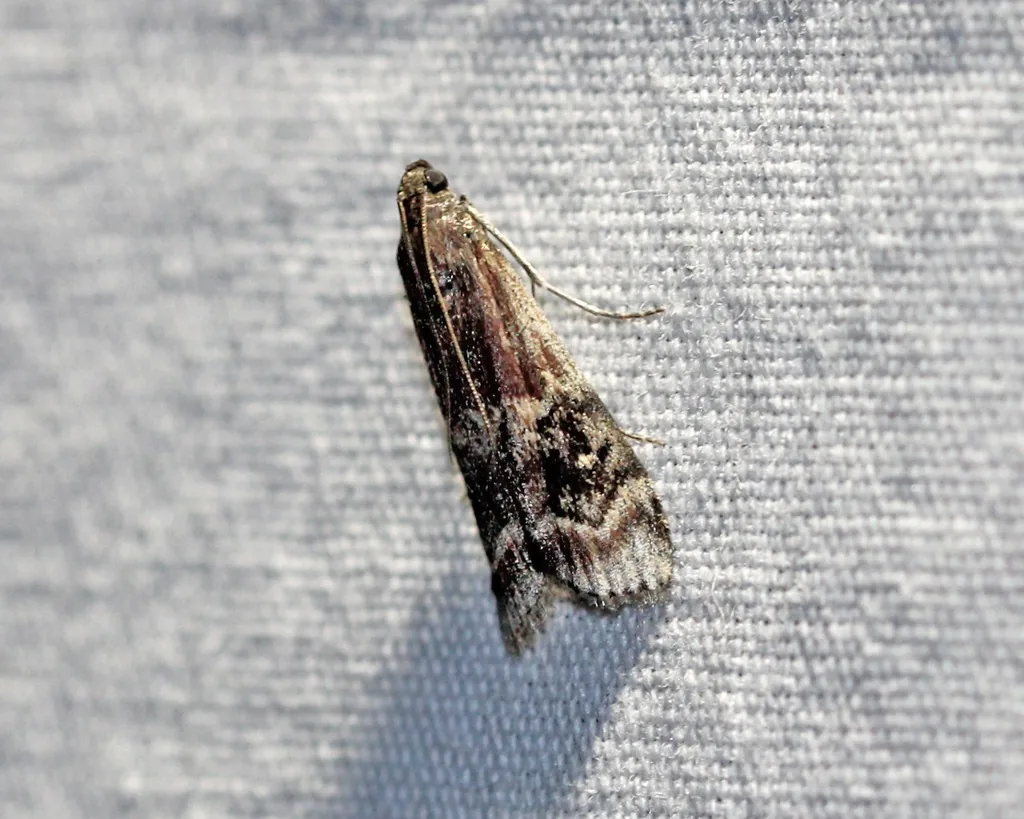
How to identify it
Look-alikes
| Look-alike | How to tell them apart |
|---|---|
| Clearwing borers | Clearwing moths, flatheaded borers and shothole borers share hosts; check larval proleg hooks with a hand lens before acting.[1] |
Where it lives
It occasionally bores in fruit and nut trees, mountain ash, olive and sycamore, mostly young trees.[1]
Biology and life cycle
Moths emerge from about April and lay eggs in bark wounds; larvae enter the wound at once.[1]
Mature larvae overwinter in cocoons within the tree, and there are three to four generations a year.[1]
Damage and signs
- Feeding weakens limbs, which often break in wind, and sometimes kills young trees.[1]
Health risk
It lives under bark; UC IPM mentions no risk to people.[1]
Control
Prevention
Avoid bark wounds from pruning, sunburn and string trimmers; whitewash young trunks with interior latex diluted with equal water.[1]
When to call a professional
Where damage is present, a trunk spray from the main crotch to the soil line usually needs a professional applicator.[1]
Common questions
Sources
- University of California Statewide IPM Program, “American Plum Borer (Pests in Gardens and Landscapes).” ipm.ucanr.edu/PMG/GARDEN/FRUIT/PESTS/amerplumbor.html (accessed 2026-10-06)
- iNaturalist, “Euzophera semifuneralis taxon page (order and family).” www.inaturalist.org/taxa/220023 (accessed 2026-10-06)