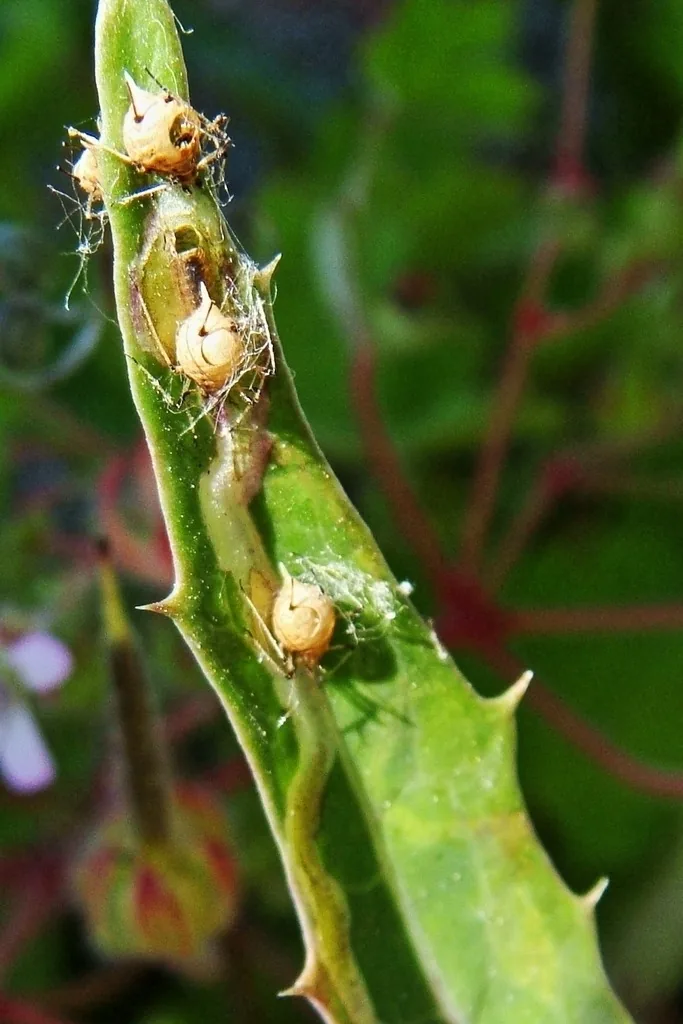
How to identify it
- Parasitized aphids become crusty, puffy, smooth mummies colored brown, gold or tan.[1][2]
- A round hole in a mummy shows where the adult wasp chewed out.[1][2]
- Adults are slender wasps 1/8 inch or less, with long, thin antennae; Lysiphlebus testaceipes is black and about 1/12 inch.[1][2]
- A parasitized aphid looks normal for about a week, so more aphids may be parasitized than you can see.[1]
Look-alikes
| Look-alike | How to tell them apart |
|---|---|
| Aphids killed by aphelinid wasps | Aphids parasitized by wasps in the family Aphelinidae turn black instead of tan.[1][2] |
| Healthy aphids | Unparasitized aphids are soft, have no holes and keep their species' normal color.[1] |
Where it lives
Lysiphlebus testaceipes occurs throughout the United States and is often the most abundant aphid parasitoid. More than a dozen Aphidius species live in California alone.[2][1]
Biology and life cycle
The female lays one egg inside an aphid, and the wasp larva feeds within it.[1][2]
About a week to 10 days later the larva kills the aphid, glues it to the leaf and pupates inside the mummy.[1][2]
Egg to adult takes about two weeks in summer, with several generations a year.[1][2]
Parasitized aphids stop reproducing within one to five days, which slows the colony even before mummies show.[3]
Damage and signs
Health risk
Parasitoid wasps, aphid parasitoids included, do not sting people.[4]
Control
Biological control
Hold off on spraying when mummies are common; in Cornell's greenbug example, an infestation usually declines fast once 20 percent are mummies.[3]
Control ants, which attack natural enemies, and grow flowering plants that give adult wasps nectar.[1][2]
Some Aphidius species are sold for release against aphids in greenhouses and crops.[1]
Common questions
- What are the brown, puffy aphids on my plants?
- They're aphid mummies: aphids killed by a parasitic wasp that is pupating, or already gone, inside.[1][2]
- Should I wash the mummies off?
- Leave them. Each intact mummy holds a wasp that will emerge and attack more aphids.[2][3]
- Do these wasps sting?
- No. Parasitoid wasps do not sting people.[4]
Sources
- University of California Statewide IPM Program, “Aphid Aphidius Parasitoids (Natural Enemies Gallery).” ipm.ucanr.edu/natural-enemies/aphid-aphidius-parasitoids/ (accessed 2026-10-06)
- University of California Statewide IPM Program, “Aphid Lysiphlebus Parasitoid (Natural Enemies Gallery).” ipm.ucanr.edu/natural-enemies/aphid-lysiphlebus-parasitoid/ (accessed 2026-10-06)
- Cornell University College of Agriculture and Life Sciences, “Biological Control: A Guide to Natural Enemies in North America: Lysiphlebus testaceipes.” biocontrol.entomology.cornell.edu/parasitoids/lysiphlebus.php (accessed 2026-10-06)
- University of Maryland Extension, “Parasitoid wasps.” extension.umd.edu/resource/parasitoid-wasps (accessed 2026-10-06)
- iNaturalist, “Aphidiinae taxon page (order and family).” www.inaturalist.org/taxa/354557 (accessed 2026-10-06)