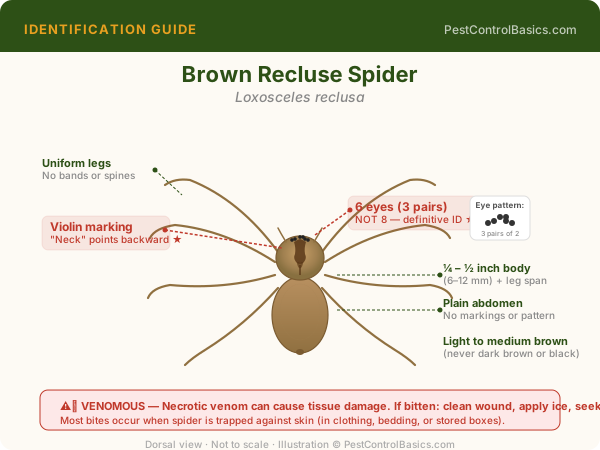
Original illustration by PestControlBasics.com. Use anatomical labels above to confirm your identification. For photo references, see the identification section below.
A Midwestern spider with an outsized reputation
The brown recluse (Loxosceles reclusa) is native to the central United States and has lived alongside humans for centuries. Despite its fearsome reputation, the species is genuinely reclusive — it avoids human contact, rarely bites unless accidentally trapped, and the majority of bites cause only mild, self-resolving symptoms.
The biggest challenge with brown recluses is misidentification. Across North America there are hundreds of spider species that resemble brown recluses. Studies examining spiders submitted as "brown recluse" from non-endemic states find the vast majority are other species entirely. Before treating for brown recluse, confirm the identification.
Brown recluses have a specific, well-documented US range: Missouri, Kansas, Arkansas, Oklahoma, Texas, Louisiana, Mississippi, Alabama, Tennessee, Kentucky, Nebraska, Iowa, Illinois, Indiana, and Ohio. They are not established in most Eastern Seaboard states, the Pacific Coast, or northern states. If you're outside this range, your spider is almost certainly something else.
The violin is secondary — six eyes are definitive
Most people focus on the violin marking to identify brown recluses, but this marking fades with age and varies in clarity. The truly definitive feature — and the one professionals use — is eye arrangement. Brown recluses have six eyes arranged in three pairs (dyads), while most spiders have eight eyes in two rows. This requires a hand lens or macro photo to confirm.
The cellar spider (Pholcus phalangioides), wolf spider, and dozens of Loxosceles relatives are routinely misidentified as brown recluses. If you're outside the documented endemic range and believe you have brown recluses, submit your specimen to a university extension entomologist before treating. Misidentification drives unnecessary pesticide use and missed actual diagnoses.
Dangerous venom — but bites are rarer than you think
Brown recluse venom contains sphingomyelinase D, an enzyme that destroys cell membranes and can cause necrotic (tissue-destroying) lesions. This is real and serious. However, the frequency and severity of bites is dramatically overstated in popular coverage.
The Bite Mechanism
Brown recluses bite defensively and only when pressed against skin. The vast majority of bites happen when a spider is trapped — rolled over in bed, wearing stored clothing, reaching into a box. A spider crawling across your skin will not bite. This means that even in heavily infested homes, bites are rare events.
What Actually Happens After a Bite
Roughly 90% of brown recluse bites resolve on their own with no intervention beyond basic wound care. About 10% develop significant necrotic wounds that may require medical treatment. Fatalities are extremely rare and almost exclusively involve young children with unusual sensitivity. The dramatic flesh-eating outcomes shown in media represent severe outlier cases.
Seek medical attention for any spider bite that: develops an expanding ring of discoloration, forms a bulls-eye pattern (dark center with pale ring and red outer ring), does not improve within 48–72 hours, or develops fever, chills, or systemic symptoms. Early intervention with wound care significantly improves outcomes. Do not attempt to cut or suction the bite site.
| Symptom | Likely Outcome | Action |
|---|---|---|
| Mild redness, minor swelling | Resolves in days | Monitor only |
| Expanding discoloration, blister | Possible necrosis | See doctor within 24 hrs |
| Bulls-eye pattern, fever | Significant necrosis risk | ER immediately |
| Child under 5, elderly, immunocompromised | Higher severity risk | ER immediately |
Understanding where they live explains why control works
Brown recluses are strongly habitat-specific. They thrive in undisturbed, dark, dry spaces — the exact conditions created by cardboard boxes, cluttered storage areas, and the spaces behind and under furniture. Understanding this drives the most effective control strategies.
The Cardboard Factor
Corrugated cardboard mimics the bark crevices brown recluses evolved to inhabit outdoors. This makes cardboard boxes in closets, garages, and basements prime harborage. Replacing cardboard storage with sealed plastic bins is one of the single most effective habitat-modification steps available.
Seasonal Movement
Brown recluses are most active from April through October. In summer months, males actively roam seeking mates — this is when most accidental contact (and therefore bites) occur. In winter they become largely sedentary, retreating deep into harborage. Populations persist year-round; there is no die-off in winter.
Contact insecticide sprays are largely ineffective against brown recluses because spiders don't groom like insects — they don't ingest residual insecticide from surfaces they walk on. The spider's leg tips contact treated surfaces, but the tarsal contact area is small. Desiccants (CimeXa) and physical barriers (glue boards) work far better than spray chemistry for spider control.
Active spring through fall — winter sedentary but present
Activity peaks June through August when males roam for mates. This is when most encounters and bites happen — not because spiders become aggressive, but because they are moving more and are more likely to end up in clothing, bedding, or shoes. Winter populations persist but are sedentary; year-round vigilance in endemic areas is warranted.
Desiccants + glue boards + habitat modification
The correct control sequence is: declutter → replace cardboard → CimeXa dust voids → glue board monitoring → perimeter treatment. Spray barriers alone are largely ineffective. Here's exactly what to use and how.
Spiders don't groom and don't ingest insecticide residue from treated surfaces. CimeXa (amorphous silica gel) works differently — it physically destroys the spider's waxy cuticle, causing death by dehydration. No resistance possible. Applied as a fine dust in wall voids, crawlspaces, and along baseboards, it remains active for years.
Chemical treatments manage populations but don't eliminate harborage. Habitat modification reduces the carrying capacity of your home — fewer suitable hiding places means fewer brown recluses long-term.
DIY treatment is effective for mild-to-moderate infestations when done correctly. If glue board monitoring shows captures in the dozens per trap per week, or if bites are occurring despite treatment, professional intervention with commercial application equipment reaching deep void spaces will achieve faster results.