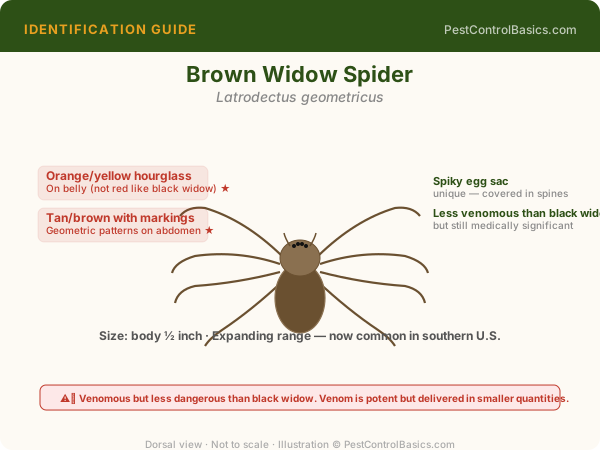
Original illustration by PestControlBasics.com. Use anatomical labels above to confirm your identification.
Juvenile black widows and males have different coloration — tan, brown, or gray with various markings. Only adult females have the classic shiny black + red hourglass appearance. If you find a tan or brown spider in a black widow habitat, don't assume it's harmless — treat any spider in a protected, ground-level web location with appropriate caution.
The Three U.S. Black Widow Species
Where black widows live — and why bites happen
Black widows are not aggressive — they bite defensively when pressed against skin in their harborage. Understanding where they hide explains when bites happen and how to prevent them.
The vast majority of black widow bites occur when someone reaches into a dark space without looking — grabbing firewood, putting on shoes or gloves left outdoors, or reaching under a shelf. Simple habit changes prevent nearly all bites: shake out gloves and shoes before wearing, use a flashlight before reaching into dark spaces, and wear leather gloves for outdoor work around potential habitats.
What happens after a black widow bite
Black widow venom is a neurotoxin (alpha-latrotoxin) that causes massive release of neurotransmitters, leading to continuous muscle contractions. This produces the hallmark symptom complex called latrodectism.
Initial bite: Often described as a pinprick — may be painless initially. Two small fang marks may be visible. The bite site may become slightly red and swollen.
30–60 minutes later: Muscle cramps and pain begin, often starting at the bite site and spreading. The classic symptom is severe abdominal rigidity and cramping — often misdiagnosed as appendicitis.
Full syndrome (1–3 hours): Severe muscle pain (especially back, chest, abdomen), sweating, nausea, headache, increased blood pressure, and anxiety. Symptoms peak at 8–12 hours.
Who is most at risk: Children, elderly, and people with heart conditions face the highest risk of serious complications. Healthy adults rarely experience life-threatening effects — fatalities are extremely rare with modern medical care.
Even if symptoms are mild initially, go to an emergency room or call Poison Control (1-800-222-1222). Antivenom (Antivenin Latrodectus mactans) is available and effective. Pain management with opioids or benzodiazepines is often needed. Do not apply ice, cut the bite, or try to suck out venom — these do not help and can cause additional harm.
How to eliminate black widows effectively
Why sprays fail: Spiders are not insects. They don't groom themselves the way insects do, so they don't pick up residual insecticide from treated surfaces. A spider can walk across a freshly sprayed surface and be unaffected. Contact kill requires a direct hit on the spider.
CimeXa desiccant dust — the right tool: CimeXa (amorphous engineered silica) works physically rather than chemically. It damages the spider's cuticle and causes dehydration and death within 24 hours of contact. Spiders cannot avoid this or develop resistance. Apply with a puffer bulb to cracks, under shelves, into wall voids, along baseboards in garages, and in crawlspaces. One application lasts months.
Physical removal: In areas you can see clearly, a vacuum cleaner with extension nozzle is extremely effective — immediately sucks up spider and web. Empty the canister into an outdoor trash bag immediately.
Glue board traps: Placed along garage walls and in crawlspace corners catch and confirm black widow activity. Monitor weekly.
Habitat reduction: Move firewood away from the structure. Clear clutter and stored items from garage floors — anything that creates dark, protected ground-level harborage. Seal gaps that allow black widow access to living areas.
Apply CimeXa as a thin, even dust layer — not a thick pile. Use a puffer or Pest Pistol duster to blow dust into: wall voids through outlet boxes, under garage shelving, in crawlspace corners, under patio furniture, and in any dark gap at ground level. A light application that settles into a fine coating on surfaces is far more effective than a heavy deposit. Wear a dust mask during application.