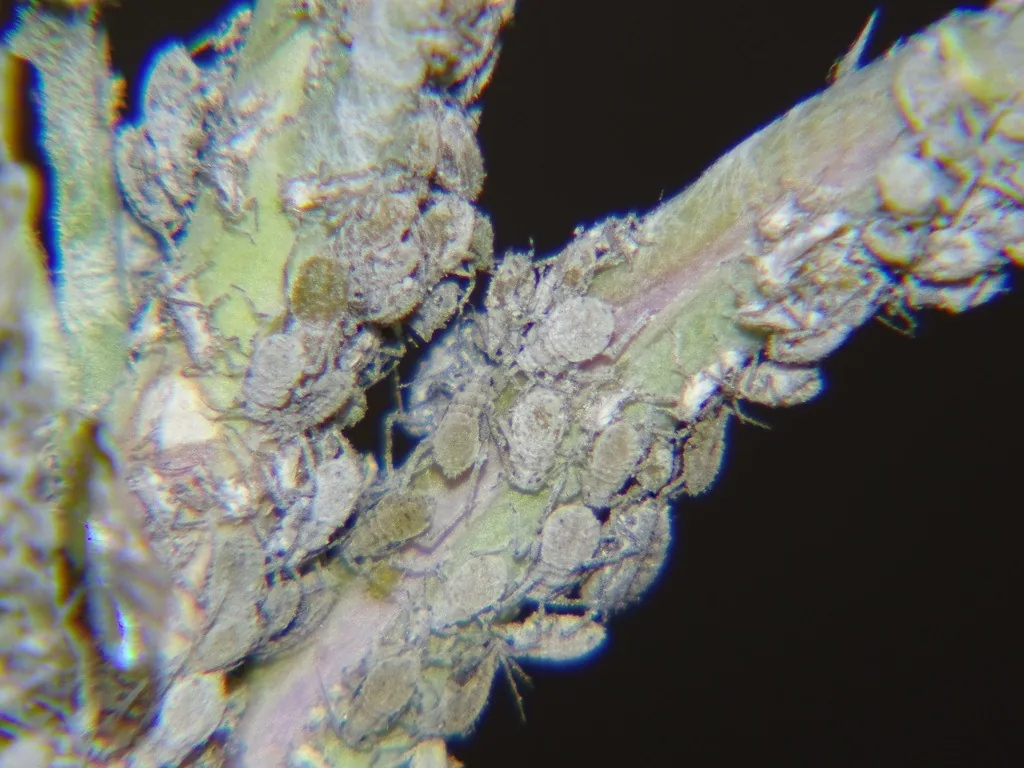
How to identify it
Look-alikes
| Look-alike | How to tell them apart |
|---|---|
| Other aphids | Short cornicles and a waxy coat distinguish cabbage aphids from most aphids on brassicas.[1] |
Where it lives
Native to Europe, it's now worldwide and widely distributed across the U.S., where it's more of a pest in the southern states.[1]
Biology and life cycle
Aphids are serious pests in cool and dry conditions.[1]
Damage and signs
- Feeding causes yellowing, wilting and stunting; honeydew draws ants that protect aphids from enemies.[1]
Health risk
It feeds on plants; UF/IFAS mentions no risk to people.[1]
Control
Prevention
Ants protect aphids from natural enemies, so ant control helps.[1]
Biological control
Cultural and biological control can reduce infestations and pesticide use.[1]
Common questions
Sources
- University of Florida IFAS Extension (Featured Creatures), “Cabbage Aphid, Brevicoryne brassicae (EENY-577).” edis.ifas.ufl.edu/publication/IN1014 (accessed 2026-10-06)
- iNaturalist, “Brevicoryne brassicae taxon page (order and family).” www.inaturalist.org/taxa/326910 (accessed 2026-10-06)