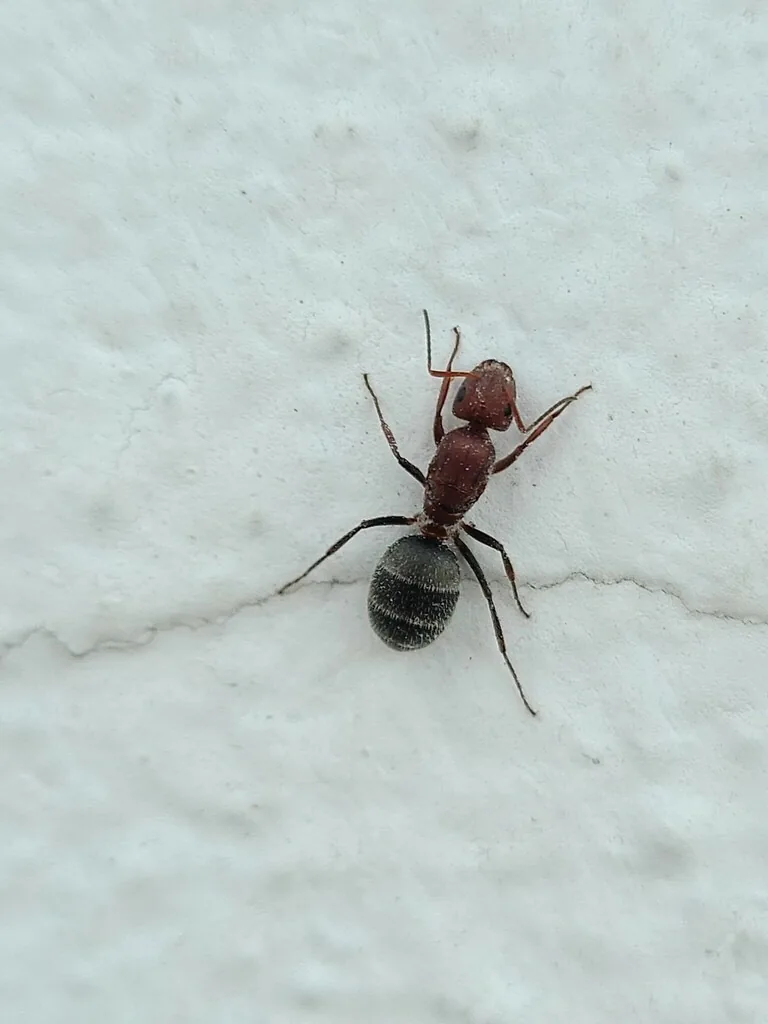
How to identify it
Look-alikes
| Look-alike | How to tell them apart |
|---|---|
| Florida carpenter ant | A larger relative often found nearby.[1] |
Where it lives
Exotic to Florida, it's established in Sarasota, Tampa, east Miami and the Florida Keys, and it's widespread in Cuba and from Mexico to Colombia.[1]
Biology and life cycle
A single queen usually starts a colony; winged reproductives appear when colonies are two to five years old.[1]
Damage and signs
- It's rarely seen inside but may enter under doors and through cracks around windows.[1]
Health risk
It's a nuisance ant; UF/IFAS mentions no health risk to people.[1]
Control
Keep them out
Caulk exterior openings and add weather stripping.[1]
Pesticides
Baits along trails help reduce colonies; residual sprays on exteriors and direct nest treatments also work.[1]
Common questions
Sources
- University of Florida IFAS Extension (Featured Creatures), “Compact Carpenter Ant, Camponotus planatus (EENY-189).” edis.ifas.ufl.edu/publication/IN346 (accessed 2026-10-06)
- iNaturalist, “Camponotus planatus taxon page (order and family).” www.inaturalist.org/taxa/300418 (accessed 2026-10-06)