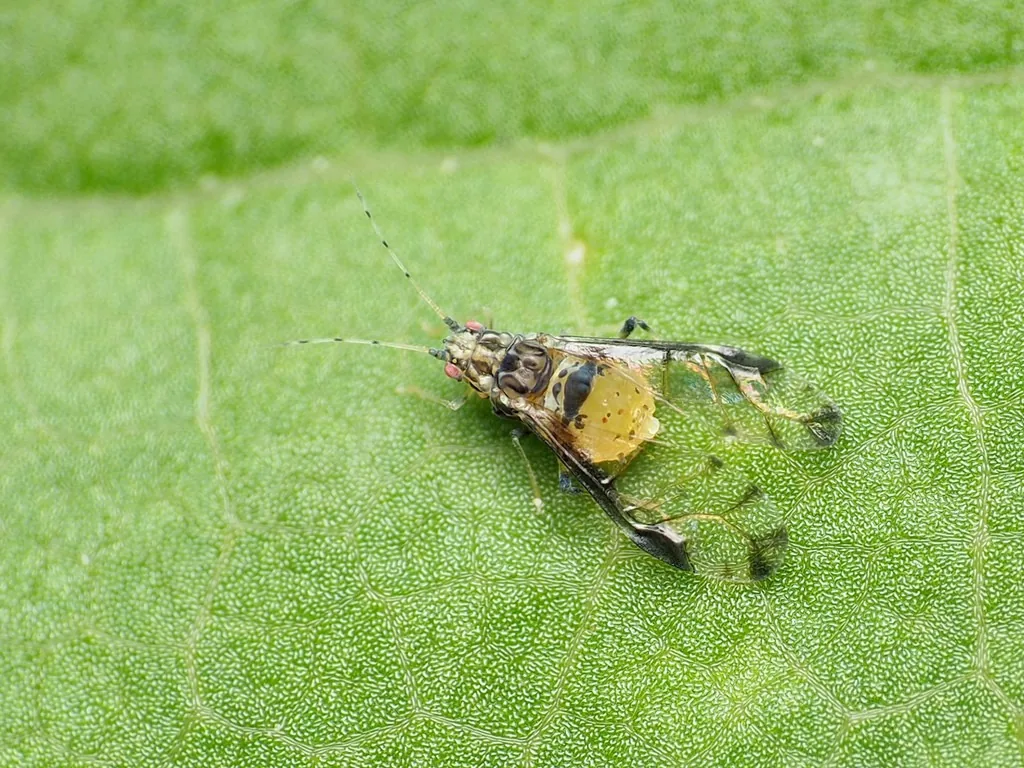
How to identify it
Look-alikes
| Look-alike | How to tell them apart |
|---|---|
| Other aphids | Unlike most aphids, every adult crapemyrtle aphid has wings.[1] |
Where it lives
It occurs throughout the tropics, Asia, the southeastern U.S., Hawaii and anywhere crapemyrtle is grown.[1]
Biology and life cycle
Eggs hatch in early spring as buds break; females give birth to live young through spring and summer.[1]
Damage and signs
- Honeydew grows sooty mold on leaves; there's no permanent damage or long-term loss of vigor.[1]
Health risk
It feeds on crapemyrtle sap; UF/IFAS mentions no risk to people.[1]
Control
Biological control
Lady beetles, lacewings and syrphid fly larvae feed on them, though populations often escape control in late July and August.[1]
Pesticides
Use insecticidal soap only as a last resort when populations escape natural control.[1]
Common questions
Sources
- University of Florida IFAS Extension (Featured Creatures), “Crapemyrtle Aphid, Tinocallis kahawaluokalani (EENY-365).” edis.ifas.ufl.edu/publication/IN663 (accessed 2026-10-06)
- iNaturalist, “Sarucallis kahawaluokalani taxon page (order and family).” www.inaturalist.org/taxa/506298 (accessed 2026-10-06)