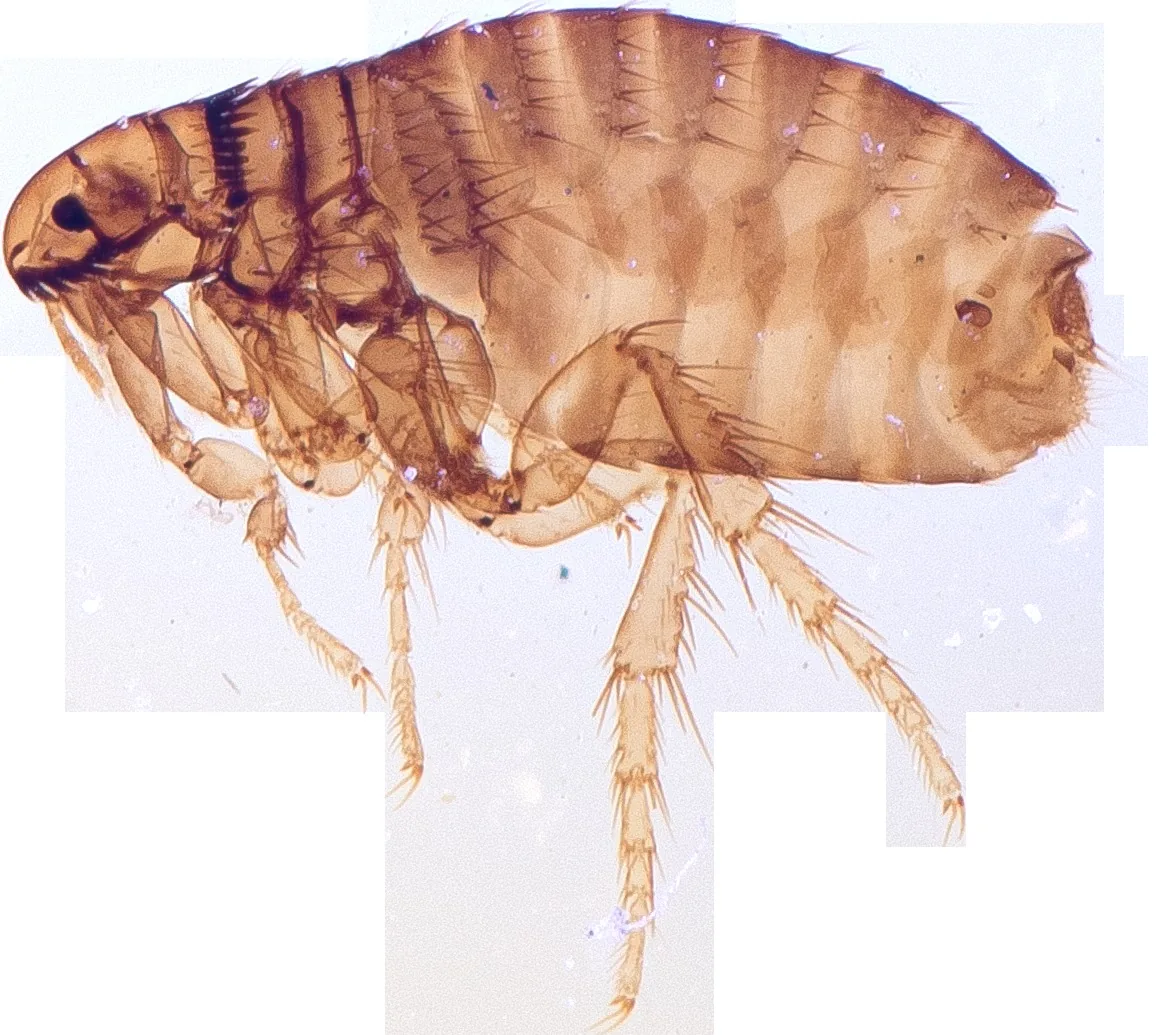
How to identify it
Look-alikes
Where it lives
It occurs worldwide and has been reported from 31 U.S. states and the District of Columbia.[1]
Biology and life cycle
The life cycle takes two to four weeks, so there can be many generations a year; numbers peak in late summer or early autumn.[1]
Adults usually stay on one host for life, and hosts include dogs, cats, rabbits, rats, foxes and people.[1]
Health risk
It can carry the dog tapeworm, which people, especially children playing with pets, can get by swallowing an infected flea.[1]
Control
Prevention
Confirm fleas first: look for fleas on pets, bites around your ankles, black flea dirt, or comb your pet or walk in white socks.[1]
Sanitation
Vacuum carpets and wash pet bedding; outdoors, wash dog house bedding and set it in the sun.[1]
Traps and physical control
Bathe pets and comb them repeatedly with a metal flea comb to remove adults.[1]
Pesticides
Use an EPA-approved topical flea treatment, after checking with your veterinarian about your dog's health and breed sensitivities.[1]
Common questions
Sources
- University of Florida IFAS Extension (Featured Creatures), “Dog Flea, Ctenocephalides canis (EENY-589).” edis.ifas.ufl.edu/publication/IN1033 (accessed 2026-10-06)
- iNaturalist, “Ctenocephalides canis taxon page (order and family).” www.inaturalist.org/taxa/307364 (accessed 2026-10-06)