Disease Vector 95% on Pet & in Home 3-Stage Protocol Required

Fleas

Ctenocephalides felis โ€” Cat Flea (most common in U.S.)

Here's the insight that changes everything: only 5% of a flea infestation is the adult fleas you can see on your pet. The other 95% โ€” eggs, larvae, and pupae โ€” are in your carpets, furniture, and yard. Treating only the pet fails every time.

Adults on PetOnly 5% of infestation
Eggs per Day40โ€“50 per female
Jump Height13 inches โ€” 150x body height
Pupa DormancyUp to 12 months
๐Ÿถ
Quick Reference Card
Cat Flea (Ctenocephalides felis)
Size1โ€“2mm โ€” barely visible to naked eye
ColorDark brown, flattened side-to-side
MovementJumps โ€” does not fly
TestWhite sock walk โ€” fleas are visible on white
Flea DirtTiny black specks that turn red when wet
Treat Pet?Yes โ€” but only step 1 of 3
IGR Required?Yes โ€” kills eggs & larvae
Timeline8โ€“12 weeks for full elimination
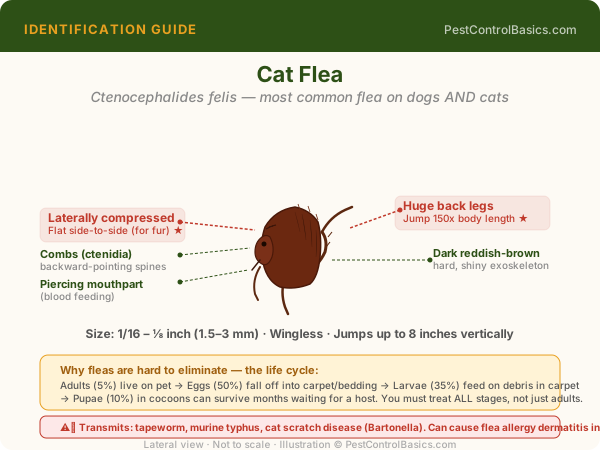
๐Ÿ“ FIELD GUIDE ILLUSTRATION
Cat flea (Ctenocephalides felis) identification illustration with labeled anatomical features โ€” PestControlBasics.com

Original illustration by PestControlBasics.com. Use anatomical labels above to confirm your identification.

The Flea Life Cycle

Why treating only the pet always fails

This is the single most important thing to understand about flea control. Fleas have a 4-stage life cycle, and each stage requires a different treatment approach. Only adult fleas live on your pet โ€” all other life stages are in your home and yard.

๐Ÿ“† The Flea Population โ€” Where They Actually Are
A typical flea infestation of 1,000 adults means there are 19,000 more in your home in other life stages.
5%
Adults
On the pet. The only ones you see.
Kill with pet treatment
50%
Eggs
Fall off pet into carpets, bedding, furniture
Kill with IGR
35%
Larvae
Live deep in carpet fibers, eating flea dirt
Kill with IGR + vacuum
10%
Pupae
Cocoon-protected. IMMUNE to all pesticides.
Only heat or vibration hatches

The Pupa Problem โ€” Why Infestations Return

Flea pupae are chemically impenetrable. Every pesticide, every spray, every fogger โ€” none of them can kill a flea pupa inside its cocoon. The pupa can remain dormant for up to 12 months, waiting for vibration, heat, and CO2 that signal a host is present. This is why people return from vacation to an explosion of fleas โ€” the pupae hatched all at once when footsteps triggered emergence.

The only ways to force pupa hatching so new adults contact your treatment: aggressive vacuuming (vibration triggers emergence), walking through treated areas, and heat treatment. This is also why you must maintain treatment for 8โ€“12 weeks โ€” until every dormant pupa has hatched and died.

๐Ÿ’ก The Flea Comeback Explanation

"I treated everything and they came back!" โ€” Almost always, this means pupae hatched after treatment. It is not treatment failure. It is the lifecycle working as designed. The solution: continue IGR treatment for the full 8โ€“12 weeks, vacuum aggressively every 2โ€“3 days to stimulate hatching, and re-treat pet monthly.

The 3-Stage Protocol

All three stages simultaneously โ€” not sequentially

The critical rule: treat the pet, the home, and the yard on the same day. Treating one at a time just moves the infestation around. All three stages must be addressed at the same time for the protocol to work.

๐Ÿถ
Stage 1
Treat the Pet
Veterinarian-recommended oral or topical treatment (Frontline, Advantage, NexGard). Vet prescription products significantly outperform over-the-counter alternatives. Bathe pet before applying topical. Treat ALL pets in the home simultaneously โ€” even those showing no signs. Continue monthly.
โš  Treat all pets on the same day
๐Ÿ 
Stage 2
Treat the Home
Vacuum all carpets, rugs, furniture โ€” every surface. Apply an IGR (methoprene or pyriproxyfen) spray to all carpets, furniture bases, and pet bedding. Replace pet bedding. Vacuum every 2โ€“3 days for 8 weeks to stimulate pupa hatching. Adult fleas emerging from cocoons contact IGR-treated surfaces and cannot reproduce.
โš  IGR is required โ€” adulticide alone fails
๐ŸŒฟ
Stage 3
Treat the Yard
Apply bifenthrin or permethrin to lawn and yard areas where pets spend time. Focus on shaded areas under decks, along fences, and in dense groundcover โ€” fleas cannot survive in sunny, dry areas. Treat monthly during flea season. Without yard treatment, pets are re-infested immediately after every outdoor visit.
โš  Skip yard treatment and the cycle restarts
๐Ÿงช
IGR โ€” Most Important Product
Precor IGR (Methoprene) โ€” Carpet & Furniture Spray
Why IGR is essential: Insect Growth Regulator โ€” mimics juvenile hormone to prevent flea larvae from maturing into reproducing adults, and prevents eggs from hatching. Does not kill adult fleas but breaks the reproductive cycle completely. Apply to all carpets, rugs, upholstered furniture, and along baseboards. One treatment lasts 7 months indoors (UV-protected). This is the #1 most important product in a flea protocol.
โ˜…โ˜…โ˜…โ˜…โ˜…
Essential
๐ŸŒฟ
Adulticide + IGR Combo โ€” Home Spray
Virbac Knockout Area Treatment (Permethrin + Precor)
How it works: Combines a contact adulticide (permethrin) with methoprene IGR in a single carpet and furniture spray. The permethrin kills adult fleas emerging from carpet and furniture on contact; the IGR prevents new generations. The gold standard home flea spray โ€” professional-quality in a consumer package. Treat every carpet, rug, couch, chair base, under beds, and along baseboards.
โ˜…โ˜…โ˜…โ˜…โ˜…
Gold Standard
๐ŸŒฟ
Yard Treatment โ€” Outdoor Source Control
Bifenthrin Yard Spray (Talstar) โ€” Outdoor Application
How it works: Apply with a hose-end sprayer to all outdoor areas where pets spend time. Focus on shaded, moist areas โ€” fleas die in direct sunlight and dry conditions. Under decks, along fence lines, in mulch beds, and in tall grass. Provides 4โ€“8 week residual. Without this step, pets are re-infested every time they go outside, continuously restarting the indoor infestation cycle.
โ˜…โ˜…โ˜…โ˜…โ’ธ
Required Step
Prevention

Year-round flea prevention for pets and home

Monthly Pet Prevention โ€” Non-Negotiable

Year-round monthly flea prevention on all pets is the single most effective flea control strategy. Modern oral preventatives (NexGard, Simparica, Bravecto) kill adult fleas before they can lay eggs โ€” breaking the lifecycle before it starts. This is far less work and far less expensive than treating a full infestation.

Vacuum Frequency

During active infestation, vacuum every 2โ€“3 days. For prevention, weekly vacuuming of all carpets and upholstery โ€” especially in pet resting areas โ€” removes eggs before they hatch and stimulates any dormant pupae to hatch into the treated environment. Discard vacuum bags immediately in an outdoor trash container.

Yard Habitat Reduction

Fleas thrive in moist, shaded areas with organic debris. Mow regularly, remove leaf piles, and maintain 18 inches of bare soil or gravel around the foundation. If you have wildlife visitors (raccoons, opossums, feral cats) โ€” they are bringing fleas into your yard continuously. Wildlife exclusion from under decks and porches is essential for chronic flea problems.

๐Ÿถ Can Fleas Live on Humans?

Human fleas (Pulex irritans) exist but are rare in the U.S. Cat fleas (by far the most common) will bite humans opportunistically but cannot complete their lifecycle on humans โ€” they require a furry host. If you're being bitten but have no pets, the source may be a wildlife infestation under the structure (opossums, raccoons) or recently vacated flea-infested space. A flea collar placed in the vacuum bag while vacuuming kills fleas collected during cleaning.

DG
Derek Giordano
Certified Pest Control Operator ยท Former Business Owner
Derek ran his own pest control company in Florida for several years, servicing thousands of regular customers. All content is based on hands-on field experience and current EPA & university extension guidelines.
🧪 Recommended Treatment Products
Methoprene IGR Pyriproxyfen IGR Beneficial Nematodes (Yard) Permethrin (Yard Spray)
Full product guides with mixing rates, safety info, and brand comparisons. → Browse All 121 Pesticide Guides

Related Resources

๐Ÿ“š Full Pest Library๐Ÿงช DIY vs. Pro Quiz๐Ÿ’ฐ Cost Guide๐ŸŒฟ IPM Guide๐Ÿ” Find a Pro
๐Ÿ”— Related Pests
Sand Flea Flea Sand Beach Rat Flea
Compare similar pests to confirm your identification. โ†’ Use our ID Flowchart
๐Ÿ”ฎ
Reviewed by Derek GiordanoContent on PestControlBasics.com is developed with input from certified pest management professionals and cross-referenced against EPA, CDC, and university extension guidance. Last reviewed: April 2026.
๐Ÿ“š Sources: EPA Flea Control ยท CDC Flea-Borne Diseases
Published: Jan 1, 2025 ยท Updated: Apr 7, 2026

Flea infestation in homes without pets: more common than expected

Flea infestations in homes without current pets surprise residents but follow a predictable pattern. The most common scenario is a home with a recently-deceased or recently-rehomed pet; flea pupae can remain dormant in carpets for months and emerge en masse when vibration and CO2 from human movement signals their environment is again occupied. Less commonly, wildlife under or near the home โ€” feral cats, raccoons, opossums, or squirrels โ€” produces an outdoor flea population that migrates inside. Even less commonly, fleas hitchhike on humans returning from visits to infested homes or properties. Treatment in pet-free homes focuses on the environment exclusively: IGR application to carpets and upholstery, repeated vacuuming over several weeks to capture emerging adults and stimulate dormant pupae, and addressing any wildlife harborage under or near the structure. Without a current host to feed on, adult fleas have shorter lifespans, but the unfed adults will actively seek humans for blood meals, producing bites that are often the first sign of the infestation.

The role of caulk, sealant, and exclusion in long-term pest control

Sealing entry points is the most underrated pest control activity in residential settings, partly because it produces no immediate visible result and partly because it feels like home repair rather than pest control. The yield is substantial: a thoroughly sealed structure with appropriate exterior caulking, intact weatherstripping, sealed utility penetrations, and screen integrity has dramatically lower pest pressure than the same structure without those interventions. Specific high-yield targets include gaps around dryer vents, electrical and plumbing penetrations through exterior walls, gaps where siding meets foundation, mortar joints in older brick, weep holes in newer brick (which should be screened, not sealed), garage door bottom seals (where rodents commonly enter), and the gap above door thresholds where many ants and small insects pass. Materials matter: silicone-based caulk for moisture areas, polyurethane sealant for foundation cracks, copper mesh for rodent exclusion at utility penetrations (steel wool degrades), and 1/4-inch hardware cloth for larger openings. A weekend of methodical sealing in spring or fall โ€” when activity is moderate and weather permits exterior work โ€” produces lasting reduction that no single treatment matches.

Yard flea reduction and the role of microhabitat

Yard flea problems concentrate in specific microhabitats and respond well to targeted treatment of those zones rather than broadcast yard spraying. Flea larvae require shaded, humid, organic-debris-rich environments to develop; they don't survive in mowed sunny grass. The actual breeding zones in a typical yard are: shaded areas under decks and porches (where pets rest), the perimeter of crawlspace access points (where wildlife shelter), along fence lines and dense shrubs (where shade and debris accumulate), under outdoor furniture where pets lie, and beneath low spruce or evergreen branches in landscaped areas. Targeted treatment of these microhabitats with appropriate IGR plus adulticide products produces much better results than spraying the entire lawn. Sunny exposed lawn areas don't support flea development and don't need treatment. Limiting wildlife access (sealing under deck and crawlspace openings, removing feeders that concentrate animals near the home, securing trash) reduces ongoing introduction of new fleas from wildlife sources.

Pet bedding and soft furnishings as the actual reservoir

When a household has a persistent flea problem despite repeated treatment, the reservoir is usually in soft furnishings rather than in carpets in general. Pet beds, blankets the pet sleeps on, fabric furniture the pet uses, and car seat covers concentrate flea eggs and larvae because the pet spends extended time on those specific surfaces. Treating these surfaces is often more important than blanket carpet treatment, and the cleaning protocol matters: hot water washing โ€” at least 130 degrees Fahrenheit โ€” kills all life stages including eggs and pupae, while cooler washes do not. Bedding that can't be hot-washed should be replaced rather than salvaged, because the cost of replacement is small compared to the cost of an extended infestation. Vacuuming furniture seams, lifting cushions and vacuuming under and behind them, and disposing of vacuum bags or emptying canister contents into sealed outdoor trash immediately after each session removes both the visible debris and the eggs and larvae that would otherwise re-emerge. The geographic concentration of fleas in pet-favored locations makes targeted treatment of those locations dramatically more efficient than uniform whole-house treatment.

The economics of preventive versus reactive treatment

Preventive treatment costs money in a year when nothing is happening, which is precisely why most households avoid it. The decision to spend on prevention requires a willingness to compare what you actually spend against a counterfactual you never directly observe โ€” the infestations you would have had without it. This is a hard mental move, and it's why preventive pest control consistently underconsumed relative to its economic value. The way to think about it more clearly is to compute the expected annual cost of treatment for a property like yours given local pest pressure, then compare that against the cost of a preventive program. In most regions and for most property types, a preventive program comes in lower in expected value, sometimes substantially. The variance is also lower: instead of a year with zero pest spending followed by a year with a large unexpected expense, you have a small consistent line item that smooths out the cash flow. For households where unexpected expenses are particularly painful, that variance reduction is itself worth something even before counting the expected-value benefit.

Environmental treatment timing tied to pet treatment

Flea control fails routinely when the pet and the environment are treated on uncoordinated schedules, and the failure mode is predictable. If the pet receives effective flea prevention but the environment isn't treated, eggs continue to drop off the pet โ€” or off transient adults that find the pet briefly โ€” and a baseline infestation persists in the carpet. If the environment is treated but the pet has untreated flea reservoir, every cycle re-seeds the environment. The right sequence is essentially simultaneous: aggressive vacuuming and indoor insecticide treatment combined with starting the pet on a fast-acting flea preventive on the same day, with both maintained for at least eight to twelve weeks to span the full life cycle. Veterinary preventives are dramatically more effective than over-the-counter products for the pet side of this, and the cost difference is small enough that the substitution rarely makes economic sense. Households that follow this sequence resolve flea problems on a predictable timeline; households that treat the pet and environment as independent problems generally don't.

๐Ÿ—บ๏ธ US Distribution โ€” Flea Control

Common Occasional Not Present
States Present
51
Occasional
0
Primary Region
All 50 states
๐Ÿ“Š Source: University extension services, USDA, CDC vector data, and published entomological surveys.