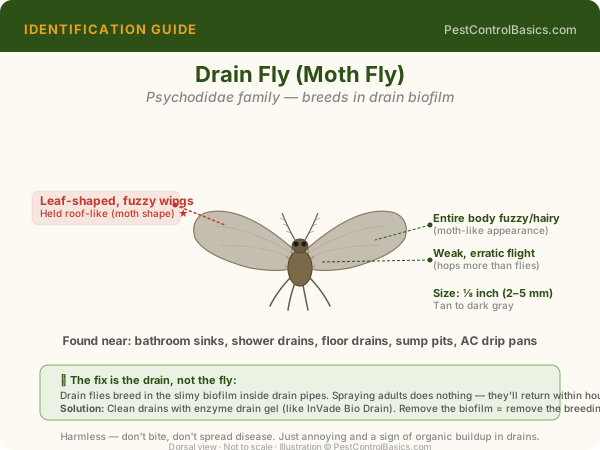
Original illustration by PestControlBasics.com. Use anatomical labels above to confirm your identification. For photo references, see the identification section below.
Why bleach fails and what actually works
Drain fly larvae live in a gelatinous organic biofilm — a mixture of soap scum, hair, food particles, grease, and bacteria — that coats the inside of drain pipes. This biofilm is not removed by bleach. Bleach kills organisms on contact, but it flows down the pipe in the water, never actually contacting and dissolving the sticky biofilm that clings to the pipe walls.
After a bleach treatment, the biofilm remains intact. The larvae that are in it survive. Within 3–5 days, those larvae become new adults. The cycle continues unchanged.
What works — enzymatic cleaners: Products like Invade Bio Drain, Green Gobbler, and American Bio-Sciences Drain Fly Killer contain bacteria and enzymes specifically designed to digest and dissolve organic biofilm. Poured down the drain and left overnight (without running water), they break down the biofilm itself — eliminating the breeding medium.
Physical cleaning first: Before applying enzymatic cleaner, use a flexible drain brush to physically scrub the P-trap and first few inches of pipe. This disrupts the biofilm and allows the enzymatic solution to penetrate more effectively.
Find every breeding drain before treating
The Tape Test: Before treatment, identify every breeding drain in the home. Place clear tape (sticky side down) over every drain at night before bed. Check the next morning. Any drain with drain flies breeding in it will have adults stuck to the tape. Test: kitchen sink, bathroom sinks, shower drains, floor drains, laundry drains, and HVAC condensate drain lines. Missing even one breeding drain means the infestation continues.
Treatment protocol:
1. Physical scrub with drain brush — every identified drain.
2. Pour enzymatic drain cleaner down each drain. Follow product directions — typically pour, let sit overnight, do not run water for 8+ hours.
3. Repeat every night for 5–7 consecutive nights.
4. The overflow drain on bathroom sinks (the small hole near the top of the basin) is a frequently missed breeding site. Treat specifically with enzymatic foam.
5. For rarely used floor drains — pour 1 gallon of water weekly to maintain the P-trap water seal that blocks sewer drain fly access.
The overflow hole near the top of bathroom sink basins connects directly to the drain line and accumulates biofilm that almost never gets cleaned. This is one of the most commonly missed drain fly breeding sites. Use an enzymatic foam spray specifically in this opening.