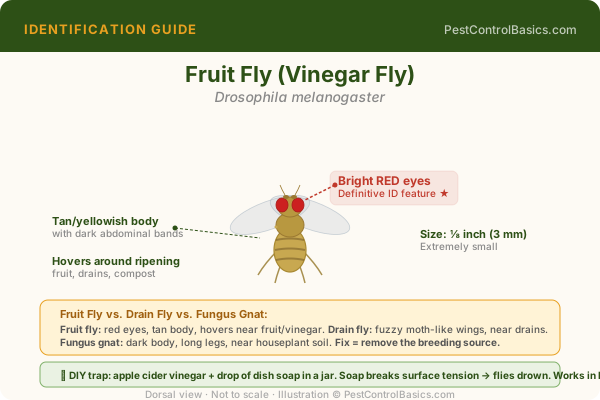
Original illustration by PestControlBasics.com. Use anatomical labels above to confirm your identification. For photo references, see the identification section below.
Why traps alone don't work
Fruit fly traps kill adult fruit flies. But a female fruit fly lays up to 500 eggs in her 10-day adult lifespan, depositing batches of eggs in any fermenting organic material she can find. If the trap catches 200 adults per day but the breeding sources are still present and producing new adults, the population is self-sustaining indefinitely.
Every breeding source must be identified and eliminated: Overripe fruit and vegetables on counters are the obvious start. But fruit flies also breed in: drains with organic buildup, recycling bins (especially with sticky residue), garbage cans, vinegar and wine bottles left open, wet mops and sponges, forgotten produce in bags or drawers, empty beer or wine bottles, and damp potting soil.
The forgotten sources: The most commonly missed fruit fly breeding sites are under refrigerators (where produce falls and ferments), inside the dishwasher door seal (food particle buildup), inside recycling bins, and the overflow drain on bathroom sinks (if connected to kitchen drains).
Source removal + trapping in sequence
Step 1 — Source elimination (Day 1): Remove ALL overripe fruit and vegetables. Empty and wash all trash cans with soap. Clean the recycling bin. Pour a quart of boiling water down kitchen and bathroom drains followed by enzymatic drain cleaner. Clean under the refrigerator. Inspect every corner of pantry and cabinets for forgotten produce.
Step 2 — Drain treatment: Invade Bio Drain or Green Gobbler enzymatic drain cleaner poured down every drain eliminates the biofilm that fruit fly larvae develop in. Apply nightly for 5 nights. This is the most commonly missed step — even a clean-looking drain can harbor fruit fly larvae in the P-trap biofilm.
Step 3 — Set traps for remaining adults: Apple cider vinegar + 2 drops dish soap in a small bowl, covered with plastic wrap with small holes poked in it. This traps the remaining adult population. Once the breeding sources are gone, the trap catches the last generation and the problem ends in 1–2 weeks.
Apple cider vinegar (not white vinegar — ACV is far more attractive). Add 2 drops of dish soap to break surface tension. Cover with plastic wrap and poke several pencil-tip-sized holes. Replace every 2–3 days. The soap causes flies to sink and drown rather than escaping from the surface.