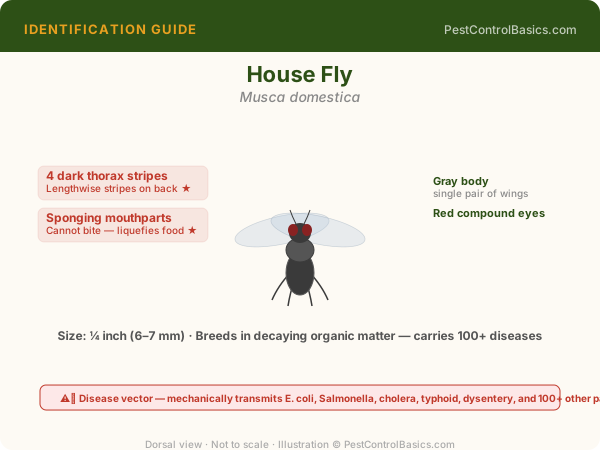
Original illustration by PestControlBasics.com. Use anatomical labels above to confirm your identification. For photo references, see the identification section below.
What house flies actually do when they land
A house fly cannot eat solid food — it liquefies food first by vomiting digestive fluid onto it, then absorbing the liquid. Every time a fly lands on food you're about to eat, it deposits bacteria from every surface it has recently visited.
House flies have been documented carrying over 100 pathogens including Salmonella, E. coli, typhoid, cholera, and several eye diseases. They transmit these mechanically — by carrying organisms on their body surface, in their gut, and in the vomit droplets they deposit while feeding.
A single fly can lay 500–900 eggs in its lifetime, in batches of 75–150 deposited directly on suitable organic matter. Egg-to-adult development takes as little as 6–8 days in warm conditions. A sanitation problem that creates breeding sites can produce overwhelming fly populations very quickly in summer.
Source elimination + Spinosad bait
Sanitation is primary: House flies need breeding sites — garbage, manure, food waste, and compost. Sealed garbage cans with tight lids, frequent garbage pickup, and clean compost management eliminate the breeding sites that support large populations. Without breeding sites, fly populations remain at low levels from wild influx.
Exclusion: Window and door screens in good repair prevent indoor entry. Check all screen frames for gaps — even 1/4 inch gaps allow flies through. Door sweeps on exterior doors.
Spinosad fly bait: Captivate Fly Bait or QuikStrike Fly Bait contain spinosad — an organic-certified insecticide that's mixed into an attractant that flies consume. Placed in areas out of reach of children and pets (on fly bait stations, under tables, in utility areas), spinosad bait provides dramatic population reduction. This is the most effective chemical control available.
UV light traps: Commercial UV fly traps (not the backyard bug zappers that mostly kill beneficial insects) capture and kill large numbers of house flies when placed inside buildings. Position away from windows and doors — near the breeding area, not the entry point.