HomePest LibraryDrain Fly
Nuisance — Enzymatic Cleaner Required
🪰

Drain Fly

Psychoda species — Moth Flies

Small, fuzzy, moth-like flies that hover slowly in bathrooms and kitchens. They breed exclusively in the organic biofilm coating the inside of drain pipes. Bleach kills adults on contact but washes past the biofilm without dissolving it — the breeding site survives and new adults emerge within days. Enzymatic cleaner is the solution.

Breeding siteOrganic biofilm INSIDE drain pipes
Bleach effective?NO — doesn't dissolve biofilm
Correct productEnzymatic drain cleaner (Invade Bio Drain)
Treatment duration5–7 consecutive nights
Key stepTape test to identify all breeding drains
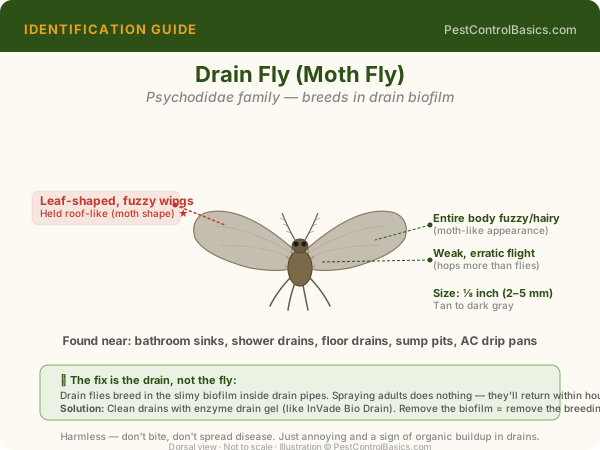
📐 FIELD GUIDE ILLUSTRATION
Drain Fly identification illustration with labeled anatomical features — PestControlBasics.com

Original illustration by PestControlBasics.com. Use anatomical labels above to confirm your identification. For photo references, see the identification section below.

The Biofilm Problem

Why bleach fails and what actually works

Drain fly larvae live in a gelatinous organic biofilm — a mixture of soap scum, hair, food particles, grease, and bacteria — that coats the inside of drain pipes. This biofilm is not removed by bleach. Bleach kills organisms on contact, but it flows down the pipe in the water, never actually contacting and dissolving the sticky biofilm that clings to the pipe walls.

After a bleach treatment, the biofilm remains intact. The larvae that are in it survive. Within 3–5 days, those larvae become new adults. The cycle continues unchanged.

What works — enzymatic cleaners: Products like Invade Bio Drain, Green Gobbler, and American Bio-Sciences Drain Fly Killer contain bacteria and enzymes specifically designed to digest and dissolve organic biofilm. Poured down the drain and left overnight (without running water), they break down the biofilm itself — eliminating the breeding medium.

Physical cleaning first: Before applying enzymatic cleaner, use a flexible drain brush to physically scrub the P-trap and first few inches of pipe. This disrupts the biofilm and allows the enzymatic solution to penetrate more effectively.

The Tape Test & Full Protocol

Find every breeding drain before treating

The Tape Test: Before treatment, identify every breeding drain in the home. Place clear tape (sticky side down) over every drain at night before bed. Check the next morning. Any drain with drain flies breeding in it will have adults stuck to the tape. Test: kitchen sink, bathroom sinks, shower drains, floor drains, laundry drains, and HVAC condensate drain lines. Missing even one breeding drain means the infestation continues.

Treatment protocol:

1. Physical scrub with drain brush — every identified drain.

2. Pour enzymatic drain cleaner down each drain. Follow product directions — typically pour, let sit overnight, do not run water for 8+ hours.

3. Repeat every night for 5–7 consecutive nights.

4. The overflow drain on bathroom sinks (the small hole near the top of the basin) is a frequently missed breeding site. Treat specifically with enzymatic foam.

5. For rarely used floor drains — pour 1 gallon of water weekly to maintain the P-trap water seal that blocks sewer drain fly access.

💡 The Missed Drain — Bathroom Sink Overflow

The overflow hole near the top of bathroom sink basins connects directly to the drain line and accumulates biofilm that almost never gets cleaned. This is one of the most commonly missed drain fly breeding sites. Use an enzymatic foam spray specifically in this opening.

DG
Derek Giordano
Certified Pest Control Operator · Former Business Owner
Derek ran his own pest control company in Florida for several years, servicing thousands of regular customers. All content is based on hands-on field experience and current EPA & university extension guidelines.
🧪 Recommended Treatment Products
Bti (Mosquito Dunks) IPM Approach
Full product guides with mixing rates, safety info, and brand comparisons. → Browse All 121 Pesticide Guides

Related Resources

📚 Full Pest Library🧪 DIY vs. Pro Quiz💰 Cost Guide🌿 IPM Guide🔍 Find a Pro
🔗 Related Pests
Crane Fly House Fly Fruit Fly Blow Fly Horse Fly Stable Fly
Compare similar pests to confirm your identification. → Use our ID Flowchart
🔮
Reviewed by Derek GiordanoContent on PestControlBasics.com is developed with input from certified pest management professionals and cross-referenced against EPA, CDC, and university extension guidance. Last reviewed: April 2026.
📚 Sources: EPA Termite Guide · NPMA Termite Info
Published: Jan 1, 2025 · Updated: Apr 7, 2026

Fly identification determines treatment approach

Different fly species require very different treatment because their breeding sites are different. House flies and bottle flies breed in decaying organic matter — garbage, animal waste, dead animals — and adult control without addressing the breeding site produces continuous reinfestation. Fruit flies breed in fermenting fruit and accumulated organic matter in drains. Drain flies (Psychodidae, often called moth flies) breed in slime accumulation inside drains and sewer lines. Phorid flies (humpbacked flies) breed in moist organic matter and indicate broken sewer lines, dead rodents in walls, or accumulated organic debris. Cluster flies enter homes seeking overwintering shelter in fall and don't breed indoors. Treatment that works for one usually doesn't address the others — diagnosis precedes effective treatment.

Choosing the right product formulation for the situation

Active ingredient gets most of the attention, but formulation often determines outcome. The same active ingredient in different formulations performs very differently: microencapsulated formulations last longer on porous surfaces and reduce human re-entry exposure, wettable powders give the longest residual on porous substrates but leave visible residue, suspended concentrates give a balance of residual and appearance, dusts are uniquely effective in wall voids and dry harborage but should never be broadcast indoors, baits are appropriate when pests must transport active to the colony or nest, and aerosols are appropriate for direct contact and quick knockdown but rarely give meaningful residual. Choosing formulation by the substrate (porous vs. nonporous), the access (open spray vs. crack-and-crevice vs. void), and the goal (knockdown vs. residual vs. transferable) routinely improves outcomes more than upgrading active ingredient.

Fruit fly elimination protocol

Fruit flies appear suddenly during warm months and persist as long as breeding sites are available. Find and eliminate all sources: overripe fruit on counters, fruit residue in compost bins (especially indoor bins), drain residue (run hot water and drain cleaner monthly), recycling containers with sugary residue, mops and cleaning supplies stored damp, plant pot saucers with stagnant water, and rotting onions or potatoes in storage. Adult fly control: apple cider vinegar traps (vinegar in a jar with plastic wrap over the top, several pinholes; flies enter but can't exit) reduce visible adults while breeding sites are being eliminated. Treatment without source elimination produces temporary results; thorough source elimination usually resolves fruit fly problems within a week or two.

Drain fly diagnosis and treatment

Drain flies appear in bathrooms, kitchens, and basements, usually near floor drains or seldom-used sinks. They breed in the biofilm slime accumulated inside drain pipes, garbage disposals, and sewer p-traps that aren't getting regular use. Diagnosis: tape a piece of clear tape over a suspected drain overnight (sticky side down, not sealing the drain completely) — adult flies emerging from the drain stick to the tape and confirm the source. Treatment: physical cleaning of the drain interior (a stiff drain brush or bottle brush, drain cleaner, then enzymatic drain treatment for ongoing biofilm reduction) is more effective than insecticide. Seldom-used floor drains in basements often dry out and lose their water seal, allowing flies from sewer lines; pouring water down them weekly maintains the trap and prevents fly migration.

Working with extension services and public resources

Every state has a Cooperative Extension Service — a university-affiliated public outreach program — and most homeowners don't know it exists. Extension publishes pest fact sheets specific to local conditions, offers free pest identification (often by photo submission), and runs Master Gardener volunteer programs that handle public inquiries. State departments of agriculture license and regulate pest control operators; their websites verify licenses and accept complaints. State and local health departments track vector-borne diseases and publish risk data that's more current than national averages. The EPA's pesticide product database lets you look up registered uses for any product before buying. The National Pesticide Information Center (1-800-858-7378) answers homeowner pesticide questions free of charge. These resources are paid for by taxes already; underusing them in favor of paid services is leaving money on the table.

Drain fly elimination: physical cleaning over chemicals

Drain flies (Psychodidae, also called moth flies) breed in the biofilm that accumulates in drain p-traps, garbage disposals, and overflow drains; they appear as small fuzzy flies near sinks, particularly in bathrooms and basement utility sinks. The diagnostic is taping a clear bag over a suspected drain overnight; emerging adults inside the bag the next morning confirm the source. Treatment focuses on physical removal of the biofilm rather than chemical intervention. The effective protocol: pour boiling water down the drain to loosen biofilm, scrub the inside of the drain pipe with a stiff drain brush (available for a few dollars at hardware stores), apply an enzymatic drain cleaner (not bleach or chemical drain opener, which doesn't address biofilm), repeat for several consecutive days, and address any rarely-used drains that may have lost their water seal and become breeding sites. Bleach treatments and pesticide pour-downs typically don't reach the breeding biofilm and produce poor results. Once treatment is complete, periodic monthly drain maintenance with enzymatic cleaner prevents biofilm rebuild.

Seasonal pest calendars: building one for your specific property

Generic seasonal pest calendars list typical activity windows by region, but every property has its own micro-calendar shaped by orientation, vegetation, drainage, neighbor properties, and structural features. After one or two years of observation, most homeowners can map their property's specific patterns: when wasps start scouting (typically early to mid spring as queens emerge), when ants first appear indoors (often after a specific rain pattern), when stored-product pests show up in pantries (often late spring through fall), when rodent activity increases (typically late fall as outdoor food declines and indoor warmth attracts them), when mosquito pressure peaks (varies enormously by local conditions), and when seasonal nuisances like cluster flies or boxelder bugs arrive (usually first hard cooling in fall). A personal calendar drives preventive timing — exterior perimeter treatment shortly before ant pressure builds is dramatically more effective than treatment after they're inside, exclusion work for rodents in early fall beats trapping in late fall, and wasp prevention in early spring beats removal in summer. Two years of observation produces a calendar more useful than any published guide for the specific property.

Fruit fly source diagnostics: where they're actually coming from

Fruit fly outbreaks have specific sources that range beyond the obvious ripe fruit, and identifying the actual breeding source is more useful than general home cleaning. The most common sources: ripening or damaged fruit (the well-known case), rotting potatoes and onions in storage (often overlooked because they don't smell strongly until well into decay), poorly-cleaned garbage disposals with food residue in the housing, recycling bins with residual liquid from beverage containers, mop heads stored damp, sponges holding food residue, drains in floor traps (rarely used but breeding sites if the seal has dried out), and damp newspaper or cardboard recycling stacks. Apple cider vinegar traps with dish soap surface tension breaker catch adult fruit flies and help confirm elimination — declining trap catches over days indicate the breeding source has been removed. Treatment that addresses only adults (sprays, traps alone) without finding and eliminating the breeding source fails to produce durable results.

Drain fly biofilm: the actual treatment target

Drain fly larvae feed on the biofilm — the layer of microbial growth and organic debris — that accumulates inside drain pipes, particularly in floor drains, infrequently-used sinks, and shower drains. Adult drain flies emerging from a drain are a downstream symptom; the population is sustained by the biofilm in the pipe, and treatment that doesn't address the biofilm reliably fails. Pouring boiling water down the drain provides momentary effect but doesn't remove the biofilm on the pipe walls above the water line. Bleach and commercial drain cleaners have similar limits. Effective drain fly elimination requires mechanical biofilm removal, which means brushing the inside of the drain with a long stiff brush, ideally combined with an enzymatic drain treatment that digests the organic film over time. For floor drains that are infrequently used and have lost their water seal, restoring regular water flow and using the drain at least monthly prevents both the biofilm buildup and the dry-trap conditions that allow sewer gases and drain fly access in the first place. The combination of mechanical cleaning, enzymatic treatment, and regular use is what resolves drain fly problems durably.

When neighborhood-level coordination matters for treatment

Some pests are house-scale problems and some are neighborhood-scale problems, and treating a neighborhood-scale problem as if it were house-scale leads to a familiar frustration: treatment works, then activity returns within weeks because the source was never inside your property. German cockroach problems in multi-unit buildings are the canonical example — treating one unit while the rest of the building is untreated produces temporary relief at best. Rodent infestations frequently span multiple adjacent properties, especially row houses, condo complexes, and dense suburban developments with shared boundary fencing or shared utility easements. Mosquito problems are obviously neighborhood-scale because adult mosquitoes don't respect property lines. The practical implication is that for these pests, isolated treatment is not just incomplete but in some cases economically wasteful. Coordinating with neighbors, talking to HOA or property management about whole-building or whole-block treatment, and identifying the actual sources rather than the symptom locations is what produces durable results. This is uncomfortable work in some neighborhoods, but no amount of treatment intensity in a single unit substitutes for it.

Phorid flies versus fruit flies: the diagnostic distinction matters

Small flies in the kitchen are often called fruit flies generically, but the distinction between fruit flies and phorid flies has major implications for source diagnosis and treatment. Fruit flies are tan to brown, have red eyes, and breed in fermenting fruit and vegetable matter — ripe produce, recycling bins, drain residue. Phorid flies are smaller, darker, hump-backed in profile, and characterized by a distinctive jerky walking motion before flight. They breed in decaying organic matter in unusual locations: under refrigerators where spills have congealed, in cracked or broken sewer lines under slabs, in dead rodents in wall voids, in compost or trash that has worked into floor cracks. Phorid flies emerging in a kitchen that has eliminated all visible fruit fly sources strongly suggest a hidden organic matter source — frequently a plumbing issue or pest die-off — and the diagnostic step is more involved than fruit fly source elimination. Treating phorid flies as fruit flies leads to repeated treatment failure; identifying them correctly redirects the investigation toward the actual source, which is often a plumbing inspection rather than a pantry cleanout.

🗺️ US Distribution — Drain Fly

image/svg+xml
Common Occasional Not Present
States Present
51
Occasional
0
Primary Region
All 50 states (indoor pest)
📊 Source: University extension services, USDA, CDC vector data, and published entomological surveys.