InicioBibliotecaHormiga Brava Roja
⚠ Pica Repetidamente Invasiva de América del Sur El Método de 2 Pasos Funciona

Hormiga
Brava Roja

Solenopsis invicta — Hormiga Colorada Importada

Invasión desde América del Sur detectada en Alabama en los años 1930. Ahora infesta más de 320 millones de acres en 14 estados del sur. Su picadura ardiente forma pústulas que pueden durar semanas. El Método de Dos Pasos — cebo de difusión lenta más tratamiento directo del montículo — es la estrategia que los profesionales utilizan.

Tamaño Colonia100,000–500,000 obreras
Reinas por Colonia1 (monogínica) o hasta 100
Territorio14 estados del sur de EE.UU.
PicaduraRepetida — veneno alcaloide
🐜
Ficha Rápida
Hormiga Brava Roja
Tamaño1/16–1/4 pulgada — trabajadoras varían
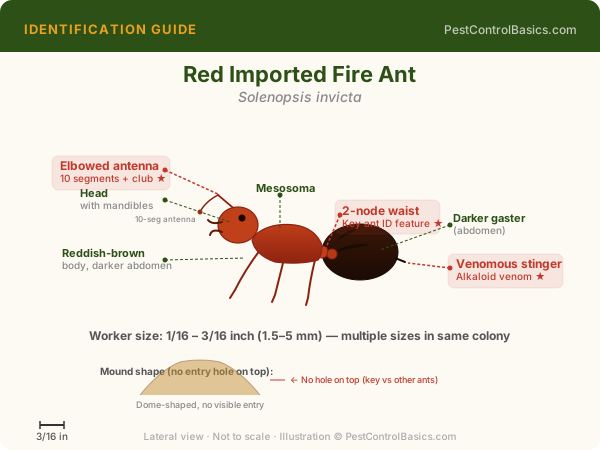
MontículosCúpulas de tierra suelta — sin agujero arriba
ComportamientoAtacan en masa cuando el montículo se perturba
PicaduraArdiente — forma pústula en 24 horas
Método #1Cebo de difusión lenta en todo el césped
Método #2Tratamiento directo del montículo
¿Peligroso?Sí — anafilaxia posible
¿DIY posible?Sí — con los productos correctos
📐 FIELD GUIDE ILLUSTRATION
Hormigas Bravas Rojas identification illustration with labeled anatomical features — PestControlBasics.com

Original illustration by PestControlBasics.com. Use anatomical labels above to confirm your identification. For photo references, see the identification section below.

Historia e Identificación

Cómo llegaron y por qué son tan difíciles de controlar

La hormiga brava roja importada (Solenopsis invicta) llegó a los Estados Unidos desde América del Sur alrededor de 1930 — probablemente a través del puerto de Mobile, Alabama, en tierra de lastre de barcos. Sin los depredadores naturales que controlan sus poblaciones en Brasil y Argentina, se expandieron rápidamente por todo el sur del país.

La característica que las hace especialmente difíciles de controlar: las reinas. Una colonia monogínica tiene una sola reina que puede poner hasta 1,500 huevos por día durante 6–7 años. Cuando una colonia es amenazada, puede dividirse rápidamente — un comportamiento llamado "brotación" — produciendo múltiples colonias nuevas.

Identificación del montículo: Los montículos de hormigas bravas son cúpulas de tierra suelta sin agujero visible en la parte superior. Las entradas están por los lados y debajo. Un montículo perturbado liberará inmediatamente miles de trabajadoras que atacan en masa.

⚠ En Caso de Picaduras Múltiples

Si usted o alguien cerca experimenta dificultad para respirar, hinchazon de la garganta, mareo, o urticaria generalizada después de picaduras de hormiga brava — llame al 911 inmediatamente. La anafilaxia ocurre en aproximadamente el 1% de las personas picadas y puede ser fatal sin tratamiento rápido.

El Método de Dos Pasos

La estrategia que los profesionales usan — y que usted puede usar también

El Método de Dos Pasos fue desarrollado por investigadores de Texas A&M y es el estándar oficial para el manejo de hormigas bravas a nivel de propiedad. Aborda tanto la población total de hormigas bravas en su césped como los montículos individuales problemáticos.

El Método de Dos Pasos
Cebo + Tratamiento Directo = Control Total
Aplicar los dos pasos con una separación de 3–5 días para máxima efectividad
1
Cebo de Difusión Lenta — Todo el Césped
Aplique cebo granulado (Amdro, Advion Fire Ant) de manera uniforme en todo el césped con un esparcidor. Las obreras llevan el cebo a la reina y a las larvas. De acción lenta por diseño — mata colonias completas en 1–6 semanas. Aplique cuando el suelo esté seco y las hormigas estén activas (entre 65°F–95°F).
Productos: Amdro Fire Ant Bait · Advion Fire Ant Bait
2
Tratamiento Directo — Montículos Individuales
Aplique tratamiento directo a montículos dentro de zonas de alto tráfico — áreas de juego, cerca de la entrada. Opciones: drench con bifentrina diluida, polvo de Ortho Fire Ant Killer, o aceite de naranja y agua jabonosa para quienes prefieren opciones orgánicas. Espere 3 días después del cebo antes de este paso.
Productos: Ortho Fire Ant Killer · Bifentrina Drench
💡 Por Qué el Cebo de Acción Lenta Funciona Mejor

Los tratamientos de contacto rápido (sprays, polvos) matan las obreras en el montículo pero no llegan a la reina. Una reina sobreviviente puede reconstruir la colonia completa en semanas. El cebo de acción lenta permite que las obreras transporten el ingrediente activo directamente a la reina antes de morir — eliminando la colonia desde adentro.

Guía de Productos

Qué comprar y cómo usarlo

🌿
Cebo — Paso 1
Amdro Fire Ant Bait (Hidramethylnon)
Cómo funciona: Granulos que imitan el alimento de las hormigas. Las obreras los llevan a la reina y a las larvas. Hidramethylnon interrumpe la producción de energía celular — la reina muere sin poder poner huevos. Visible reducción de actividad en 1–2 semanas, eliminación completa de la colonia en 4–6 semanas. Aplique 2–4 veces al año para control continuo.
[ Enlace de Afiliado — Próximamente ]
★★★★★
Mejor Cebo
🐛
Tratamiento Directo — Paso 2
Bifentrina Drench (Talstar, Bifen IT)
Cómo funciona: Mezcle 1–3 oz de concentrado de bifentrina por galón de agua. Vierta 1–2 galones directamente sobre el montículo lentamente — no tanto que lo inunde, sino que el líquido penetre. Actúa rápido (contacto). Use para montículos en zonas de alto tráfico donde necesita eliminación rápida. No sustituye al cebo para el control a largo plazo del césped completo.
[ Enlace de Afiliado — Próximamente ]
★★★★Ⓒ
Montículos Rápidos
Prevención

Mantenimiento continuo — 2–4 veces al año

Las hormigas bravas vuelan y establecen nuevas colonias continuamente desde propiedades vecinas. La única manera de mantener su propiedad libre de hormigas bravas es aplicar cebo de manera preventiva 2–4 veces al año — en primavera, verano e inicio del otoño. En Texas y Florida, donde las condiciones son ideales, 4 aplicaciones por año son lo óptimo.

Cuándo NO aplicar cebo: Cuando el suelo está muy húmedo, cuando las temperaturas superen los 95°F o bajen de los 65°F, o cuando se espera lluvia en las próximas 24 horas. El cebo se deshace con la lluvia y pierde efectividad si el suelo está saturado.

✓ Pro o DIY — La Respuesta

El control de hormigas bravas es uno de los tratamientos de plagas más efectivos que los dueños de casa pueden hacer por sí mismos. Con los productos correctos aplicados en el momento correcto, los resultados del DIY son comparables a los del servicio profesional. Use nuestra prueba DIY vs. Pro si no está seguro.

DG
Derek Giordano
Certified Pest Control Operator · Former Business Owner
Derek ran his own pest control company in Florida for several years, servicing thousands of regular customers. All content is based on hands-on field experience and current EPA & university extension guidelines.

Frequently Asked Questions

How do I know if I have HormigaBrava Roja?

Signs of HormigaBrava Roja include physical sightings, droppings or frass, damage to food or materials, and unusual odors. Inspect hidden areas like wall voids, behind appliances, and in storage spaces. A flashlight inspection after dark is often most revealing.

Are HormigaBrava Roja dangerous to humans or pets?

HormigaBrava Roja can pose health risks including bites, allergic reactions, food contamination, and disease transmission. Children, elderly, and pets are especially vulnerable. Consult a pest management professional when an infestation is confirmed.

Can I eliminate HormigaBrava Roja myself?

Light infestations may be manageable with DIY baits, traps, and targeted treatments. Established infestations typically require professional intervention. Misapplied products often scatter pests and worsen the problem long-term.

How long does HormigaBrava Roja treatment take?

Timelines vary by infestation size and method. Baits may take 1–4 weeks to work through a colony. Chemical treatments often require 2–3 applications spaced 2–4 weeks apart. Monitor for 30–60 days after treatment to confirm elimination.

What attracts HormigaBrava Roja to my home?

HormigaBrava Roja are typically drawn by food sources, standing moisture, warmth, and shelter. Sealing entry points, reducing clutter, fixing leaks, and storing food in airtight containers are the most effective long-term prevention measures.

🧪 Recommended Treatment Products
Ant Bait Guide Fipronil (Termidor) Borax vs Boric Acid Indoxacarb (Advion)
Full product guides with mixing rates and safety info. → Browse All 130 Pesticide Guides

Related Resources

📚 Full Pest Library🧪 DIY vs. Pro Quiz💰 Cost Guide🌿 IPM Guide🔍 Find a Pro
🔮
Reviewed by Derek GiordanoContent on PestControlBasics.com is developed with input from certified pest management professionals and cross-referenced against EPA, CDC, and university extension guidance. Last reviewed: April 2026.
📚 Sources: Texas A&M Fire Ant Project · EPA Safe Pest Control
Published: Jan 1, 2025 · Updated: Apr 7, 2026

Outdoor ant management: protecting the indoor perimeter

Many indoor ant problems originate from outdoor colonies that find access points into the structure, which means the most effective long-term ant management often happens outdoors. Reducing landscape conditions that support colonies near the foundation is the first step: pulling mulch back six to twelve inches from the foundation, trimming shrubs and tree branches that touch the structure (eliminating direct access bridges), removing leaf litter and debris from the foundation area, and addressing any wood debris (firewood, scrap lumber) stored against the structure. Granular baits applied to the perimeter address foraging colonies, while perimeter sprays (where appropriate) create a brief barrier during peak pressure periods. The granular and liquid approaches work together: granular baits target the colony, liquid perimeter sprays kill foraging individuals that would otherwise cross. For chronic problems, identifying and treating actual colony locations (typically following workers back to their entry points, then tracing further) is more efficient than blind perimeter treatment.

Why most pest 'sightings' aren't what people think they are

Species misidentification is the single most common reason that DIY pest treatment fails or that homeowners describe products as not working. The patterns are consistent: bed bug bites are routinely attributed to mosquitoes, fleas, or unknown causes; carpet beetle larvae are mistaken for bed bug nymphs; small black ants are called 'sugar ants' regardless of actual species; carpenter ants and termites are confused despite very different treatments; bat bugs are treated as bed bugs (the treatment may work, but the actual problem is overhead). Even when identification is correct at the family level, species within a family often require different approaches — German vs. American cockroaches, subterranean vs. drywood termites, or pavement vs. carpenter ants are practical examples. The first hour of any pest problem should go to identification, not treatment: photograph specimens with a coin for scale, send images to a local cooperative extension office (most respond within a day or two), or post to one of the moderated identification forums where entomologists answer. Correct identification narrows treatment options to those that actually work and discards the larger pile that don't.

Why different ant species need different baits

The category 'ant bait' covers products with very different active ingredients and matrices, and matching the right bait to the species is critical. Sugar-loving species — common pavement ants, odorous house ants, Argentine ants — respond to liquid sugar baits like borax-based sugar bait. Protein-feeding species and species with seasonal preferences shift toward protein require oil- or protein-based bait matrices. Carpenter ants are technically protein/sugar-feeding but respond best to specific protein-rich baits like indoxacarb-based products. Pharaoh ants are notoriously difficult and respond only to specific bait formulations (typically methoprene-based growth regulator baits or hydramethylnon at low concentrations); standard ant sprays will cause Pharaoh ant colonies to bud and multiply, making the problem dramatically worse. Identifying the species — typically possible from a clear photograph — and selecting the right bait matrix multiplies effectiveness compared to using a single 'all ants' product. Many DIY ant treatments fail not because the homeowner used a bad product but because the right product was used against the wrong species.

Pavement ants: structural vulnerability rather than household pest

Pavement ants get their name from their habit of nesting under and adjacent to concrete slabs, walkways, and driveways, and they're a common but often overlooked driver of indoor ant activity in homes with slab-on-grade construction or attached garages. The nest itself is usually outside, but foraging trails enter the structure through expansion joints, utility penetrations, and gaps in slab perimeters. Treating the indoor foraging trails without addressing the outdoor nest produces only short-term relief. Effective control combines bait stations placed along the indoor trails with outdoor perimeter treatment focused on the slab-adjacent soil and exclusion work that closes the entry points. The structural component is what distinguishes pavement ant control from other indoor ant work — without sealing the entry routes, the next colony to discover the same openings will produce the same problem within months, regardless of how well the previous colony was eliminated. Homeowners who address pavement ants without the exclusion piece often see the same activity pattern return year after year, and conclude that the ants are unbeatable; in fact the colony is being eliminated each cycle, but the route is being reopened to the next colony in line.

The role of inspection in long-term cost reduction

An inspection is the cheapest tool in pest management, and homeowners systematically underspend on it. The economics are unambiguous: an annual or semiannual inspection costs a small fraction of what any moderate treatment costs, and it catches problems while they're still cheap to address. Termite damage detected in its first season requires perimeter treatment; the same damage discovered three years later may require structural repairs running into five figures. Rodent activity detected through droppings before nesting establishes requires sealing and a few traps; the same activity discovered after a multi-generation infestation has set up in wall voids requires removal, exclusion, sanitation, and sometimes drywall work. The pattern repeats across nearly every pest category. Even households that don't engage a regular pest service should treat the annual inspection as a baseline expense — equivalent to the way they probably treat HVAC tune-ups, gutter cleaning, or smoke detector battery changes. The marginal cost of one trained set of eyes on the property each year is one of the most defensible expenses in home maintenance.

Ant colony dynamics and the limits of trail-level treatment

An ant trail is the visible surface of a colony that may include tens of thousands of individuals, multiple satellite nests, and reproductive structures distributed across an area much larger than the trail suggests. Treating the trail without affecting the colony produces predictable failure: the foragers you killed are replaced from a much larger reservoir, and the colony's reproductive capacity is unaffected. This is the structural reason that bait — which is carried back to the colony and shared through trophallaxis — outperforms contact insecticide for most household ant problems. The bait reaches the queens and the brood; the spray reaches only the workers currently outside the nest. Understanding this also explains why partial bait treatment often fails: if the bait is consumed only on one trail while the rest of the colony continues foraging on untreated trails, the toxic load on the queen may not reach lethal levels. Effective bait programs identify all active trails, treat them simultaneously, and continue baiting for long enough that the entire colony cycles through the affected food source.

🗺️ US Distribution — Hormigas Bravas Rojas

Common Occasional Not Present
States Present
49
Occasional
2
Primary Region
Continental US
📊 Source: University extension services, USDA, CDC vector data, and published entomological surveys.