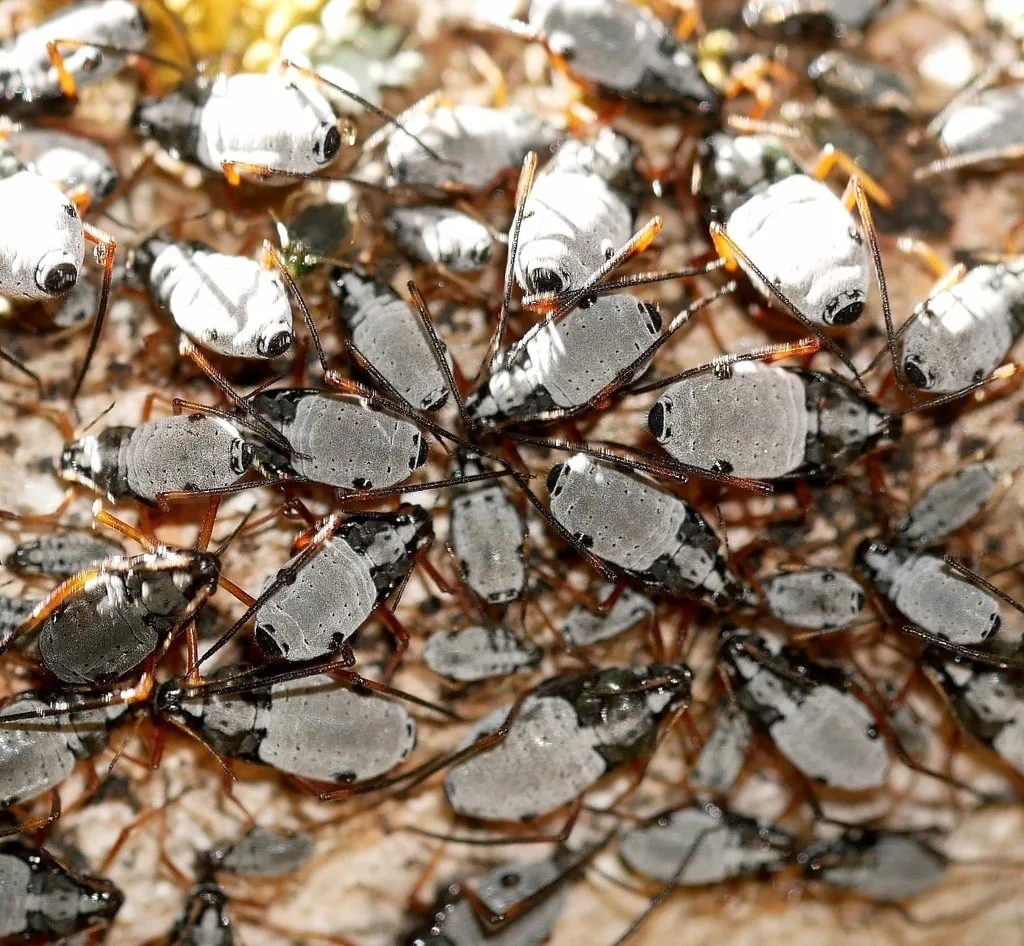
How to identify it
Look-alikes
| Look-alike | How to tell them apart |
|---|---|
| Other aphids | Most landscape aphids are only 1/16 to 1/8 inch long and tend to match the color of their host plant.[2] |
Where it lives
The PNW Insect Management Handbook covers them on firs and pines in Pacific Northwest landscapes.[1]
Biology and life cycle
Eggs overwinter on needles and bark; large black stem mothers hatch in early spring and give birth to live young.[1]
Colonies build among the needles and under larger branches, and there may be several generations through summer.[1]
Damage and signs
Health risk
They feed on trees; the PNW Insect Management Handbook mentions no risk to people, though their honeydew draws yellowjackets.[1]
Control
Prevention
Check early in the season, when aphids are fewer; a dark plate under the branches shows spatters of honeydew from the first activity.[2]
Avoid heavy nitrogen fertilizer and heavy watering, which produce the succulent growth aphids favor.[2]
Traps and physical control
Wash aphids off with a strong stream of water or wipe them off by hand.[2]
Biological control
Lady beetles, syrphid fly larvae, green lacewings and parasitoid wasps attack aphids; avoid broad-spectrum sprays that kill them.[2]
Common questions
Sources
- Pacific Northwest Pest Management Handbooks (OSU, WSU, University of Idaho), “Fir (Abies): Giant conifer aphid (Insect Management Handbook).” pnwhandbooks.org/insect/hort/landscape/hosts-pests-landscape-plants/fir-abies-giant-conifer-aphid (accessed 2026-10-06)
- Pacific Northwest Pest Management Handbooks (OSU, WSU, University of Idaho), “Landscape pests: Aphid (Insect Management Handbook).” pnwhandbooks.org/insect/hort/landscape/common/landscape-aphid (accessed 2026-10-06)
- iNaturalist, “Cinara taxon page (order and family).” www.inaturalist.org/taxa/199407 (accessed 2026-10-06)