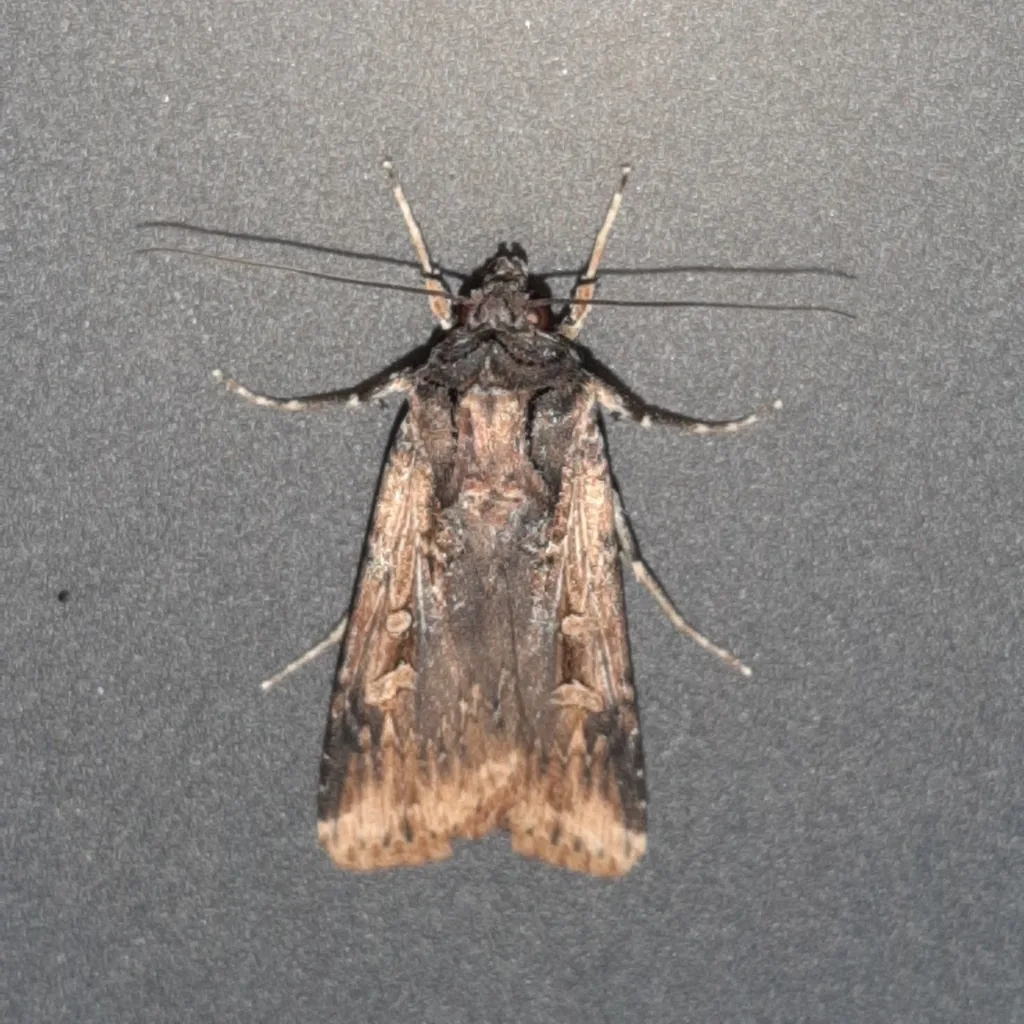
How to identify it
Look-alikes
| Look-alike | How to tell them apart |
|---|---|
| Black cutworm and other cutworms | Several cutworm species hide by day and feed at night.[1] |
Where it lives
Native to the Western Hemisphere and mainly tropical, it's found all year in Louisiana and Florida and only strays north to the northern U.S. and southern Canada.[1]
Biology and life cycle
Adults live 10 to 20 days and begin mating about a day after emerging.[1]
Damage and signs
- Larvae feed at night on garden and crop plants.[1]
Health risk
It feeds on plants; UF/IFAS mentions no risk to people.[1]
Control
Prevention
Blacklight traps can monitor moth populations.[1]
Pesticides
Baits, especially bran-based baits, seem particularly effective.[1]
Common questions
Sources
- University of Florida IFAS Extension (Featured Creatures), “Granulate Cutworm, Feltia subterranea (EENY-559).” edis.ifas.ufl.edu/publication/IN997 (accessed 2026-10-06)
- iNaturalist, “Feltia subterranea taxon page (order and family).” www.inaturalist.org/taxa/152979 (accessed 2026-10-06)